
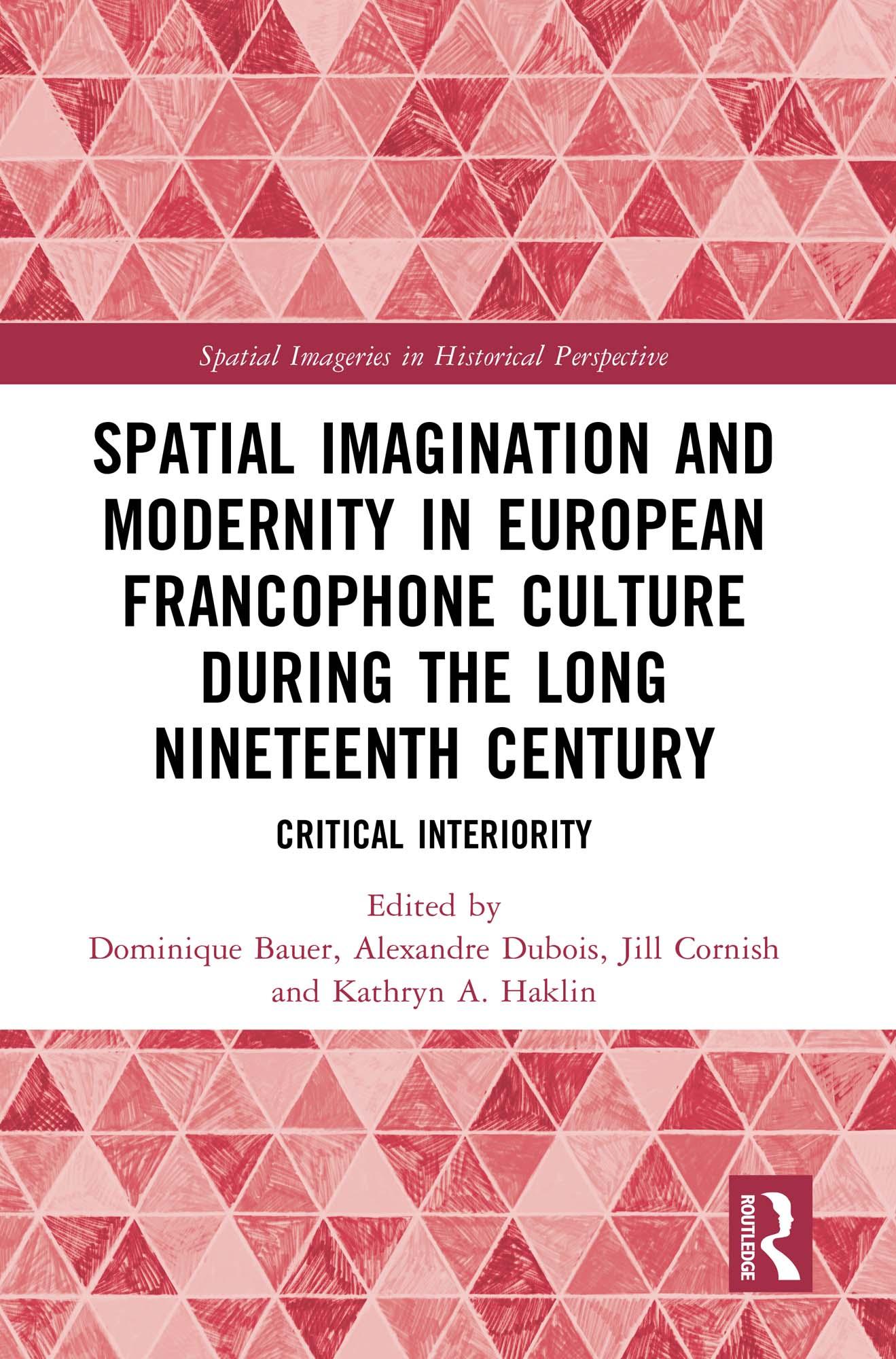
This book explores the concept of critical interiority in literature, art, and architecture within European francophone culture, spanning the late eighteenth to early twentieth centuries.
As a lived, imagined, or conceptualized interior space, critical interiority initially suggests a duality between interior and exterior spaces. However, this division is simultaneously destabilized, to the point where the distinction between the two spatial categories nearly dissolves. This paradox forms a lens through which modern subjectivity is analysed as an interiority. By examining examples of critical interiority found in architecture, literature, and visual art, the chapters in this volume illuminate the fundamental tensions of modernity regarding the subject and its relationship to authenticity, gender, identity, memory, nature, privacy, sociability, and temporality.
Set at the intersections of various critical frameworks, this book offers a unique and interdisciplinary perspective on space. It will be of interest to researchers in the fields of nineteenth-century literature and architecture, France and Belgium, general cultural history, domesticity and the city, art history and aesthetic theory, literary genres and comparative literature.
Pay easily by card, Klarna, Apple Pay or Google Pay. Not happy? You always have a 14-day money-back guarantee. Read more in our terms. If you have any questions, email us at hello@memmo.org.
Memmo makes studying easier – wherever you are in the world. We bring your course books and smart study tools together in one place: summaries, quizzes, podcasts and flashcards. Plus Ted, your study buddy who answers anything you wonder. Over 50,000 students already study here – built to help you learn faster and stress less.