
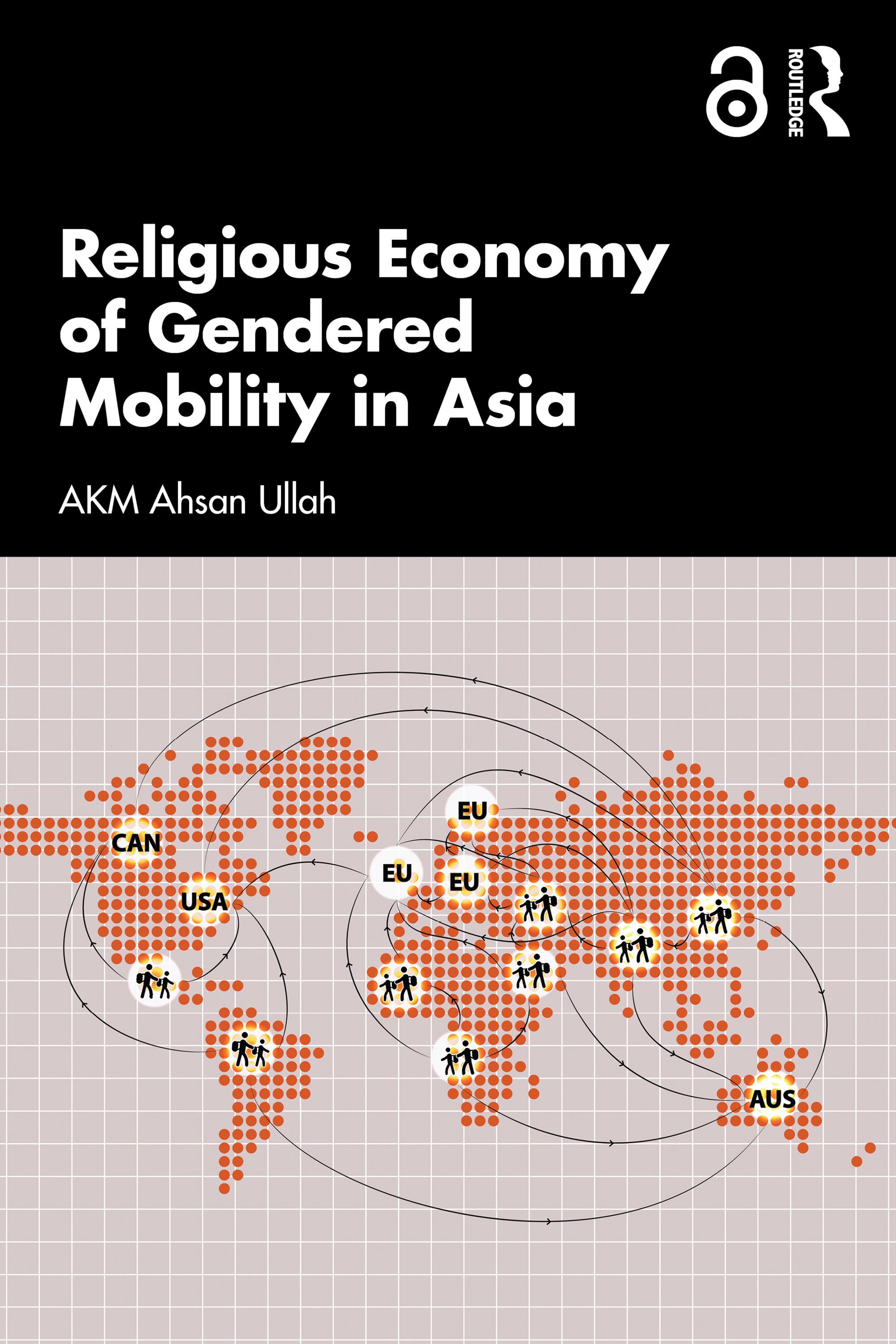
This book explores how religion, gender, and economic structures influence mobility across local, national, and global scales, providing a groundbreaking perspective into urgent debates on migration, gender inequality, religious change, and the global political economy.
Combining theory, comparative analysis, and case studies from Asia, the Gulf, Africa, and the Global North, this book reveals how religious beliefs and institutions act as moral economies that regulate labour, discipline gender roles, and mediate migrants’ access to resources and belonging. By foregrounding women’s mobility, it highlights how patriarchal norms, religious interpretations, and labour markets intersect to shape migration trajectories, while documenting women’s agency in navigating these systems. This book is equally attentive to power, using a Global North–Global South framework informed by world-systems theory to expose how global inequalities, colonial legacies, and geopolitical interests structure migration regimes, including gendered labour migration and the governance of religious minorities.
Religious Economy of Gendered Mobility in Asia is written for scholars, policymakers, and advanced students studying migration, development, gender studies, and social justice.
Chapter 1 and Chapter 3 of this book are freely available as a downloadable Open Access PDFs at http://www.taylorfrancis.com under a Creative Commons Attribution-Non Commercial-No Derivatives (CC BY-NC-ND) 4.0 International license.
Pay easily by card, Klarna, Apple Pay or Google Pay. Not happy? You always have a 14-day money-back guarantee. Read more in our terms. If you have any questions, email us at hello@memmo.org.
Memmo makes studying easier – wherever you are in the world. We bring your course books and smart study tools together in one place: summaries, quizzes, podcasts and flashcards. Plus Ted, your study buddy who answers anything you wonder. Over 50,000 students already study here – built to help you learn faster and stress less.