
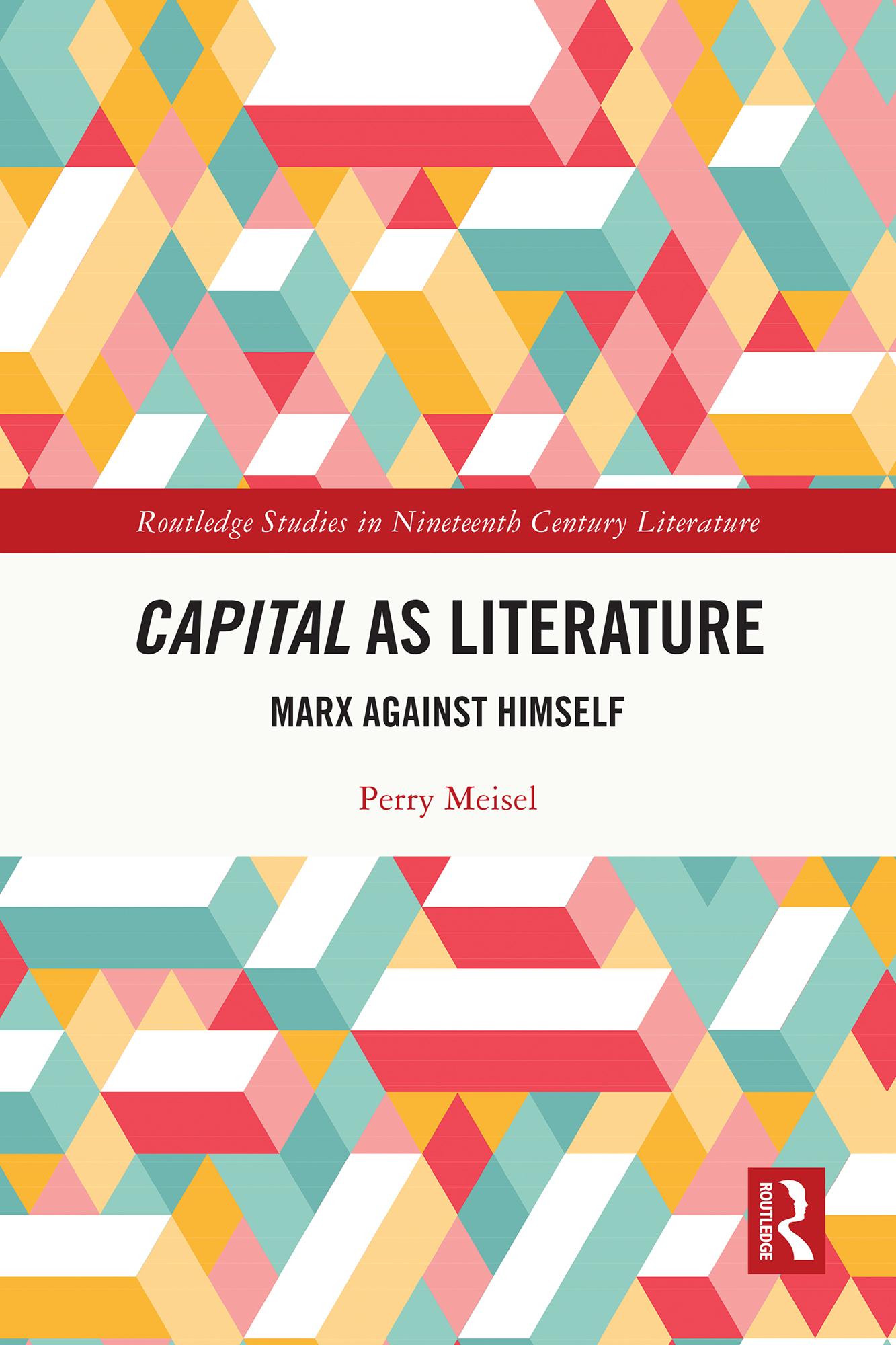
Studies of Marx, particularly of his masterwork Capital (1867), are as a rule tutelary—they attempt to explain him. Even literary readers of Marx, from Raymond Williams to Fredric Jameson, seek to secure Marxist tenets by means of Marxian style. ‘Capital’ as Literature: Marx Against Himself departs from this tradition by reading Capital as literary in its own right rather than as political economy with style as its filigree rather than its focus. Here, Marx emerges in a different light. If literature is writing that calls whatever is settled into question, then Marx's writing is literature, not because of its revolutionary program, but because Marx's rhetoric, particularly its key trope of chiasmus, undoes the coherence of the notions it propounds, especially in Capital. Marx's chiasmatic style turns Capital into a mise en abyme and Marx's enterprise into an example of what it describes rather than its foil or antidote: the structure of capital itself. Capital, like capital, is a self-begetting production machine whose fungibility as a form is one and the same with the money economy it unravels. ‘Capital’ as Literature: Marx Against Himself shows how this irony unfolds and what the implications are for epistemology, cultural studies, and literary criticism.
Pay easily by card, Klarna, Apple Pay or Google Pay. Not happy? You always have a 14-day money-back guarantee. Read more in our terms. If you have any questions, email us at hello@memmo.org.
Memmo makes studying easier – wherever you are in the world. We bring your course books and smart study tools together in one place: summaries, quizzes, podcasts and flashcards. Plus Ted, your study buddy who answers anything you wonder. Over 50,000 students already study here – built to help you learn faster and stress less.