
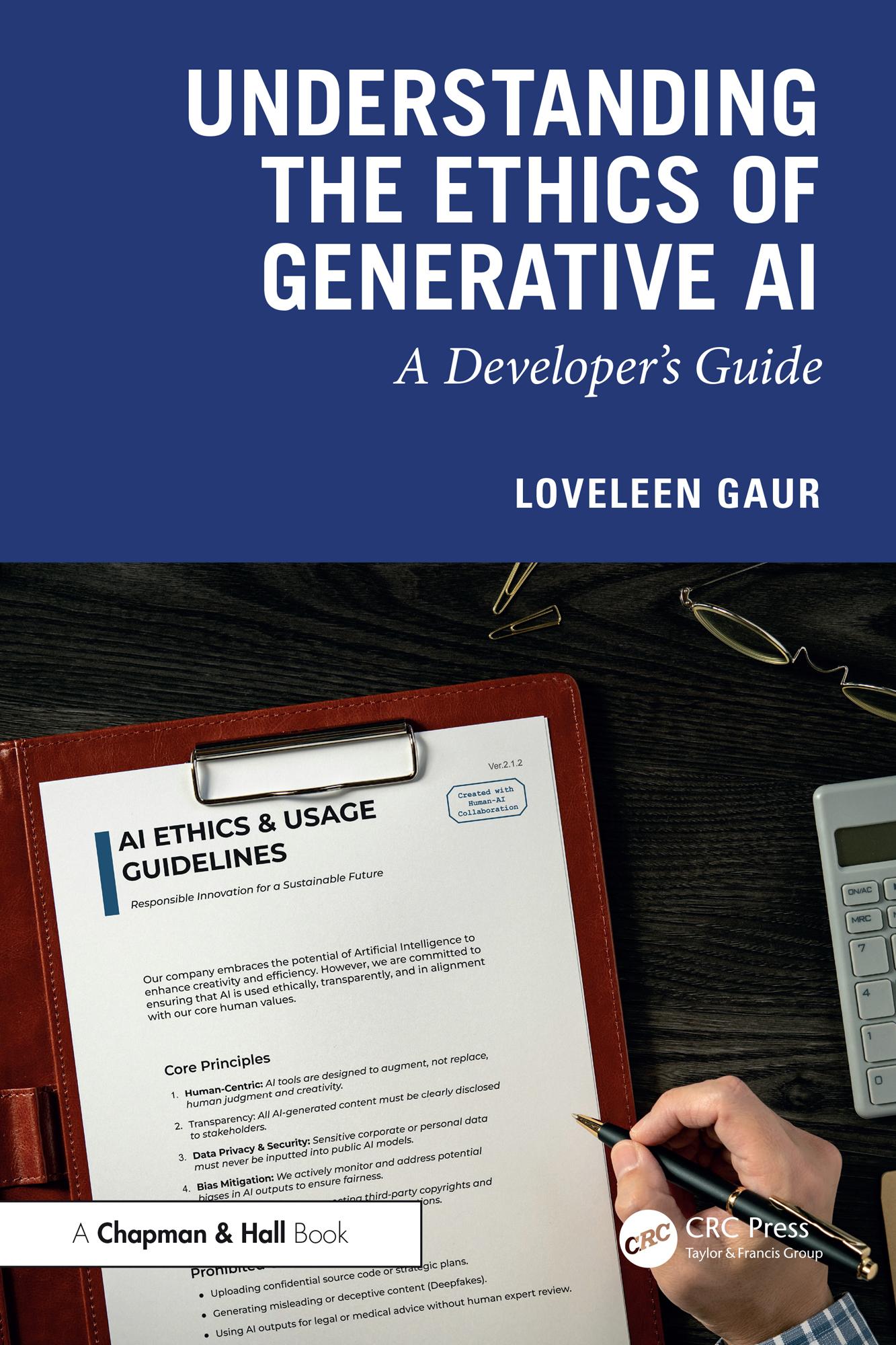
The book discusses the ethical complexities that software developers face as they build AI systems capable of autonomous creation. It explores the ethical decisions developers must make when building generative AI systems, from mitigating bias in training data to protecting user privacy and navigating regulatory compliance. Through real-world case studies and actionable frameworks, it equips technical professionals with both the understanding and tools to build AI systems that are fair, transparent, and worthy of public trust.
This book covers the following topics:
- Identifies and corrects algorithmic bias in training datasets, ensuring AI systems produce equitable outputs that don’t systematize discrimination.
- Designs privacy-first AI architectures and implements transparency practices that comply with data protection regulations while building user trust.
- Navigates evolving legal and regulatory landscapes (GDPR, AI Act, sector-specific rules), helping teams stay ahead of compliance requirements.
- Applies ethical frameworks to real-world decisions: what to do when fairness and accuracy conflict, how to audit AI systems for hidden harms, when to say no to a project.
- Provides a governance model for embedding ethics into development workflows, not as an afterthought but as a core design practice.
Pay easily by card, Klarna, Apple Pay or Google Pay. Not happy? You always have a 14-day money-back guarantee. Read more in our terms. If you have any questions, email us at hello@memmo.org.
Memmo makes studying easier – wherever you are in the world. We bring your course books and smart study tools together in one place: summaries, quizzes, podcasts and flashcards. Plus Ted, your study buddy who answers anything you wonder. Over 50,000 students already study here – built to help you learn faster and stress less.