
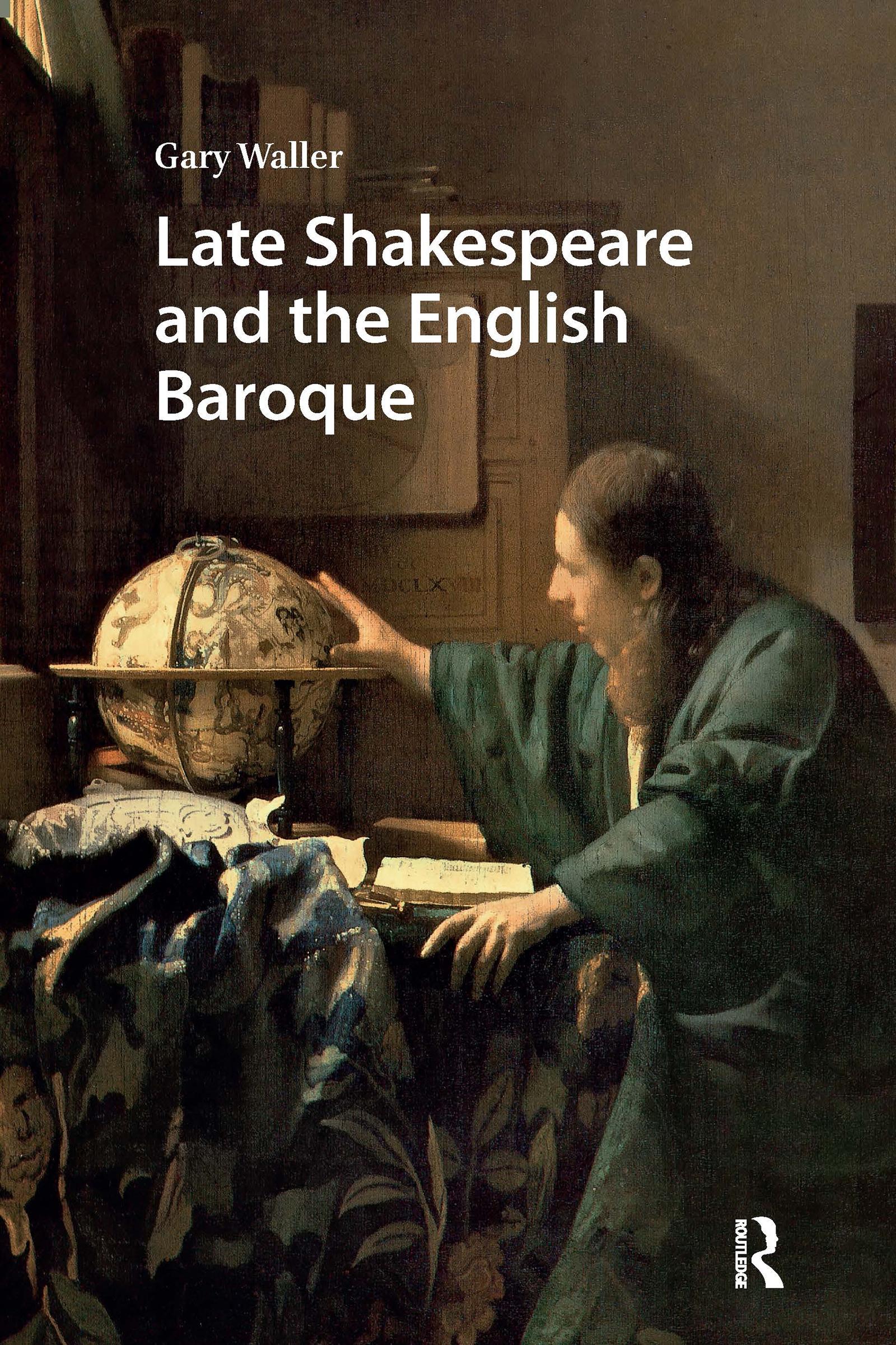
Late Shakespeare and the English Baroque focuses mainly on Shakespeare’s late (or later) works, those written from around 1607. It sets both poetry and plays within the emerging culture of the baroque, the term defined not merely by stylistic features but by the underlying ideological ‘structure of feeling’ of baroque culture in early modern England. The book extends the mode of analysis of The Female Baroque (Amsterdam University Press, 2020) and draws on theoretical work by José Antonio Maravall, Raymond Williams, and Julia Kristeva. It analyzes recurring Baroque characteristics – hyperbole and melancholy, theatricality, gender, and ‘plateauing’. Attention is given to the sonnets and other poems, as well as the tragedies from Hamlet on, and argues that increasingly, tragi-comedy emerges as a distinctively baroque Shakespearean characteristic. In the final chapter, primarily on The Tempest, the late Shakespeare is shown to have philosophical insights parallel to Montaigne or Bruno, and to provide anticipatory connections with later baroque artists like Vermeer.
Pay easily by card, Klarna, Apple Pay or Google Pay. Not happy? You always have a 14-day money-back guarantee. Read more in our terms. If you have any questions, email us at hello@memmo.org.
Memmo makes studying easier – wherever you are in the world. We bring your course books and smart study tools together in one place: summaries, quizzes, podcasts and flashcards. Plus Ted, your study buddy who answers anything you wonder. Over 50,000 students already study here – built to help you learn faster and stress less.