
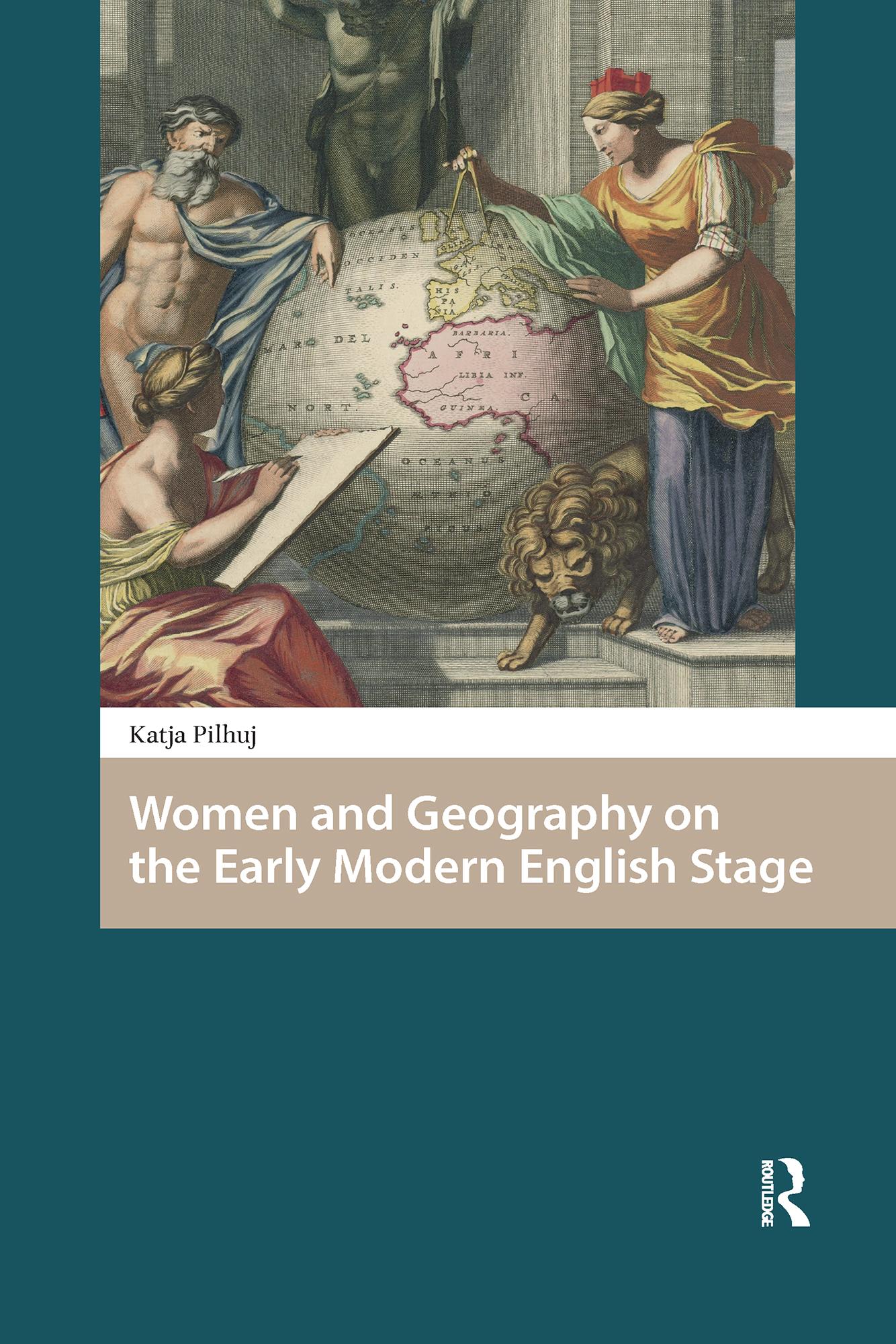
In a late 1590s atlas proof from cartographer John Speed, Queen Elizabeth appears, crowned and brandishing a ruler as the map's scale-of-miles. Not just a map key, the queen's depiction here presents her as a powerful arbiter of measurement in her kingdom. For Speed, the queen was a formidable female presence, authoritative, ready to measure any place or person. The atlas, finished during James' reign, later omitted her picture. But this disappearance did not mean Elizabeth vanished entirely; her image and her connection to geography appear in multiple plays and maps. Elizabeth becomes, like the ruler she holds, an instrument applied and adapted. Women and Geography on the Early Modern English Stage explores the ways in which mapmakers, playwrights, and audiences in early modern England could, following their queen's example, use the ideas of geography, or 'world-writing', to reshape the symbolic import of the female body and territory to create new identities. The book demonstrates how early modern mapmakers and dramatists -- men and women -- conceived of and constructed identities within a discourse of fluid ideas about space and gender.
Pay easily by card, Klarna, Apple Pay or Google Pay. Not happy? You always have a 14-day money-back guarantee. Read more in our terms. If you have any questions, email us at hello@memmo.org.
Memmo makes studying easier – wherever you are in the world. We bring your course books and smart study tools together in one place: summaries, quizzes, podcasts and flashcards. Plus Ted, your study buddy who answers anything you wonder. Over 50,000 students already study here – built to help you learn faster and stress less.