
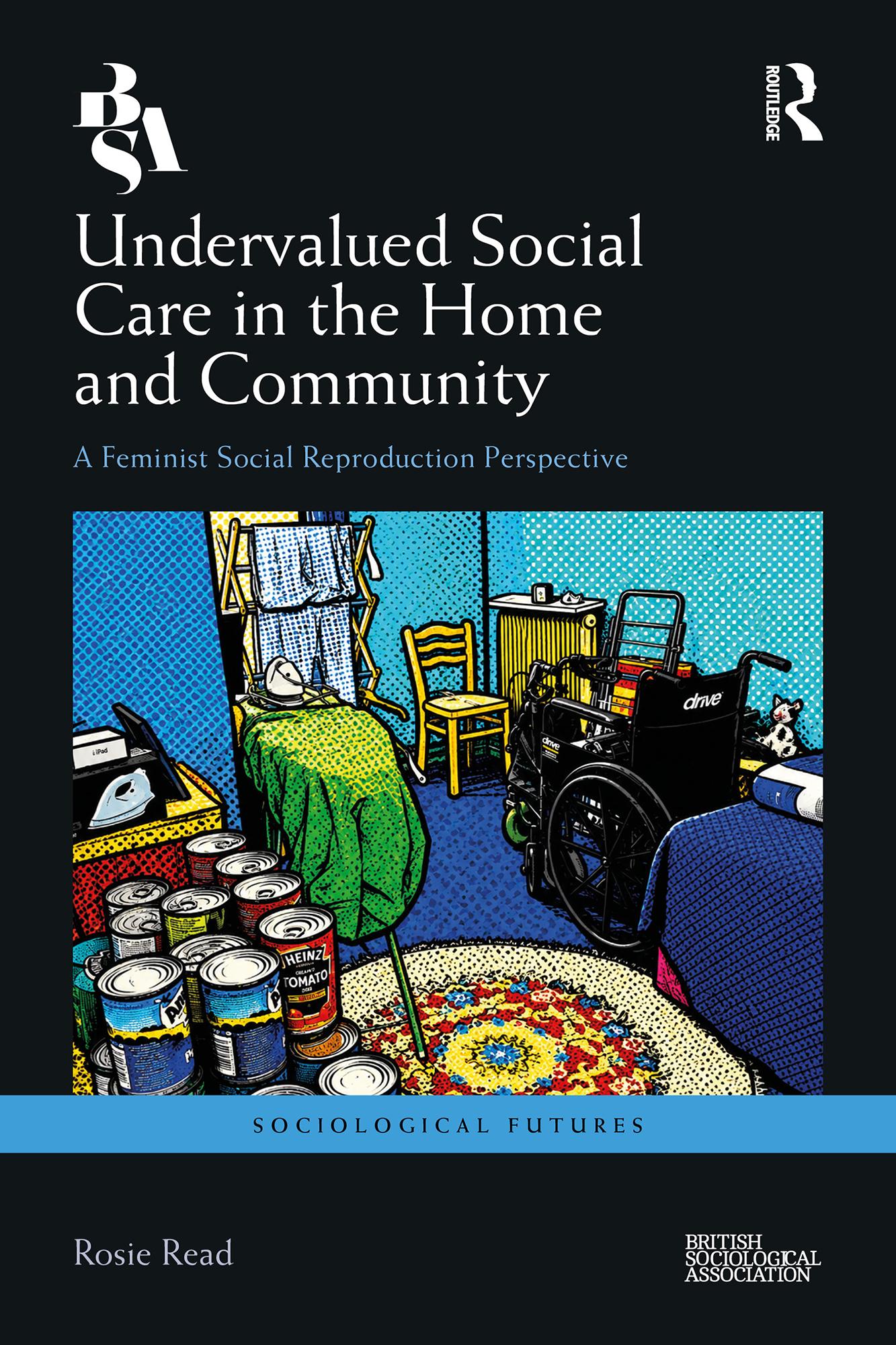
This book develops a fresh approach to understanding social care, by using feminist social reproduction theory to critically assess the undervaluing of waged and unwaged adult social caregiving labour in homes and communities.
Part I makes the case for why the feminist social reproduction approach offers a dynamic and compelling intellectual framework for exploring adult social care in theoretical and historical terms. Feminist social reproduction theory analyses the paradox that caregiving, in sustaining human lives, is both essential for and continually subordinated to capitalist accumulation. The book explores how this core contradiction has shaped the history of adult social care in homes and communities in the UK, from the post-World War II welfare settlement to the present day. Part II comprises a case study of adult social care in a southern English region during the pandemic of 2020–2021 focusing on caregiving infrastructures across households, communities, and home care occupations. It provides detailed insights into how carers, volunteers, and home care workers experienced the contradiction of being simultaneously essential to the sustenance and survival of the older and disabled people they cared for, and yet also poorly compensated, invisibilised, and taken for granted.
The book will be of interest to scholars and students working on care, social reproduction, and feminist theory, from across sociology, social anthropology, social policy, social work, human geography, and history.
Pay easily by card, Klarna, Apple Pay or Google Pay. Not happy? You always have a 14-day money-back guarantee. Read more in our terms. If you have any questions, email us at hello@memmo.org.
Memmo makes studying easier – wherever you are in the world. We bring your course books and smart study tools together in one place: summaries, quizzes, podcasts and flashcards. Plus Ted, your study buddy who answers anything you wonder. Over 50,000 students already study here – built to help you learn faster and stress less.