
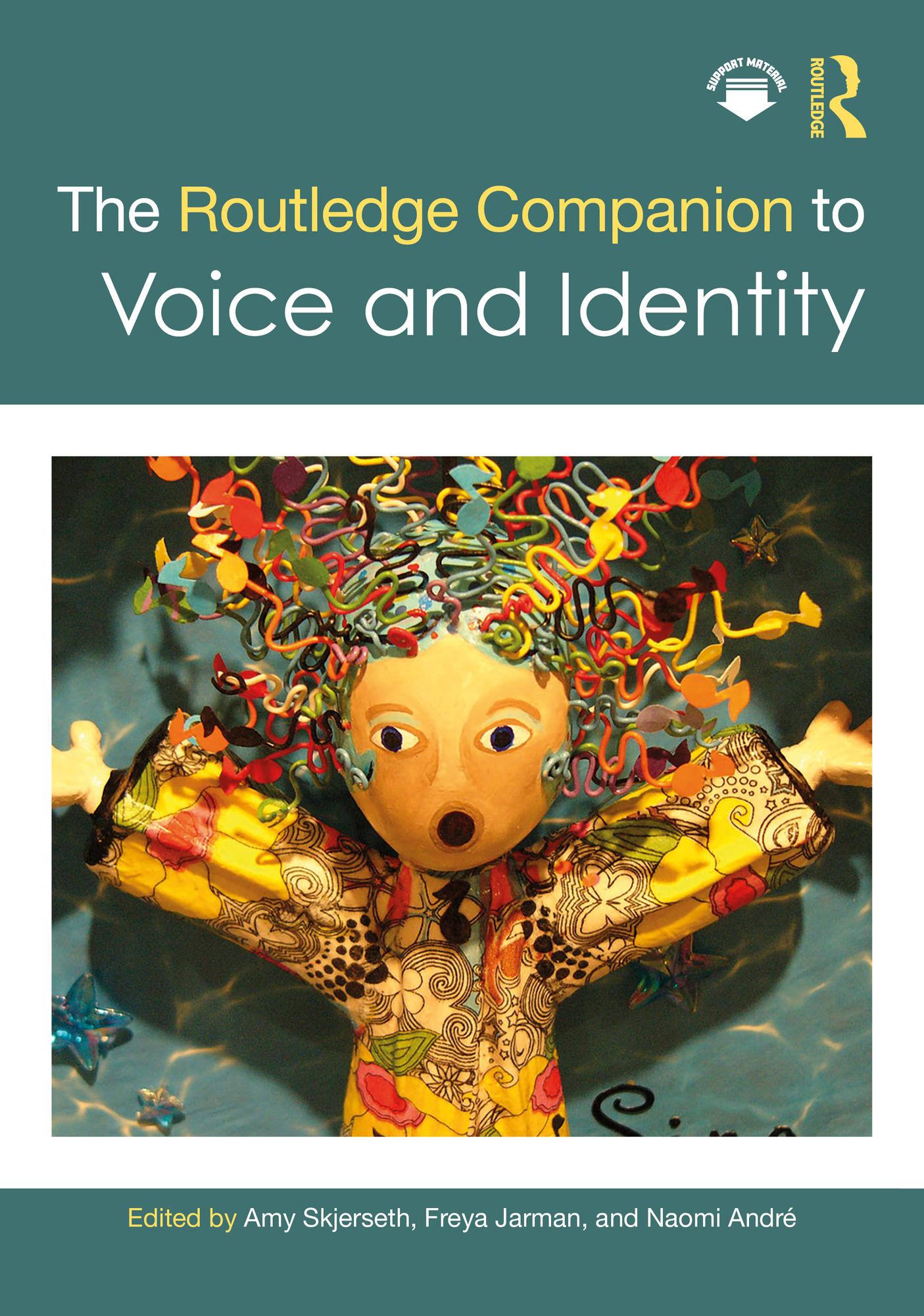
This collection pushes the boundaries of studies and practices of voice–not only past essential, transcendental, and universal notions of voicing, but also to understudied arenas of voice and identity, especially in race, disability, aging, geographical, Indigenous, trans, and other contexts.
The authors and editors understand the voice as existing both in and across contexts. Case studies oscillate between local and global phenomena to ground voicing in temporal, geographical, and political scales. From South African opera singers to Brazilian countertenors, gender-affirming trans voice care to spectrographic and documentary forms of representing voice, and Indigenous film dubbing to embodied performances of American Sign Language, this collection opens up disciplinarily and epistemologically bound topics to ask how vocality works in a multitude of ways for producing meanings around culture and identity. Moreover, this collection engages and emerges from a broad range of academic ranks, artistic practices, geographies, and identities, and engages interviews, multimedia exhibitions, and more. The contributors situate each act of voicing in its place, time, and connections to questions of power, agency, and advocacy.
This book is for scholars and practitioners of voice and voice studies and those interested in the structural–and fluid–aspects of identity. The authors address both historical and cutting-edge issues, imbricating vocality in identity.
Pay easily by card, Klarna, Apple Pay or Google Pay. Not happy? You always have a 14-day money-back guarantee. Read more in our terms. If you have any questions, email us at hello@memmo.org.
Memmo makes studying easier – wherever you are in the world. We bring your course books and smart study tools together in one place: summaries, quizzes, podcasts and flashcards. Plus Ted, your study buddy who answers anything you wonder. Over 50,000 students already study here – built to help you learn faster and stress less.