
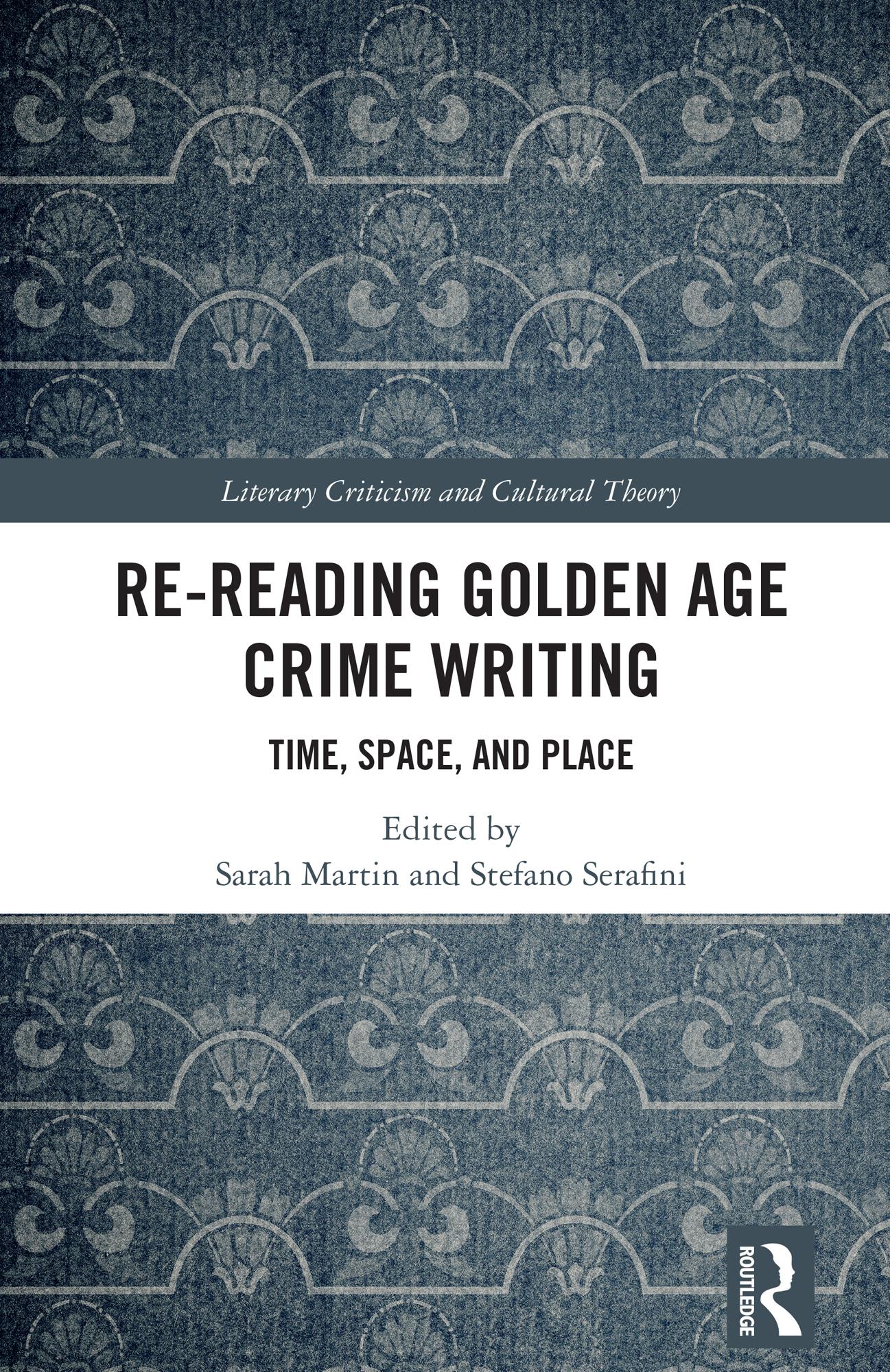
Re-Reading Golden Age Crime Writing: Time, Space, and Place intervenes in debates on crime literature by offering the first sustained analysis of British and American Golden Age fiction, broadly spanning the 1910s to the 1950s, through the interrelated yet analytically distinct frameworks of time, space, and place.
It shows how each dimension shapes both the genre and individual texts and how their interactions generate specific narrative, thematic, and ideological effects. Building on recent scholarship that understands crime fiction as mobile, composite, and open to continual reinterpretation, the volume foregrounds the thematic richness, theoretical sophistication, and experimental energies of Golden Age writing. It proposes a coherent critical framework and flexible set of tools for rethinking the genre. Drawing on paradigms such as Bakhtin’s chronotope, islandness, heterotopia, human geography, hauntology, psychogeography, and spatial discourse analysis, the contributors demonstrate how time, space, and place structure narrative possibility, organise perception, and mediate questions of crime, knowledge, justice and power.
Combining diverse theoretical paradigms, the book reconceptualises Golden Age crime fiction’s formal and ideological complexity and highlights its continuing relevance for contemporary debates about crime, justice, and narrative form.
Pay easily by card, Klarna, Apple Pay or Google Pay. Not happy? You always have a 14-day money-back guarantee. Read more in our terms. If you have any questions, email us at hello@memmo.org.
Memmo makes studying easier – wherever you are in the world. We bring your course books and smart study tools together in one place: summaries, quizzes, podcasts and flashcards. Plus Ted, your study buddy who answers anything you wonder. Over 50,000 students already study here – built to help you learn faster and stress less.