
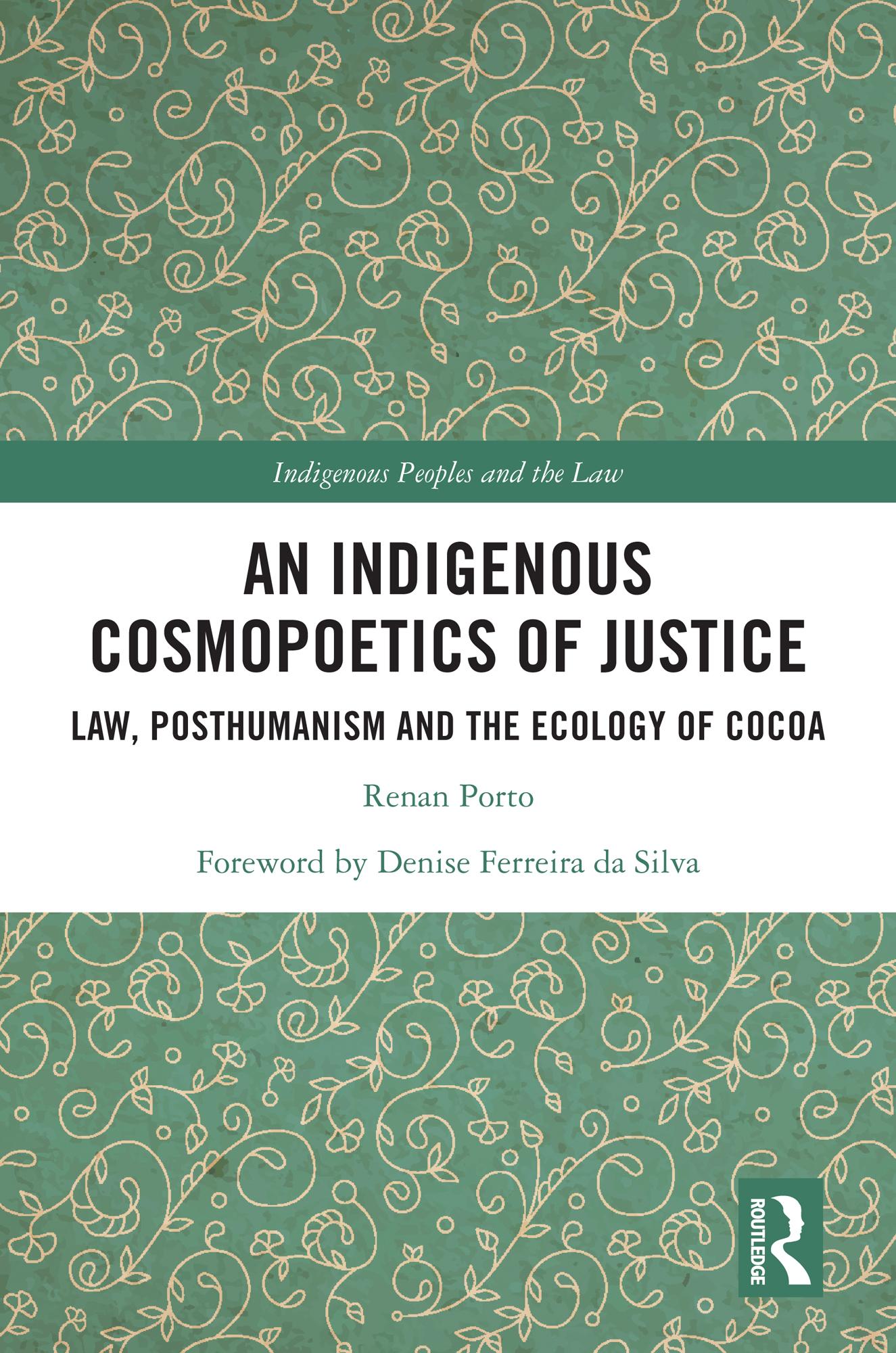
This book examines cocoa farming in northeast Brazil to explore a fundamental question: can ecological relationships create their own form of law?
Through the study of indigenous people and landless workers who use sustainable farming practices to restore damaged lands, the book analyses how humans and nature together create social and ecological systems that function as a kind of "viscous law,” with flexible rules emerging from relationships with the land and its diverse lifeforms. Unlike rigid modern legal systems, this "viscous law" adapts to the realities of cocoa ecology and how it connects people, plants, and animals within global environmental systems. It addresses the practical needs of land rights struggles while recognising relationships that Western legal systems often ignore.
An Indigenous Cosmopoetics of Justice is of interest to legal theorists, as well as those with interests in the areas of indigenous studies, postcolonial studies and ecology.
Pay easily by card, Klarna, Apple Pay or Google Pay. Not happy? You always have a 14-day money-back guarantee. Read more in our terms. If you have any questions, email us at hello@memmo.org.
Memmo makes studying easier – wherever you are in the world. We bring your course books and smart study tools together in one place: summaries, quizzes, podcasts and flashcards. Plus Ted, your study buddy who answers anything you wonder. Over 50,000 students already study here – built to help you learn faster and stress less.