
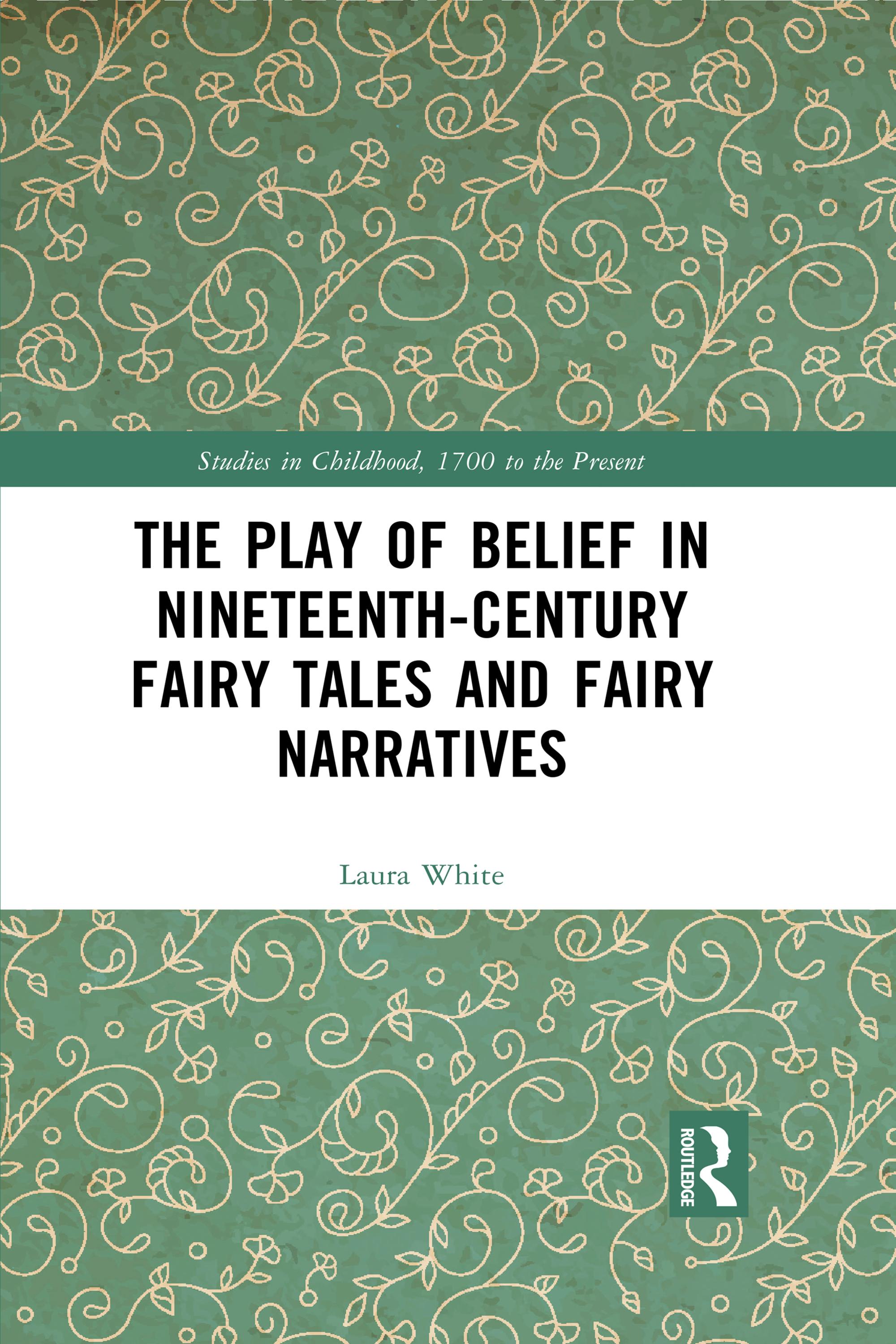
The Play of Belief in Nineteenth-Century Fairy Tales and Fairy Narratives examines the range of playful negotiations with truth claims in British and American fantasies for children of the nineteenth century within the context of the era’s ebbing Christian commitments and competing forces for belief and disenchantment.
While Victorian culture was broadly Christian, its fantasy literature for children shed the explicit piety of writers of earlier generations to embrace magical tales of many stripes. In many ways the story of children’s literature in the nineteenth century is one of a Christian culture disinheriting itself, turning its angels into fairies, its faith into a range of doubts, and blending its Christian ethics with progressive evolutionary ideals. The study shows how authors embraced a wide variety of rhetorical and narrative strategies by which play, ambiguity, and hesitation could suggest what is or is not “real.” Inevitably, such strategies brought disenchantment in their wake, for the more Victorian authors foregrounded the problem of belief, the more they betrayed the nervousness of their own affirmations, especially in the glut of sentiment and frenzied fantasy which typifies fin de siècle fairy tales.
This essential study illuminates the historical nature of children’s literature, making it indispensable reading for scholars of Victorian culture, children's fantasy, and anyone fascinated by the enduring power of fairy tales.
Pay easily by card, Klarna, Apple Pay or Google Pay. Not happy? You always have a 14-day money-back guarantee. Read more in our terms. If you have any questions, email us at hello@memmo.org.
Memmo makes studying easier – wherever you are in the world. We bring your course books and smart study tools together in one place: summaries, quizzes, podcasts and flashcards. Plus Ted, your study buddy who answers anything you wonder. Over 50,000 students already study here – built to help you learn faster and stress less.