
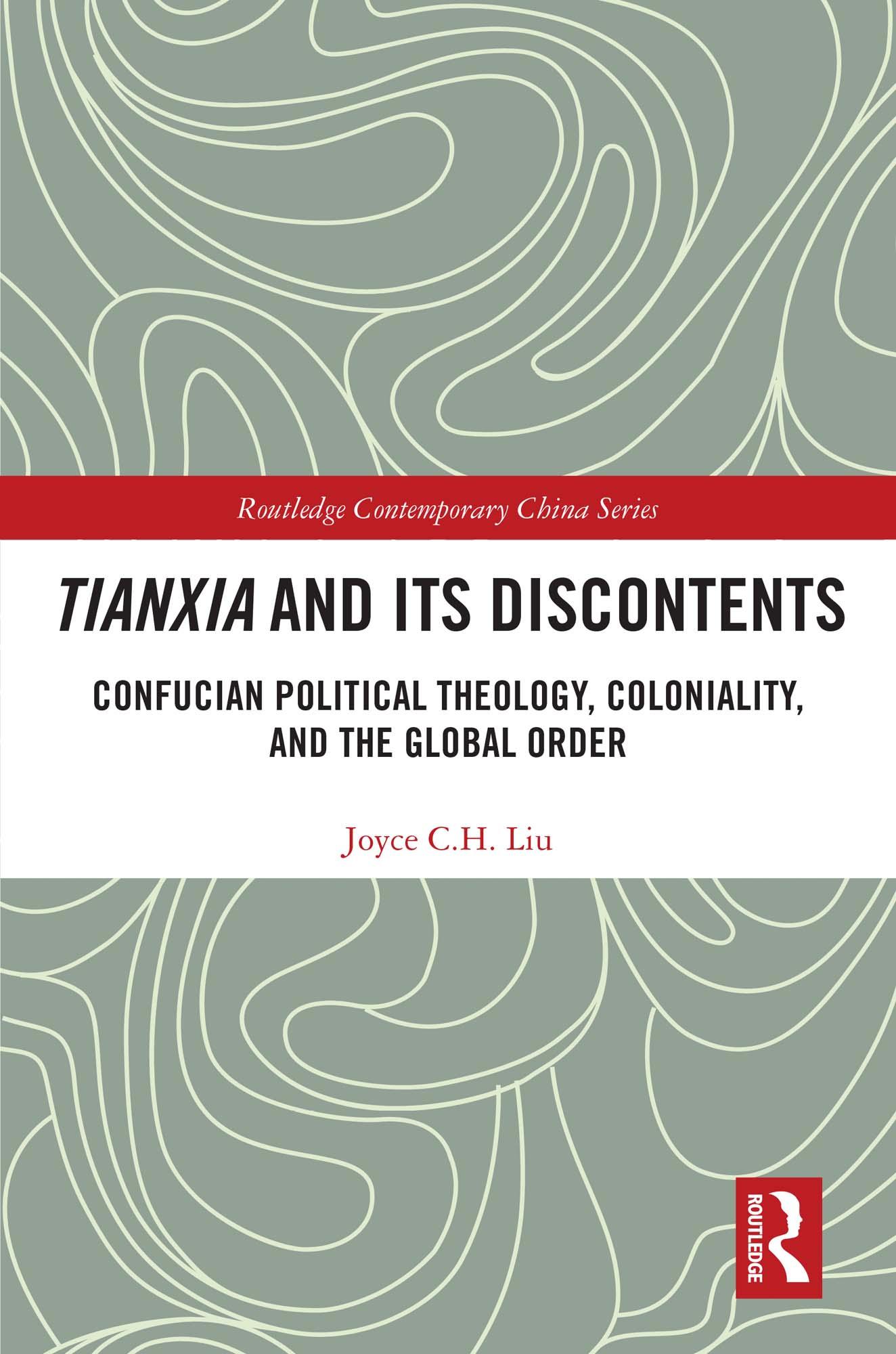
Across imperial histories and contemporary digital infrastructures, Tianxia and Its Discontents challenges the enduring assumption that the Chinese notion of tianxia—“all under heaven”—offers a benign or alternative vision of world order.
It argues instead that Tianxia operates as a colonial dispositif: a mode of power that organises space, hierarchy, and subjectivity while masking domination in the language of moral inclusion.
Rather than countering Western imperialism, Tianxia constitutes a parallel—and increasingly entangled—formation of global domination. In its contemporary mutations, it extends through biopolitics, the economisation of psyche, and regimes of algorithmic governance, where data infrastructures and predictive systems restructure life at a planetary scale. Beneath the rhetoric of harmony, connectivity, and development, the book exposes the emergence of a Digital Tianxia: an infrastructural empire sustained by extraction, illegality, and carceral control
across transnational zones.
Combining theoretical innovation with historically grounded analysis, the book makes a distinctive contribution by developing the concept of surplus (yu 餘) as a method of immanent critique, opening new pathways for rethinking coloniality, governance, and resistance. It will appeal to scholars and advanced students in global studies, political philosophy, Asian history, and media and technology studies, and is well suited for courses on geopolitics, digital governance, and postcolonial theory.
Pay easily by card, Klarna, Apple Pay or Google Pay. Not happy? You always have a 14-day money-back guarantee. Read more in our terms. If you have any questions, email us at hello@memmo.org.
Memmo makes studying easier – wherever you are in the world. We bring your course books and smart study tools together in one place: summaries, quizzes, podcasts and flashcards. Plus Ted, your study buddy who answers anything you wonder. Over 50,000 students already study here – built to help you learn faster and stress less.