
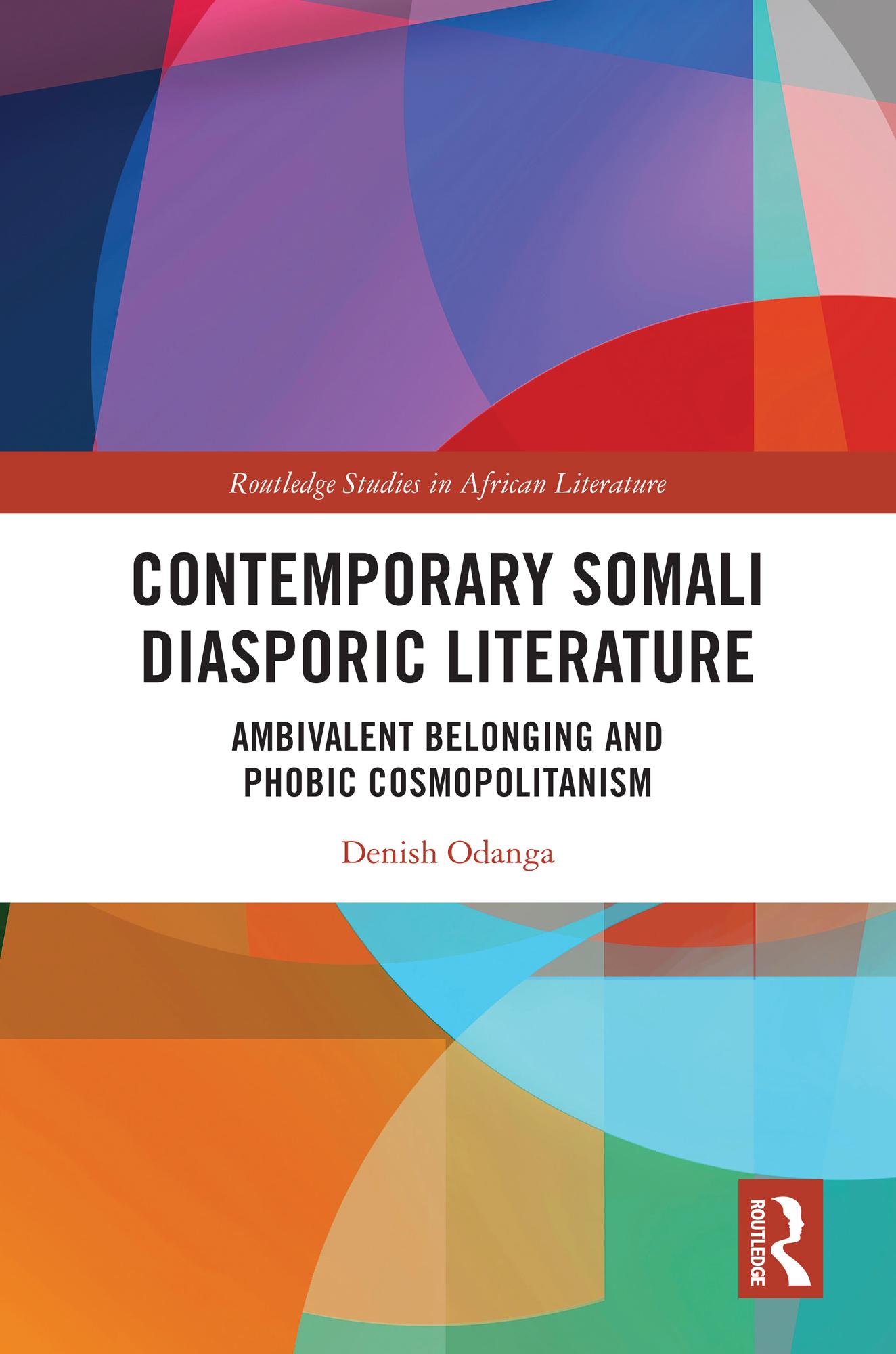
This book considers how the literature of the Somali diaspora deploys themes of ambivalent belonging in cosmopolitan spaces.
The book starts by building a picture of cosmopolitanism thinking from the European Enlightenment through to key postcolonial thinkers like Anthony Appiah, Achille Mbembe, and Arjun Appadurai. However, the book shows that far from a picture of diverse groups coming together in mutual respect, in fact cosmopolitanism is affected by mutual phobias between migrants and their host cultures. These phobias stem from (ethno)racism, Islamophobia, classicism, clannism, xenophobia, and mutual superiority and inferiority complexes. In building this analysis, the book considers key texts from Ayaan Hirsi, Yasmeen Maxamuud, Jonny Steinberg, Nuruddin Farah, and Santur Ghedi, with settings that range from North America, Canada, Norway, Holland, Germany, South Africa, Saudi Arabia to East Africa.
Considering literature on the Somali diaspora within the context of major cosmopolitan theories and postcolonial inflexions, this book is an important contribution to contemporary sociopolitical conversations, and will be of interest to researchers across literary and cultural studies.
Pay easily by card, Klarna, Apple Pay or Google Pay. Not happy? You always have a 14-day money-back guarantee. Read more in our terms. If you have any questions, email us at hello@memmo.org.
Memmo makes studying easier – wherever you are in the world. We bring your course books and smart study tools together in one place: summaries, quizzes, podcasts and flashcards. Plus Ted, your study buddy who answers anything you wonder. Over 50,000 students already study here – built to help you learn faster and stress less.