
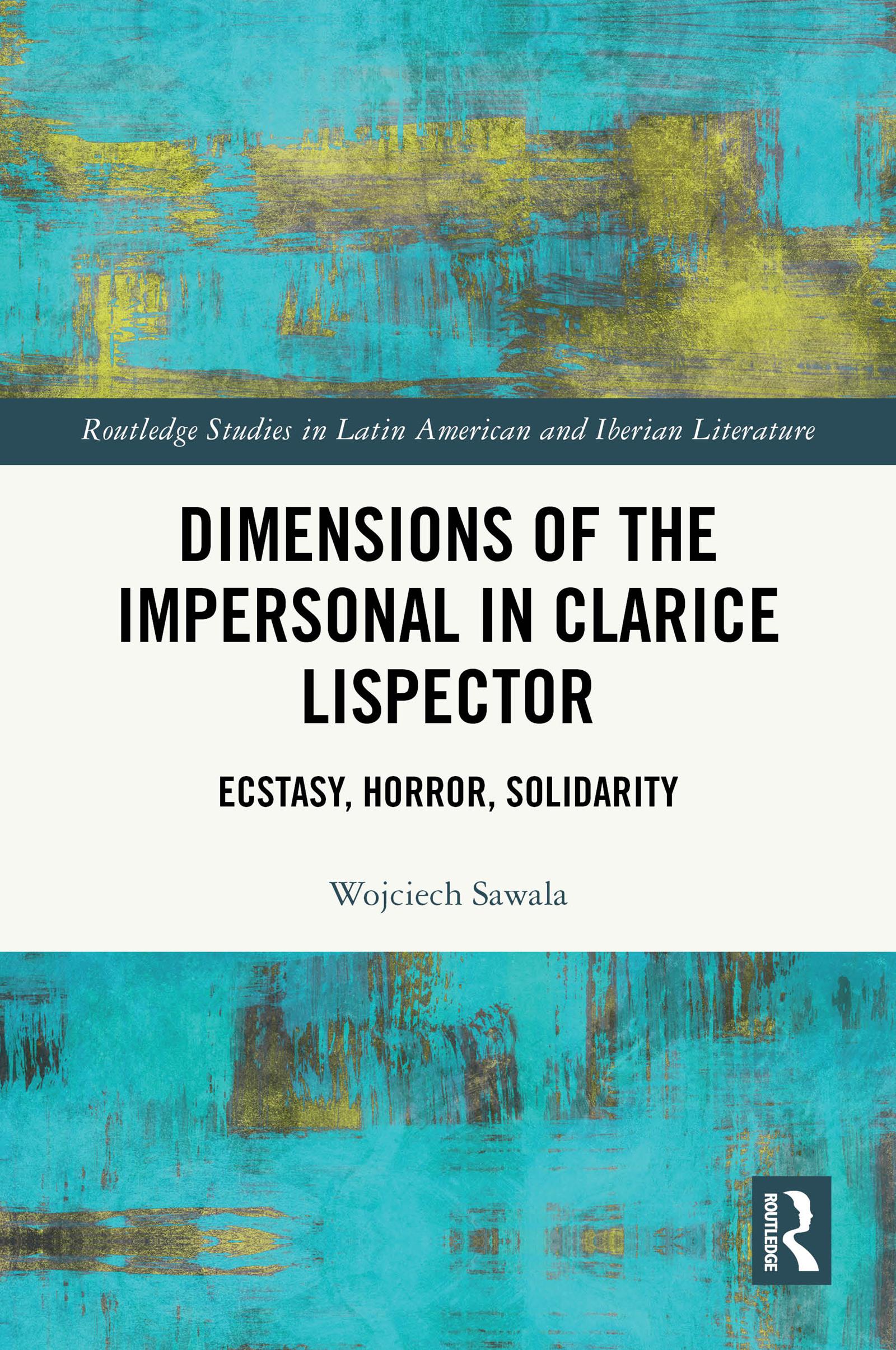
This book explores the fictional work of Clarice Lispector (1920–1977), the eminent twentieth-century Brazilian writer. It employs the theoretical framework of "affirmative biopolitics" by Roberto Esposito, engaging with Michel Foucault and Giorgio Agamben, alongside voices like Mircea Eliade, Anthony Giddens, and Agata Bielik-Robson. The focus is on rethinking and valuing “impersonality,” crucial for understanding the anthropological, metaphysical, ethical, and political implications in Lispector's works. The main thesis posits that Lispector’s writings, from journalistic chronicles to significant books like The Passion According to G.H., present a complex anthropological vision marked by an ontological and ethical “deadlock” between personality and impersonality. This vision suggests that humans are trapped in a personal mode of existence, separated from their ontological essence, leading to a metaphysical guilt. The book analyzes this deadlock both in individual and communal-political contexts, highlighting the cryptotheological dimension in Lispector’s mystical and messianic themes rooted in Jewish tradition.
Pay easily by card, Klarna, Apple Pay or Google Pay. Not happy? You always have a 14-day money-back guarantee. Read more in our terms. If you have any questions, email us at hello@memmo.org.
Memmo makes studying easier – wherever you are in the world. We bring your course books and smart study tools together in one place: summaries, quizzes, podcasts and flashcards. Plus Ted, your study buddy who answers anything you wonder. Over 50,000 students already study here – built to help you learn faster and stress less.