
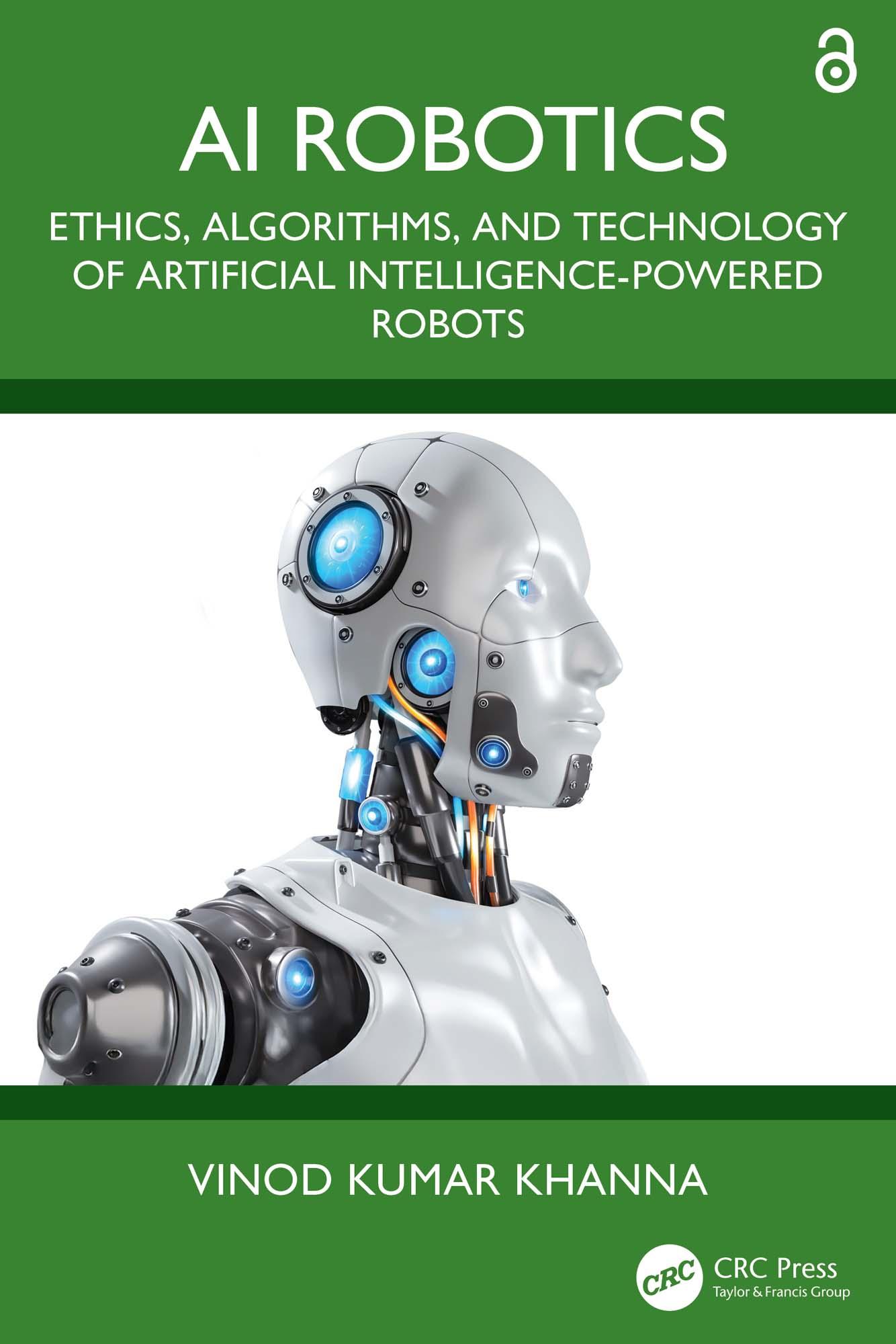
Artificial intelligence (AI) robots can learn from their experiences, make decisions in real time, understand natural language and human gestures, and utilize computer vision to perceive and comprehend their environments. Beginning with the rudimentary concepts of AI, AI Robotics: Ethics, Algorithms, and Technology of Artificial Intelligence-Powered Robots explores the intersection of robotics and physics and emphasizes the need for strict adherence to ethical principles in relation to overall progress and the development of humankind. Chapters on robots capable of talking, listening, and visual perception similar to human beings are followed by discussions of those that display emotional intelligence. This book also discusses task and motion planning, a set of methods that help robot hardware achieve high-level goals by breaking down tasks into smaller, more manageable steps. Lastly, the text describes autonomous robots that can make independent decisions and execute tasks on their own, utilizing sensors and AI-enabled software programmed with predefined guidelines and data. Examples of autonomous robots are presented in a chapter on robot swarms that operate in a decentralized, self-organizing manner through local communication to manage disaster relief, search-and-rescue operations, warehouse logistics, agricultural practices, and environmental exploration. Offering an up-to-date, expansive, and comprehensive treatment of the vast interdisciplinary field of AI robotics, this book will be an invaluable resource for postgraduate and doctorate students as well as academic researchers and professional engineers working on AI-enabled robotics.
The Open Access version of this book, available at https://www.taylorfrancis.com, has been made available under a Creative Commons Attribution-Non Commercial-No Derivatives (CC-BY-NC-ND) 4.0 license.
Key Features
- Explores the research frontiers and advancements leveraged by integrating AI with robotics
- Highlights the unique challenges faced in robot vision and speech recognition vis-à-vis computer vision and standard speech processing
- Provides a state-of-the-art overview of emotional recognition, task and motion planning, and coordinated functioning of robots in multi-robot systems
Pay easily by card, Klarna, Apple Pay or Google Pay. Not happy? You always have a 14-day money-back guarantee. Read more in our terms. If you have any questions, email us at hello@memmo.org.
Memmo makes studying easier – wherever you are in the world. We bring your course books and smart study tools together in one place: summaries, quizzes, podcasts and flashcards. Plus Ted, your study buddy who answers anything you wonder. Over 50,000 students already study here – built to help you learn faster and stress less.