
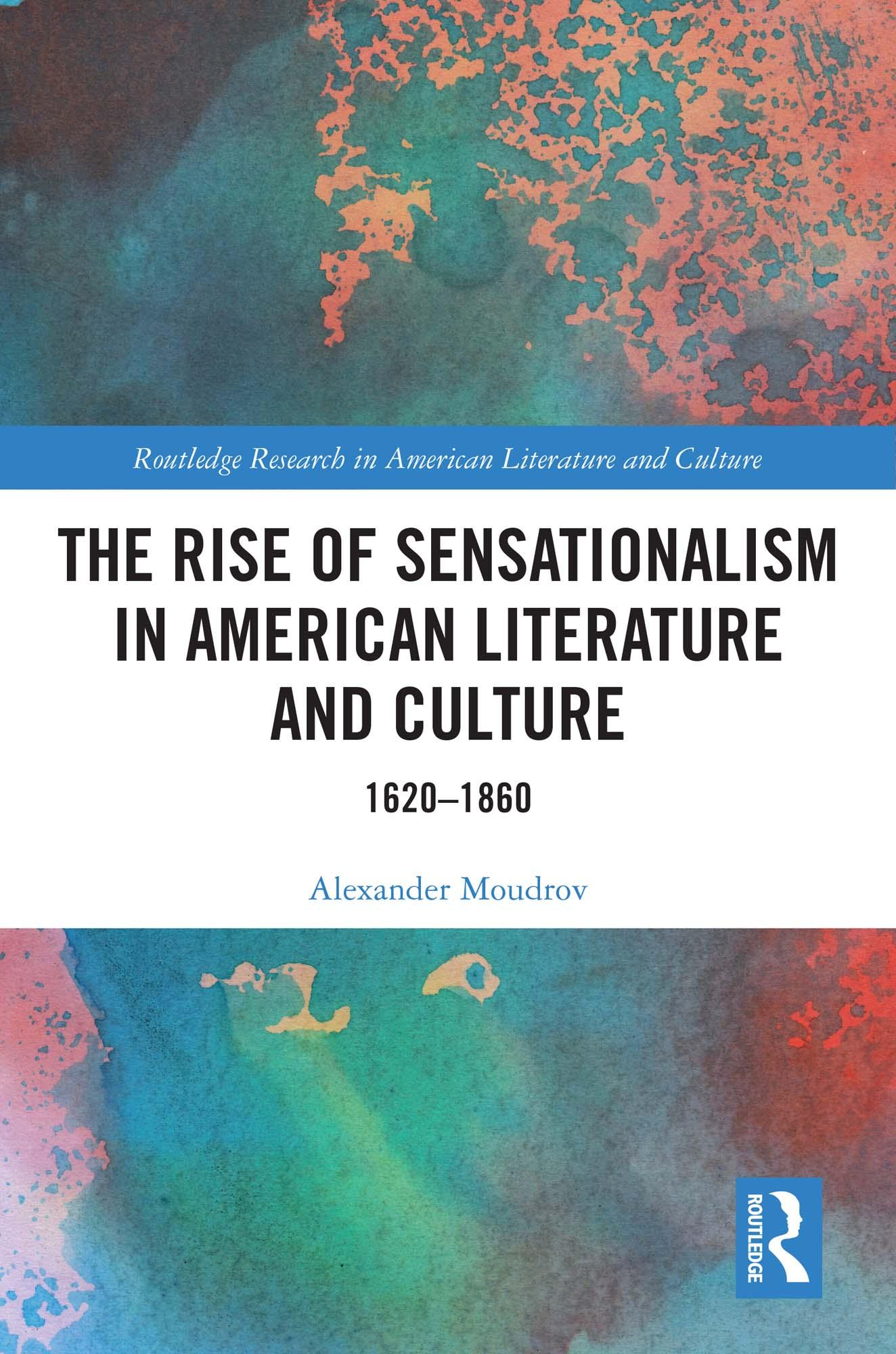
The Rise of Sensationalism in American Literature and Culture: 1620‑1860 argues that the rise of the American tradition of sensationalism can be better understood in the transatlantic context. Early American writers were unquestionably influenced by various forms of European sensationalism. At the same time, they often felt compelled to distance themselves from their European counterparts whom they accused of promoting voyeuristic indulgence in the scandalous and demoralizing their readers. American writers typically claimed that they turned to the scandalous only to promote legitimate religious, political, and social causes. In this respect, their approach reflected the Puritan tradition of didactic sensationalism in which provocative themes (religious dissent, crime, and sex scandals) were routinely exploited in ostensibly well‑intentioned publications (sermons, crime reports, and journalism). What is remarkable about the antebellum period is that it saw a dramatic transformation of American sensationalist literature as popular writers started to incorporate elements of European sensationalism while trying to preserve the didactic conventions of their predecessors.
Pay easily by card, Klarna, Apple Pay or Google Pay. Not happy? You always have a 14-day money-back guarantee. Read more in our terms. If you have any questions, email us at hello@memmo.org.
Memmo makes studying easier – wherever you are in the world. We bring your course books and smart study tools together in one place: summaries, quizzes, podcasts and flashcards. Plus Ted, your study buddy who answers anything you wonder. Over 50,000 students already study here – built to help you learn faster and stress less.