
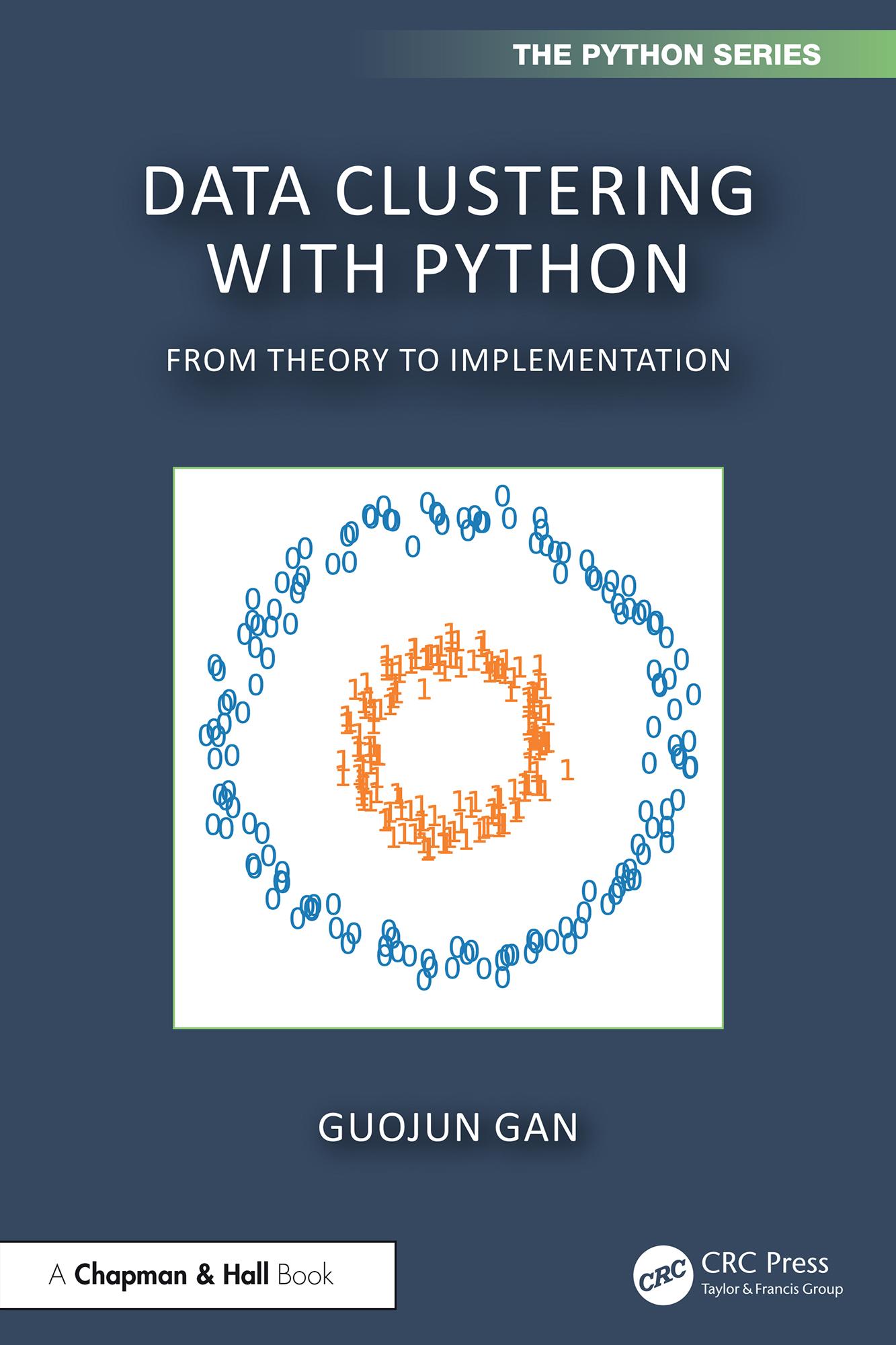
Data clustering, an interdisciplinary field with diverse applications, has gained increasing popularity since its origins in the 1950s. Over the past six decades, researchers from various fields have proposed numerous clustering algorithms. In 2011, I wrote a book on implementing clustering algorithms in C++ using object-oriented programming. While C++ offers efficiency, its steep learning curve makes it less ideal for rapid prototyping. Since then, Python has surged in popularity, becoming the most widely used programming language since 2022. Its simplicity and extensive scientific libraries make it an excellent choice for implementing clustering algorithms.
Features:
- Introduction to Python programming fundamentals
- Overview of key concepts in data clustering
- Implementation of popular clustering algorithms in Python
- Practical examples of applying clustering algorithms to datasets
- Access to associated Python code on GitHub
This book extends my previous work by implementing clustering algorithms in Python. Unlike the object-oriented approach in C++, this book uses a procedural programming style, as Python allows many clustering algorithms to be implemented concisely. The book is divided into two parts: the first introduces Python and key libraries like NumPy, Pandas, and Matplotlib, while the second covers clustering algorithms, including hierarchical and partitional methods. Each chapter includes theoretical explanations, Python implementations, and practical examples, with comparisons to scikit-learn where applicable.
This book is ideal for anyone interested in clustering algorithms, with no prior Python experience required. The complete source code is available at: https://github.com/ganml/dcpython.
Pay easily by card, Klarna, Apple Pay or Google Pay. Not happy? You always have a 14-day money-back guarantee. Read more in our terms. If you have any questions, email us at hello@memmo.org.
Memmo makes studying easier – wherever you are in the world. We bring your course books and smart study tools together in one place: summaries, quizzes, podcasts and flashcards. Plus Ted, your study buddy who answers anything you wonder. Over 50,000 students already study here – built to help you learn faster and stress less.