
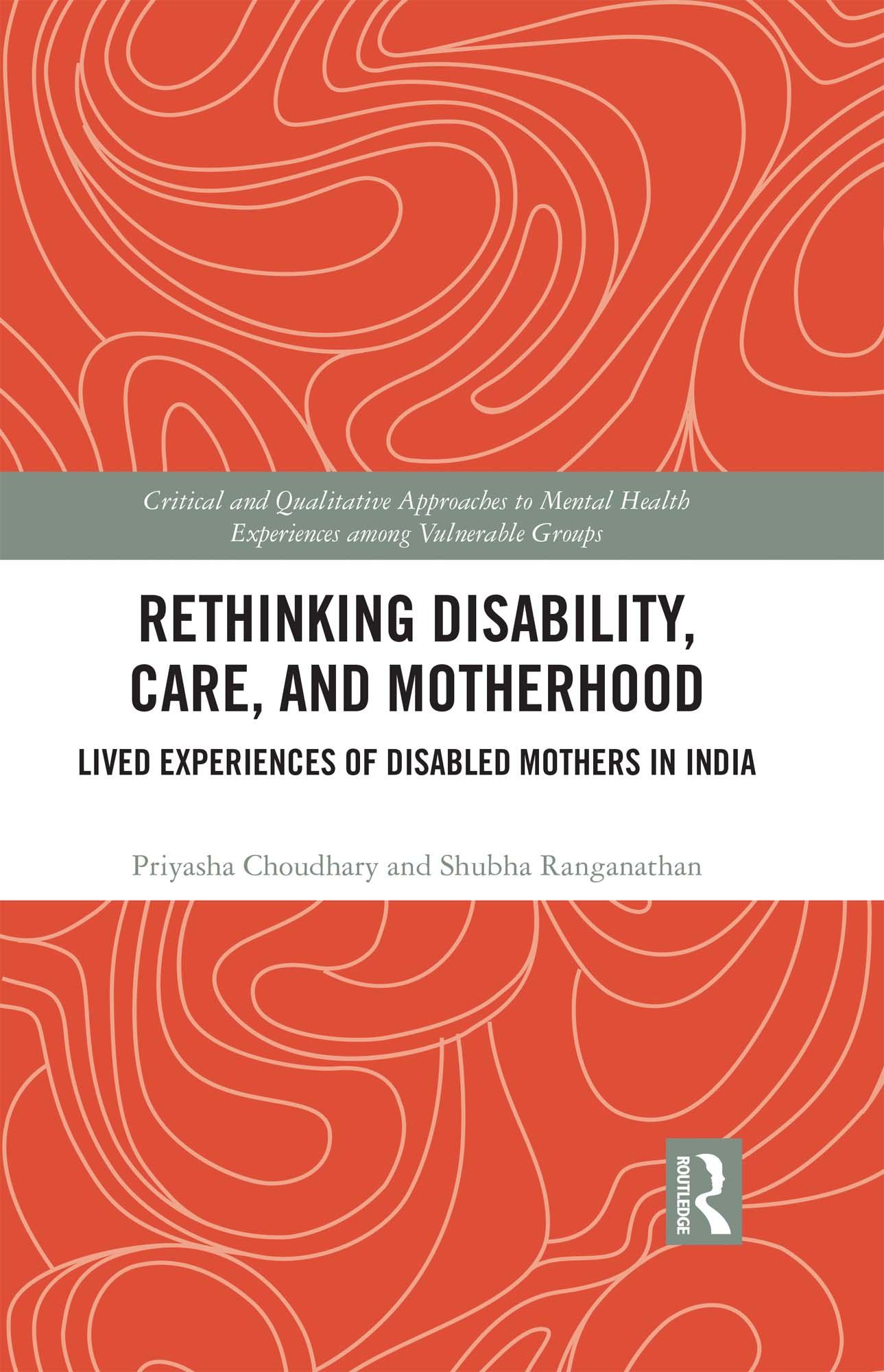
This book focuses on the lived realities of disabled mothers to examine how they navigate their multiple competing responsibilities and identities. It reimagines normative constructions of motherhood, dependency, and care while rethinking advocacy and resistance, in the context of disability, gender, and mental health. It essentially argues that disabled women negotiate a delicate balancing act: they constantly work at proving their competence, even as they push the boundaries of normative femininity.
The book is grounded in qualitative research on disabled mothers. In these conversations, disabled mothers described various aspects of their motherhood journey, ranging from their interactions with society to their daily experiences within the household. Drawing from critical disability studies, critical psychology, care theory, and feminist scholarship, this interdisciplinary volume elaborates on the everyday situations that disabled mothers encounter and the strategies they engage in to provide care for their children.
This book will be relevant for students and scholars in disability studies, psychology, gender studies, development studies, medical anthropology and sociology, and medical humanities, among others. Further, the use of case studies makes it an essential read for practitioners and policymakers. Recognising the political significance of ‘plain language’ in disability studies, the book’s accessible language will appeal to academic, lay, and practitioner audiences.
Pay easily by card, Klarna, Apple Pay or Google Pay. Not happy? You always have a 14-day money-back guarantee. Read more in our terms. If you have any questions, email us at hello@memmo.org.
Memmo makes studying easier – wherever you are in the world. We bring your course books and smart study tools together in one place: summaries, quizzes, podcasts and flashcards. Plus Ted, your study buddy who answers anything you wonder. Over 50,000 students already study here – built to help you learn faster and stress less.