
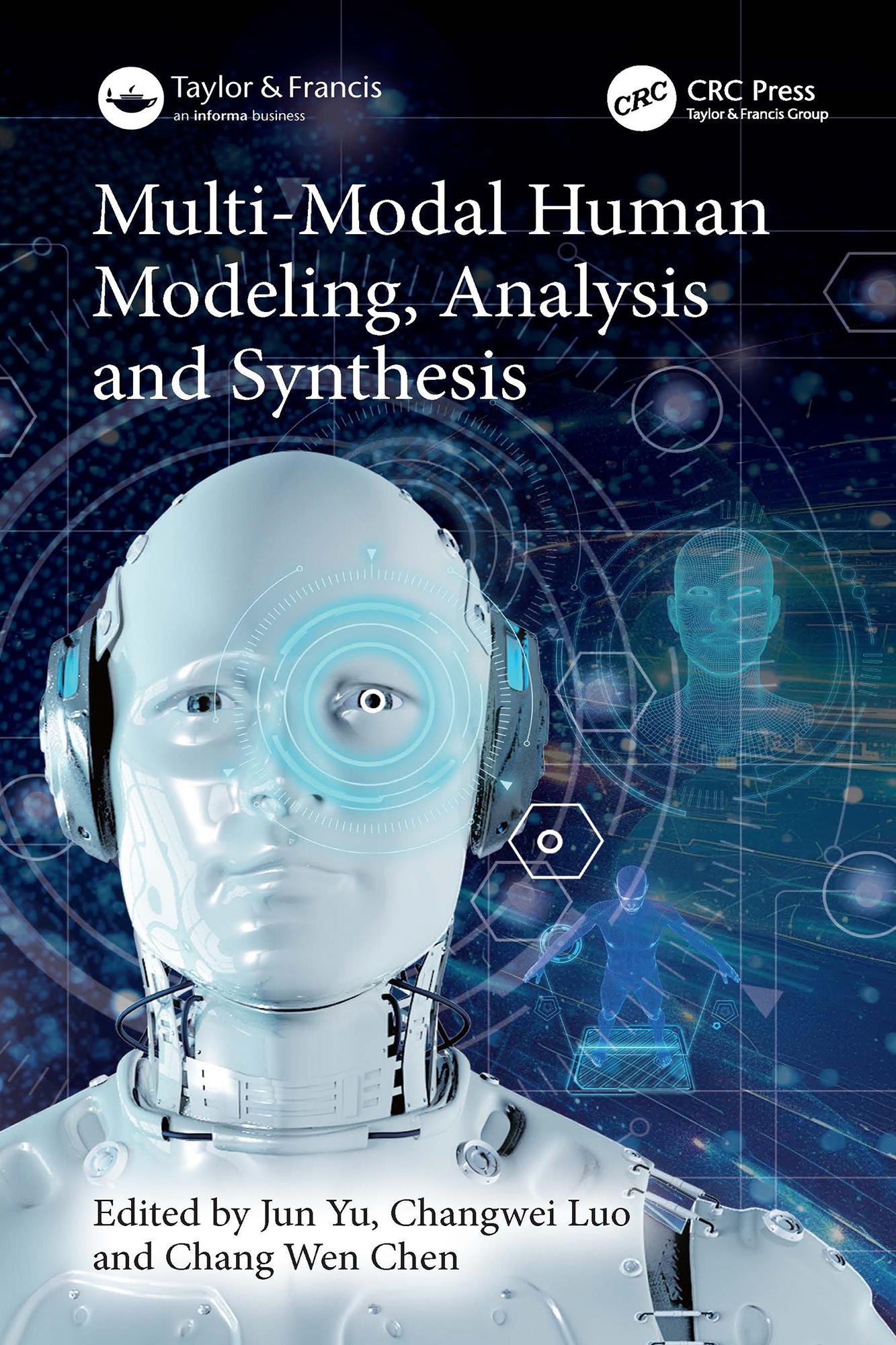
In today’s world, where intelligent technologies are deeply transforming human-computer interaction and virtual reality, multi-modal human modeling, analysis and synthesis have become central topics in computer vision. As application scenarios grow increasingly complex, new technologies continue to emerge to address these challenges. These techniques demand systematic summarization and practical guidance.
To meet this need, Multi-Modal Human Modeling, Analysis and Synthesis aims to adopt a structured perspective, building a comprehensive technical framework for multi-modal human modeling, analysis and synthesis—progressing from local details to holistic perspectives, and from face features to body dynamics.
This book begins by examining the anatomy structures and characteristics of human faces and bodies, then analyzes how traditional methods and deep learning approaches provide robust optimization solutions for modeling. For example, it explores how to address challenges in face recognition caused by lighting changes, occlusions, face expressions and aging, as well as methods for body localization, reconstruction, recognition and anomaly detection in multi-modal scenarios. It also explains how multi-modal data can drive realistic face and body synthesis. A standout feature is its focus on Huawei’s MindSpore framework, bridging the gap between algorithms and engineering through practical case studies. From building face detection and recognition pipelines with the MindSpore toolkit to accelerating model training via automatic parallel computing, and solving large language model (LLM) training challenges, each step is supported by reproducible code and design logic.
Designed for researchers and engineers in computer vision and AI, this book balances theoretical foundations with industry-ready technical details. Whether you aim to enhance the reliability of biometric recognition, explore creative possibilities in virtual-real interactions or optimize the deployment of deep learning frameworks, this guide serves as an essential link between academic advancements and real-world applications.
Pay easily by card, Klarna, Apple Pay or Google Pay. Not happy? You always have a 14-day money-back guarantee. Read more in our terms. If you have any questions, email us at hello@memmo.org.
Memmo makes studying easier – wherever you are in the world. We bring your course books and smart study tools together in one place: summaries, quizzes, podcasts and flashcards. Plus Ted, your study buddy who answers anything you wonder. Over 50,000 students already study here – built to help you learn faster and stress less.