
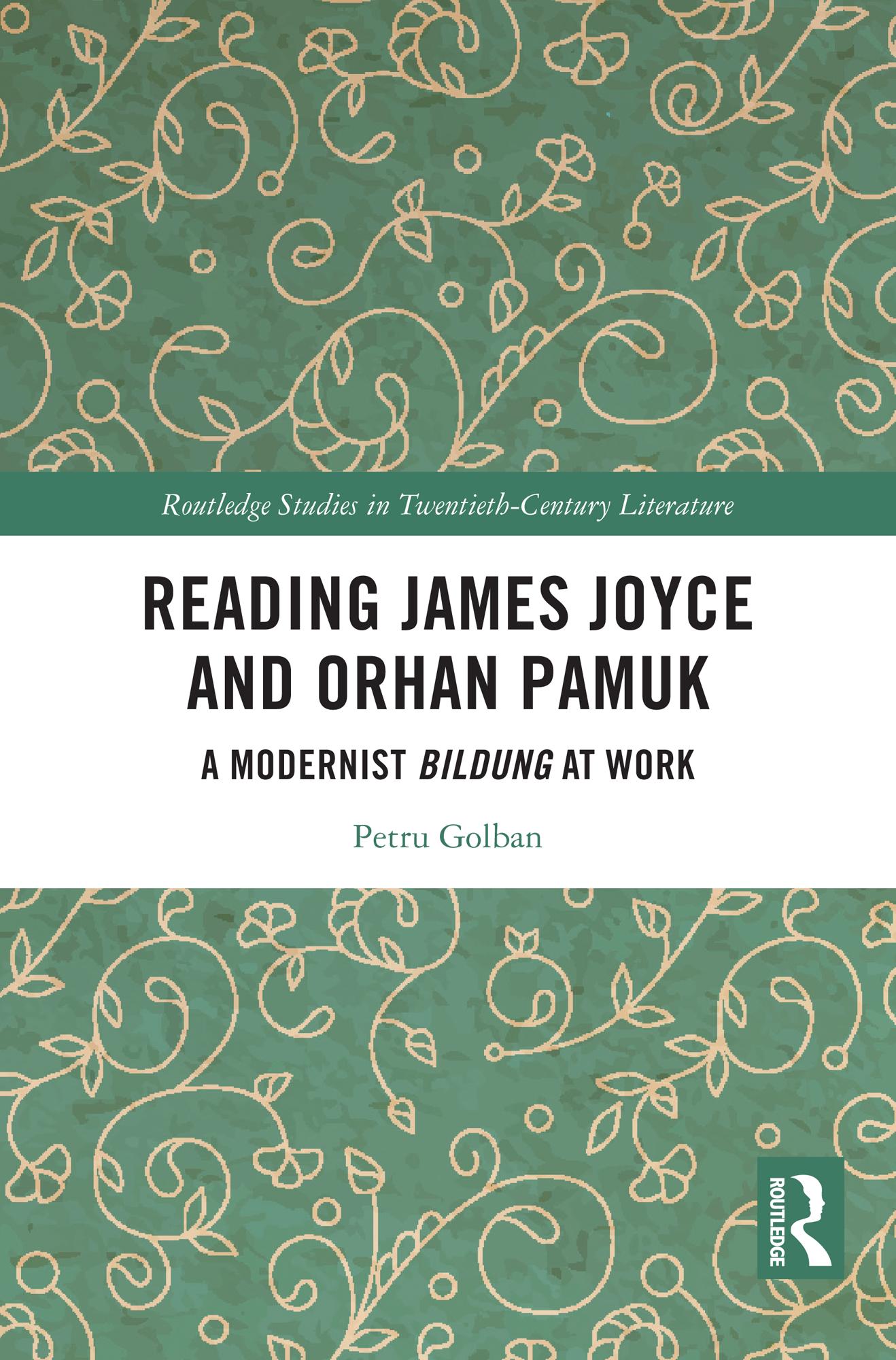
Reading James Joyce and Orhan Pamuk reveals how by embracing the idea that an individual subject and history (of a nation and the city) mutually shape identities as formative processes, James Joyce and Orhan Pamuk create “portraits” adapting bildung to chart the becoming of the protagonist alongside the development of a nation of people emerging from and redefining themselves in the waning years of the empire (as for Joyce) or some decades after the end of the empire (as for Pamuk). Their life narratives encompassing artistic formation act as metaphors for the emergence of an independent (in Joyce) or new (in Pamuk) nation from imperial rule, but in asserting a modernist standing, both Joyce and Pamuk, the latter from a metamodernist perspective with his emphasis on the hüzün, “beauty”, and “hidden symmetry” of the text, remind us of something else, too. To understand the literary work, one needs the frameworks of ideas contemporary and not only to it, but the reader of the present book will re/discover that modernism teaches us that the value and use of art are to do with appropriating individual inward in order to inform what is profoundly human, or art is dulce rather than utile advancing formalism rather than moralizing, or formalist artfulness diffusing pleasure of visceral, delightful artistic comprehension rather than monumentality. Ultimately, art sparks off beauty and is about perpetuating recognizable experiences, but modernism favours the use of the literary work to be also in its having always something new and different to say. Modernism advocates the value that the literary work has in the end to reside in its identity as a literary work (product of art), and this identity prevails over its task of offering as an informative or pedagogical tool, via verisimilitude of reconstructed historical documents and recordings, a mere surrogate of some reasserted meanings and essences for various personal and communal experiences.
Pay easily by card, Klarna, Apple Pay or Google Pay. Not happy? You always have a 14-day money-back guarantee. Read more in our terms. If you have any questions, email us at hello@memmo.org.
Memmo makes studying easier – wherever you are in the world. We bring your course books and smart study tools together in one place: summaries, quizzes, podcasts and flashcards. Plus Ted, your study buddy who answers anything you wonder. Over 50,000 students already study here – built to help you learn faster and stress less.