
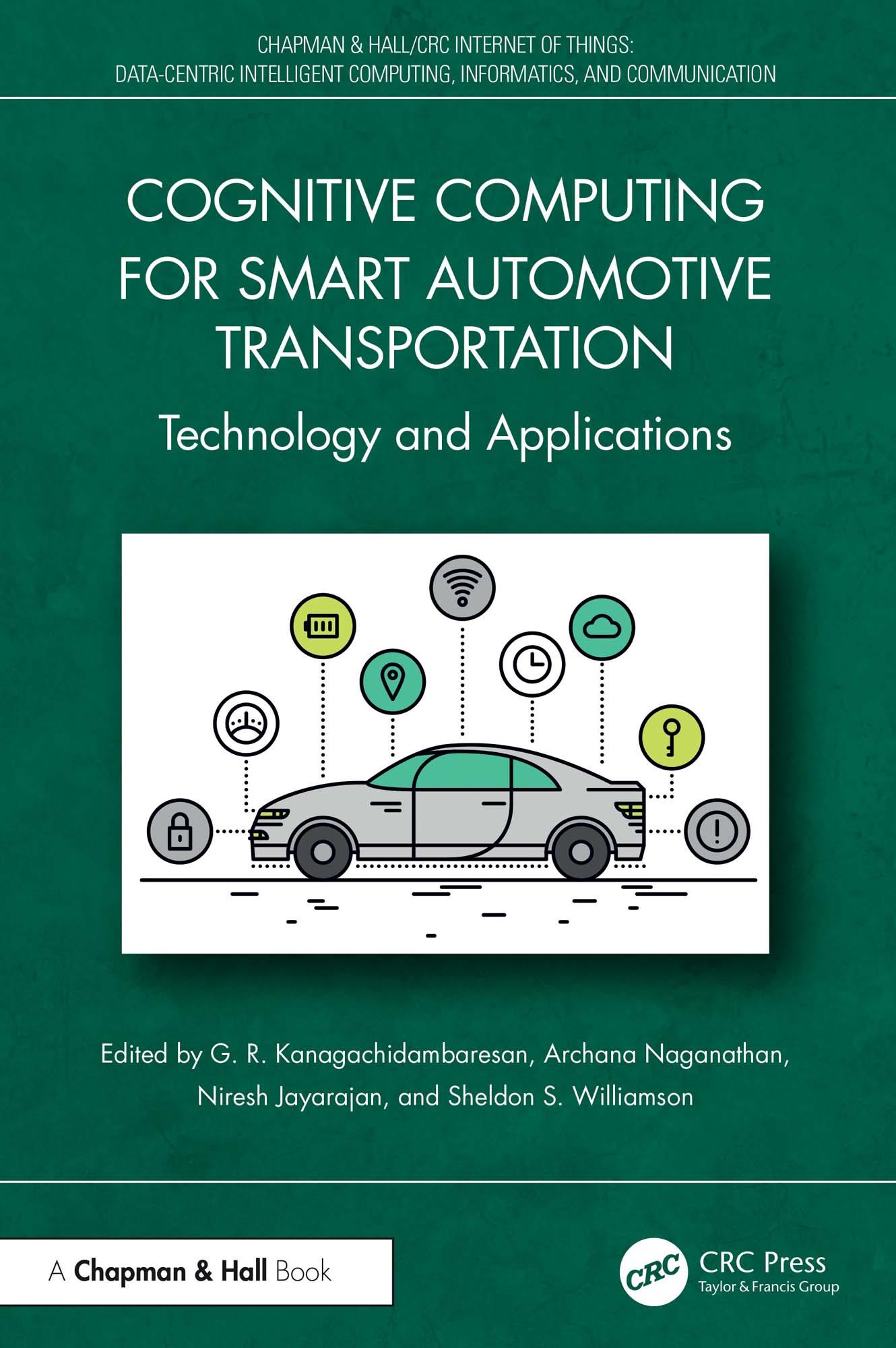
This reference book explores the integration of cognitive computing technologies in the automotive industry to enhance smart transportation systems. It focuses on how AI, machine learning, and data analytics can improve vehicle automation, safety, and efficiency. Automation can support driverless vehicle transportation and bridge the gap between manual control and fully automated navigation systems. The text introduces a discussion on numerous applications of cognitive computing in smart transportation, motion planning, situation awareness, dynamic driving, adaptive behavior, human intent measurement, and predictive analysis.
Key Features:
• Discusses basic concepts and architecture of cognitive computing for vehicular systems.
• Presents technologies to measure human intent for vehicle safety, including emergency management systems (EMS).
• Covers the perception and localization processes in autonomous driving through LiDAR, GPS, and Stereo vision data with critical decision‑making and simulation results.
• Elucidates the application of motion planning for smart transportation.
• Covers visual perception technologies for advanced driver assistance systems (ADAS) through deep learning.
The text is primarily written for graduate students, academic researchers, and professionals in the fields of computer science, electrical engineering, automotive engineering, and civil engineering.
Pay easily by card, Klarna, Apple Pay or Google Pay. Not happy? You always have a 14-day money-back guarantee. Read more in our terms. If you have any questions, email us at hello@memmo.org.
Memmo makes studying easier – wherever you are in the world. We bring your course books and smart study tools together in one place: summaries, quizzes, podcasts and flashcards. Plus Ted, your study buddy who answers anything you wonder. Over 50,000 students already study here – built to help you learn faster and stress less.