
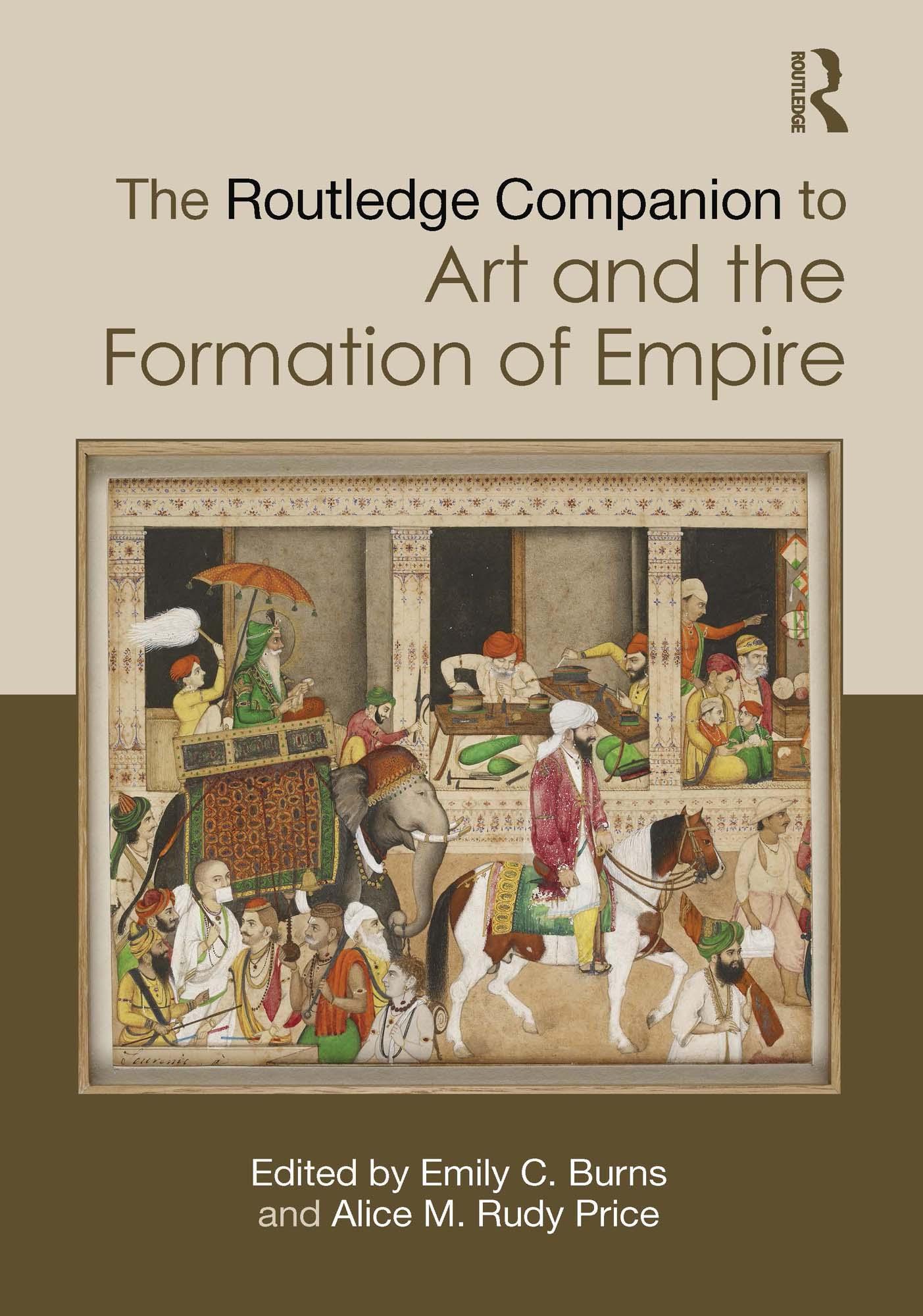
This companion comprises essays that analyze interactions between art and global imperial relationships from 1800 to World War II.
The essays in this volume expose and add to historical layers of meaning in their discussions of art and empire. Found across much of the globe, sites of sedimentary rock allegorize the dynamics of art and empire and frame the section structure for this book. Twenty‑two authors unpack imperial layers in a variety of global and historical contexts through case studies that center art and visual and material culture. The authors show how art and aesthetics have operated as tools of empire. Interpreting a comprehensive array of media as well as inter‑media dialogues, they analyze and intervene in how we remember and examine entwinements between empire and aesthetic practices. In this volume’s attention to the role of art in imperial formation, as well as the legacy of colonization, the essays disentangle sediments of culture as they are moved and shaped by homogenizing forces of empire, showing that the aesthetics of empire inflect not only individuals, makers, and economies, but also practices of circulation and collecting.
The book will be of interest to graduate students, researchers, and professors and may be used in classes focused on art history, imperialism, and colonialism.
Pay easily by card, Klarna, Apple Pay or Google Pay. Not happy? You always have a 14-day money-back guarantee. Read more in our terms. If you have any questions, email us at hello@memmo.org.
Memmo makes studying easier – wherever you are in the world. We bring your course books and smart study tools together in one place: summaries, quizzes, podcasts and flashcards. Plus Ted, your study buddy who answers anything you wonder. Over 50,000 students already study here – built to help you learn faster and stress less.