
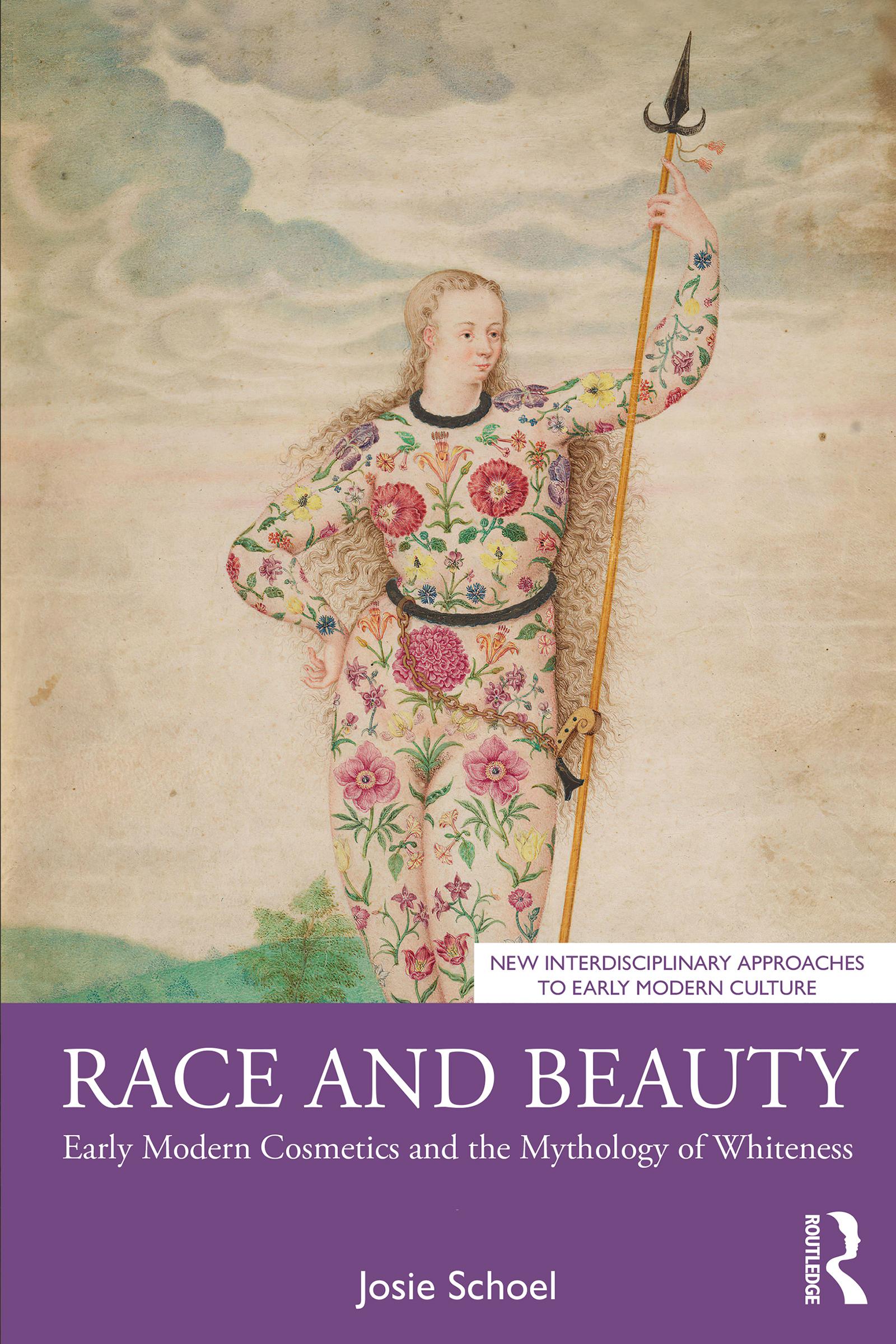
This work examines how beauty standards, specifically the ideology of "fairness", contributed to the racialization of bodies in early modern England. Schoel emphasizes the need to dismantle whiteness’s invisibility in historical criticism, noting that it has long been an unexamined norm. By focusing on the materiality of cosmetic whiteness, the text aims to disrupt colorblind ideologies and reveal the mechanisms behind white supremacy.
Drawing on diverse texts like sonnets, travel literature, and medical treatises, the book discusses how light skin and hair were idealized, symbolizing Christian virtue and femininity. This rhetoric of fairness not only promoted racial hierarchies but also constructed whiteness through cosmetics like whitening creams and exfoliants. These practices, associated with Queen Elizabeth I's image and widely reproduced in theater, medicine, and household texts, led to a "cult of whiteness". The locus of the cult was Queen Elizabeth I, whose materially constructed reds and whites in her portraiture and on the surface of her skin resounded throughout the commonwealth. If the cult of whiteness was founded by Elizabeth's propagandistic image campaign, it was facilitated and reproduced through theatrical productions, medical treatises, household manuals, and the birth of the apothecary, which made the materials of whiteness accessible to a wider socially diverse network of consumers.
The book is not only an ideal resource for students and scholars of early modern studies, performance, and Critical Race Studies, but for all those seeking an introduction to constructions of race in early modern England.
Pay easily by card, Klarna, Apple Pay or Google Pay. Not happy? You always have a 14-day money-back guarantee. Read more in our terms. If you have any questions, email us at hello@memmo.org.
Memmo makes studying easier – wherever you are in the world. We bring your course books and smart study tools together in one place: summaries, quizzes, podcasts and flashcards. Plus Ted, your study buddy who answers anything you wonder. Over 50,000 students already study here – built to help you learn faster and stress less.