
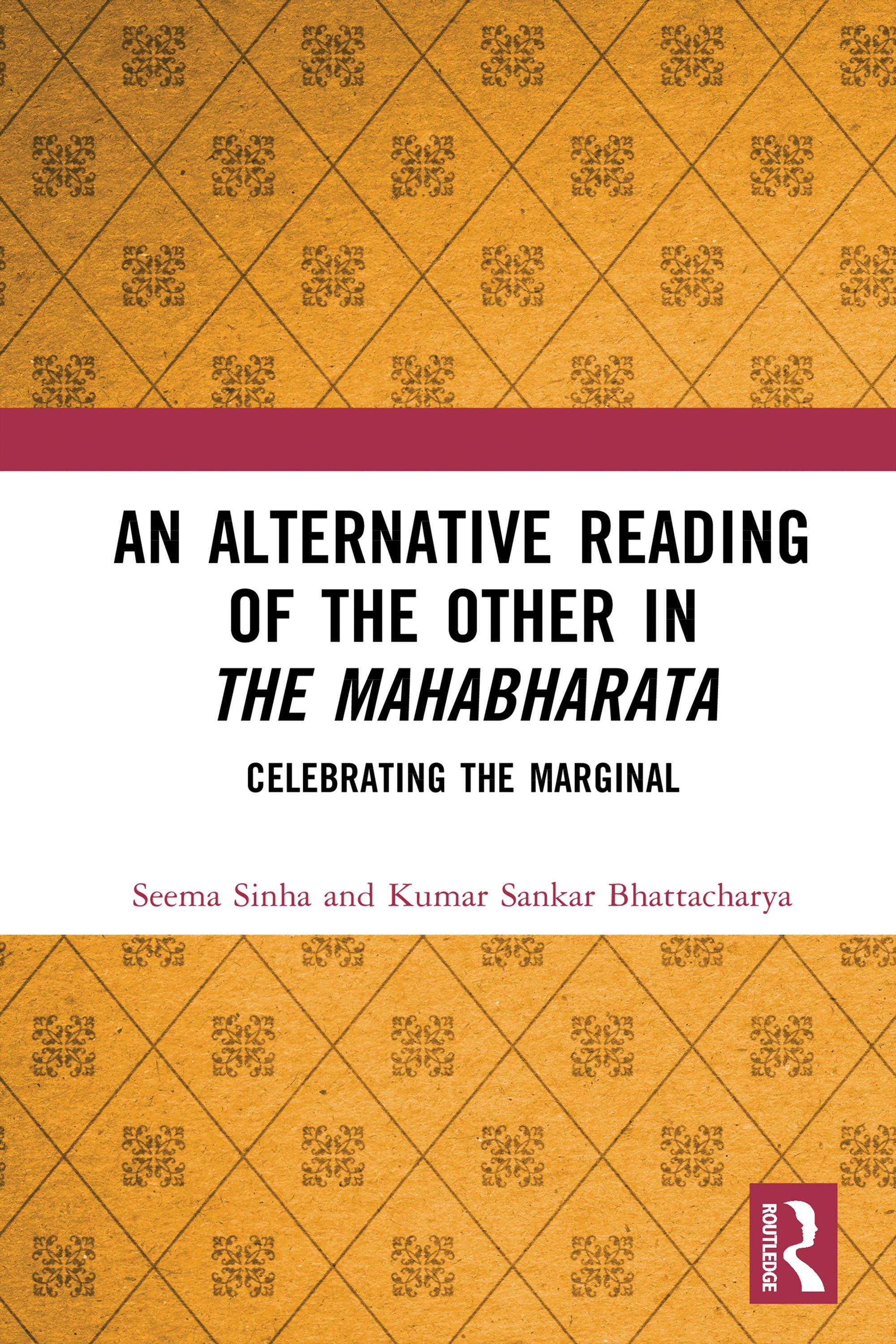
This book studies gender, sexuality, and representation in The Mahabharata. Drawing on Feminist theory, Queer theory and Deconstructivist theory, it revisits the epic as a saga of agency, empowerment, and subversion, and examines how it gives the gendered marginal — the women and the queer — a voice.
The authors argue that in a fluid text like The Mahabharata, there is ample scope for contradiction and conformation, as well as conflict and resolution, which gives the marginal an opportunity to document resistance. They analyse the stories of Draupadi, Kunti, Renuka, Ulupi, and Hidimba within an anti-patriarchal, non-normative, post-modern theoretical framework. They also examine liminal figures like Shikhandi, Yuvanashwa, Sudyumna and Bhangashwan, who are uniquely placed in conversation involving queer space, marginalization, and resistance.
An important addition to the study of Indian epics, this book will be indispensable for scholars and researchers of cultural studies, subaltern studies, Indian literature, English literature, gender studies, sexuality studies, queer studies, women’s studies, exclusion studies, and postcolonial studies.
Pay easily by card, Klarna, Apple Pay or Google Pay. Not happy? You always have a 14-day money-back guarantee. Read more in our terms. If you have any questions, email us at hello@memmo.org.
Memmo makes studying easier – wherever you are in the world. We bring your course books and smart study tools together in one place: summaries, quizzes, podcasts and flashcards. Plus Ted, your study buddy who answers anything you wonder. Over 50,000 students already study here – built to help you learn faster and stress less.