
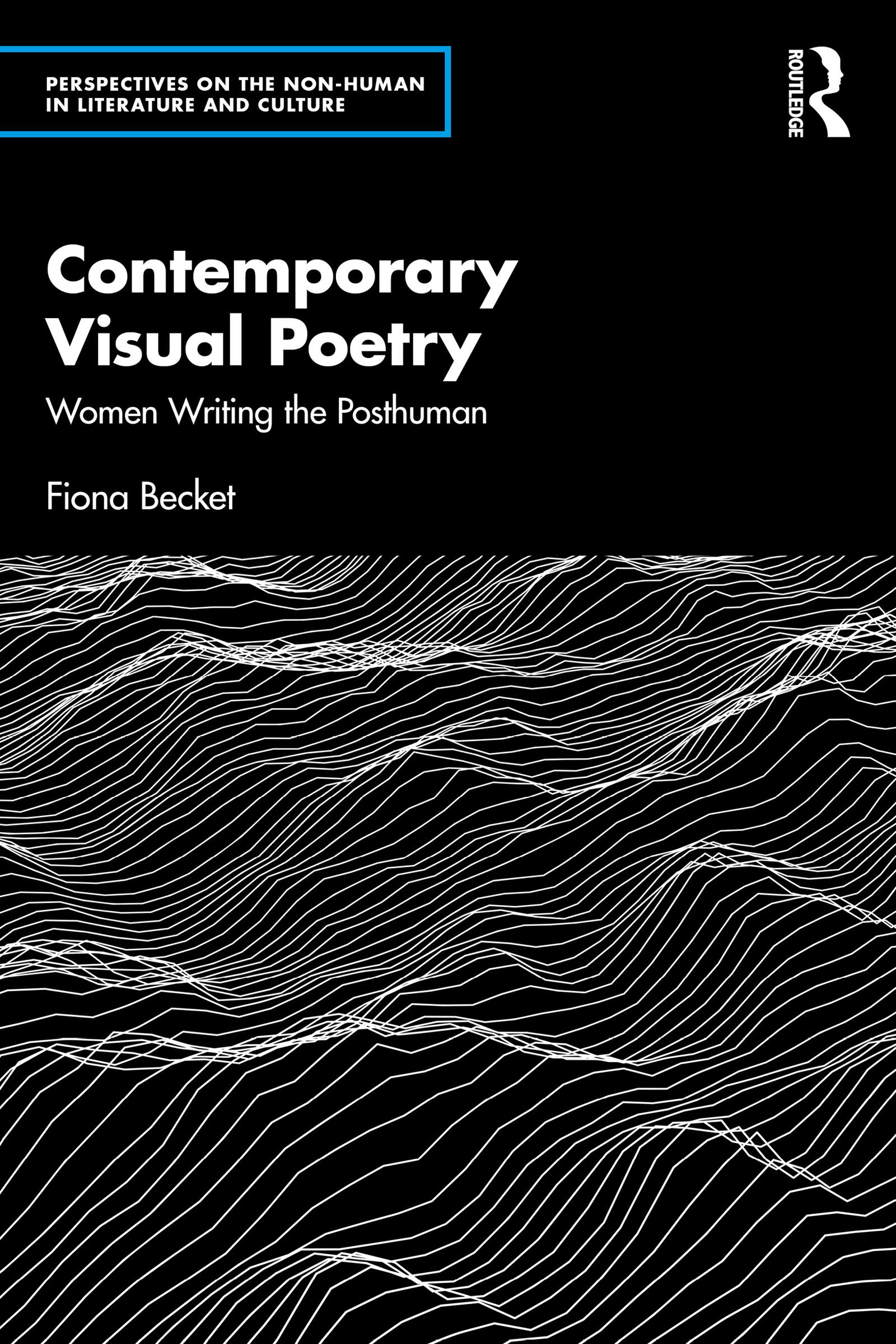
This book examines contemporary visual poetry and how conceptual writing, poem-objects, and computational texts shape a posthumanist understanding that is “situated”. First, the eye is theorised with respect to ethical understanding. When visual poets reclaim vision, visual poetics becomes a feminist praxis. In Paula Claire and Maggie O’Sullivan, visual poetry becomes an ecological practice concerned with connectivity in the entanglements of natureculture. In O’Sullivan, Campanello, Bergvall, and Philip, spatial and temporal sense (de)formation sustains radical forms of voicing and eyewitness. Finally, works by Mez Breeze and Stephanie Strickland expand our understanding of visual poetry in digital (electronic, virtual reality, and artificial intelligence) contexts in which technology and affect are intimately connected. These visual texts open up Braidotti’s question with respect to how we are to “visualize the subject as a transversal entity encompassing the human, our genetic neighbours the animals and the earth as a whole, and to do so within an understandable language”.
Pay easily by card, Klarna, Apple Pay or Google Pay. Not happy? You always have a 14-day money-back guarantee. Read more in our terms. If you have any questions, email us at hello@memmo.org.
Memmo makes studying easier – wherever you are in the world. We bring your course books and smart study tools together in one place: summaries, quizzes, podcasts and flashcards. Plus Ted, your study buddy who answers anything you wonder. Over 50,000 students already study here – built to help you learn faster and stress less.