
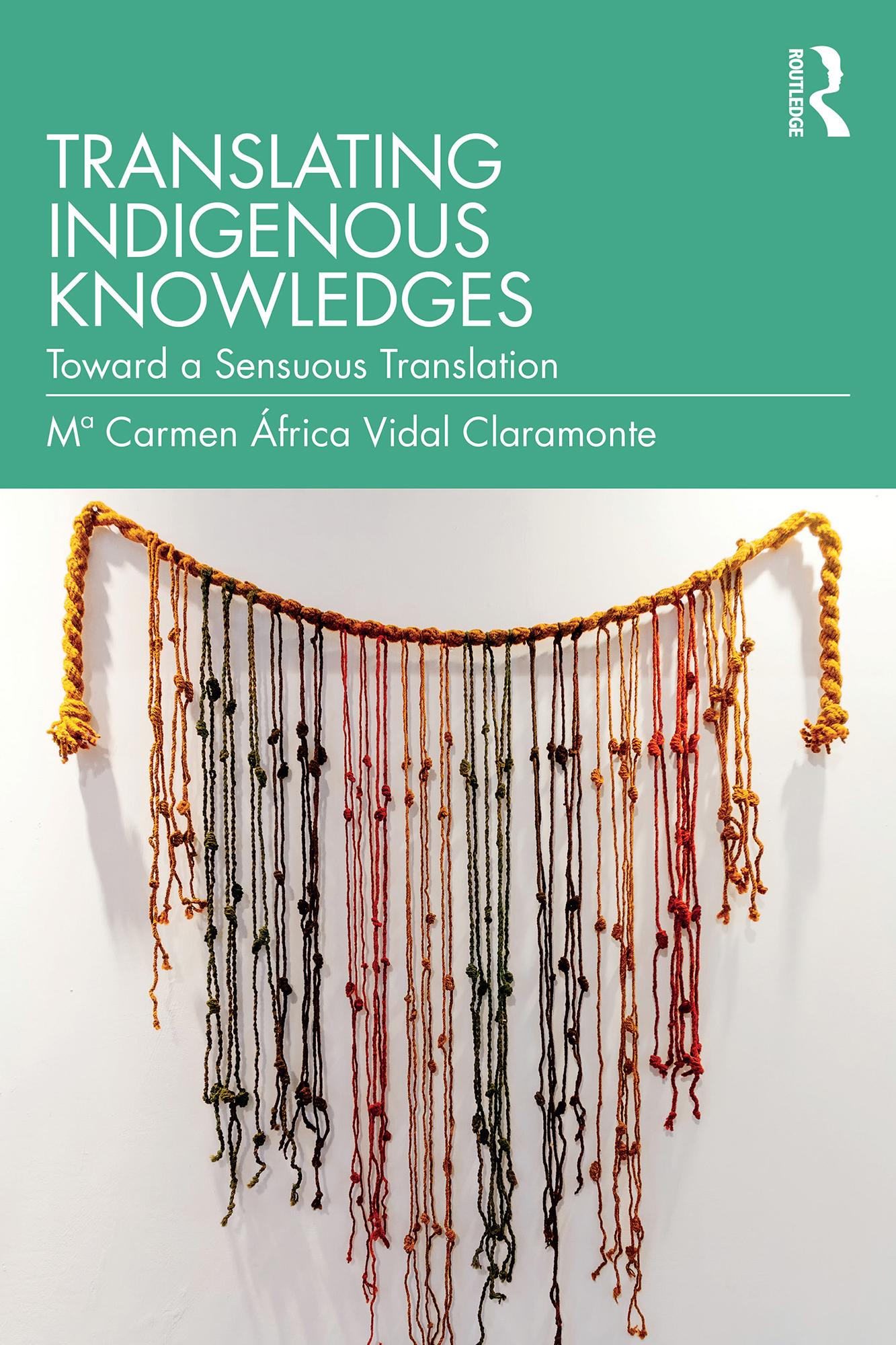
In this book, Vidal presents a new way of translating indigenous epistemologies. For centuries, the Western world has ordained what knowledge is and what it should be and has also been responsible for transmitting that knowledge. This "universal" knowledge has traveled to the four corners of the globe.
In recent decades, there has been a steadily growing interest in dialogical epistemologies. Disciplines ranging from historiography and philosophy to anthropology are calling for this universalist idea of knowledge to be modified. Thanks to this change of perspective, other forms of knowledge, which until now have been ignored, are gradually coming to light. Indigenous knowledges are not constructed with the scientific, binary, static, Cartesian, or univocal logic characteristic of Western societies. Non-Western types of knowledge incorporate senses, emotions, body, objects, and matter. It is impossible to reduce indigenous knowledges to Western conceptualizations. The types of translation covered in this book assume that knowledge is not transmitted only in the Western way and that there are world views that take into account the emotions and body, as well as the intellect. This includes all types of beings: human, non-human, and extrahuman. In the face of this plurality of epistemologies, this book affirms that the static Western conceptual traditions characterized by a binary logic are not useful and that there is a need to translate outside the scope of these traditions.
The examples given in this book show that translation is not only a process involving Western and non-Western languages. Translation is not a mere substitution of one word for another because knowledge is not only transmitted through words. It also involves non-verbal elements. Knowledge is transmitted through objects, songs, sensations, and emotions, as well as through words. Moreover, many non-Western traditions do not translate with language systems but rather with other semiotic systems, such as knots, threads, colors, and bodies in movement. This is a timely, topical, and transdisciplinary reading, of interest to advanced students and researchers in translation studies, anthropology, and beyond.
Pay easily by card, Klarna, Apple Pay or Google Pay. Not happy? You always have a 14-day money-back guarantee. Read more in our terms. If you have any questions, email us at hello@memmo.org.
Memmo makes studying easier – wherever you are in the world. We bring your course books and smart study tools together in one place: summaries, quizzes, podcasts and flashcards. Plus Ted, your study buddy who answers anything you wonder. Over 50,000 students already study here – built to help you learn faster and stress less.