
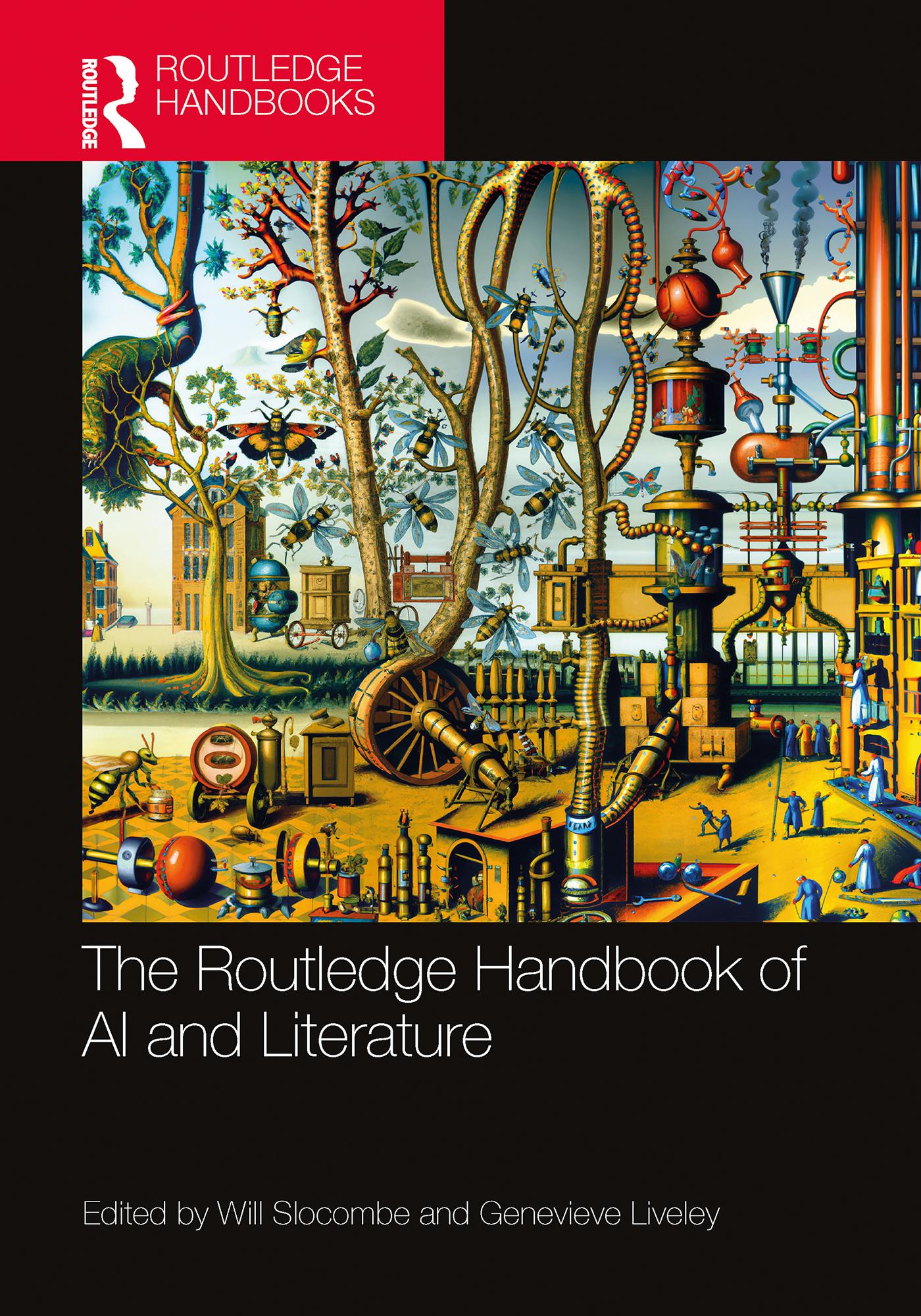
The Routledge Handbook of AI and Literature provides an invaluable resource for those interested in deepening their understanding of the variety of theories and approaches available when AI is studied or deployed in literary contexts. It also illustrates ways in which AI researchers can use literary lenses to better understand the sociotechnical dynamics and cultural imaginaries shaping human interactions with AI.
Both AI and literature are understood in their broadest senses here. The book incorporates chapters that deal with Large Language Models, Generative AI, transformer architectures, story generators, and computational analysis. Literary case studies embrace performance, poetry, comics, as well as prose, and span a wide range of historical periods, from the ancient world to contemporary science fiction and Generative AI poetry.
The Handbook brings together early career contributors, as well as some of the best-known names in the digital humanities and computational literary studies. It offers a fresh perspective on the past, present, and future of AI and literature that will appeal to students and scholars with relevant interests across a range of subjects, including AI Engineering, Classics, Computing, Digital Humanities, English, Ethics, Film and Television, Law, and Narratology.
Pay easily by card, Klarna, Apple Pay or Google Pay. Not happy? You always have a 14-day money-back guarantee. Read more in our terms. If you have any questions, email us at hello@memmo.org.
Memmo makes studying easier – wherever you are in the world. We bring your course books and smart study tools together in one place: summaries, quizzes, podcasts and flashcards. Plus Ted, your study buddy who answers anything you wonder. Over 50,000 students already study here – built to help you learn faster and stress less.