
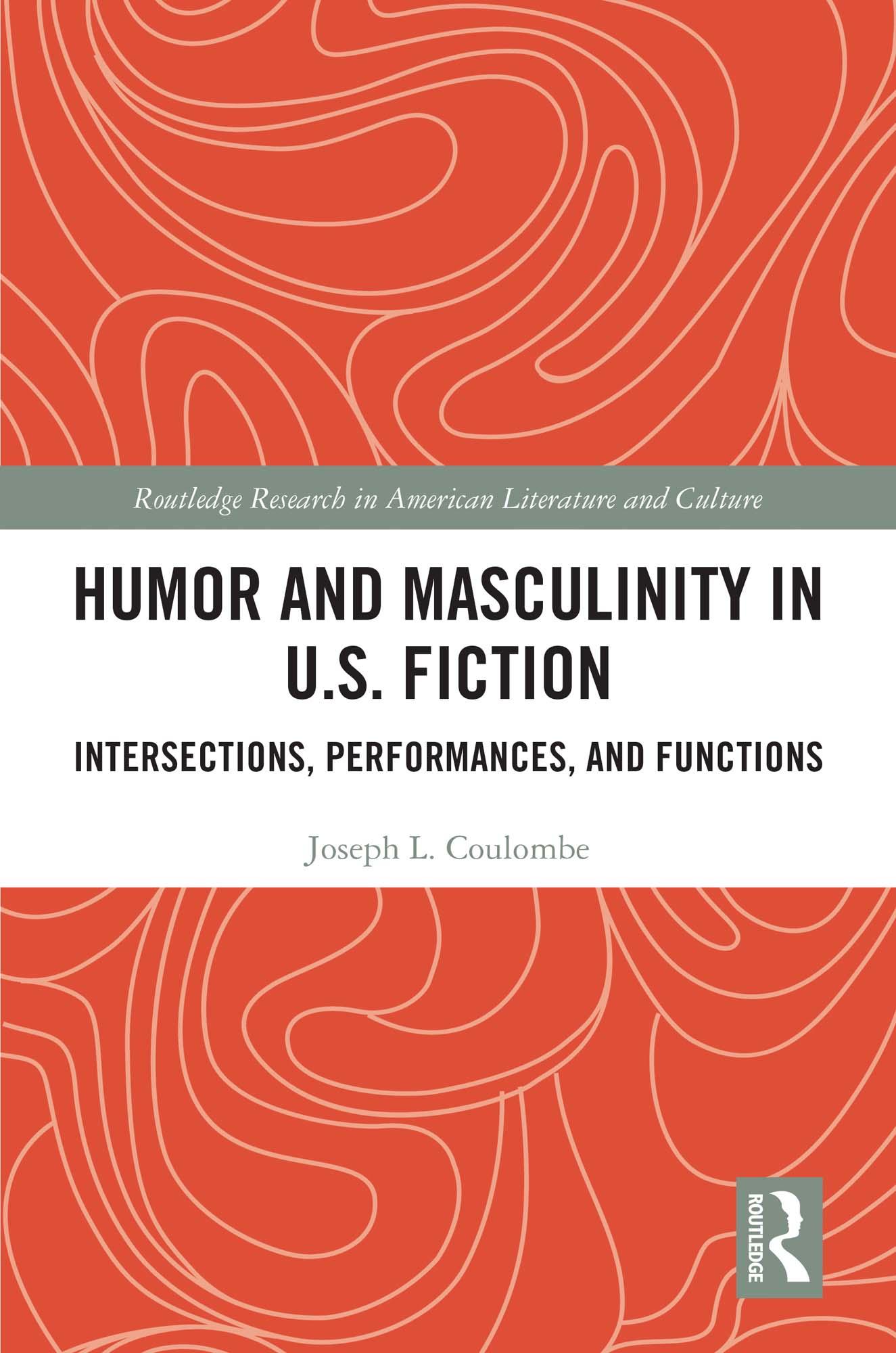
Humor and Masculinity in U.S. Fiction offers a pragmatic and theoretically informed model for analyzing how humor and gender intersect in key U.S. texts, bringing much-needed attention to the complex ways that humor can support and/or subvert reductive masculine codes and behaviors. Its argument builds upon three major humor theories – the incongruity theory, superiority theory, and relief theory – to analyze how humor is used to negotiate the shifting constructions of masculinity and manhood in American culture and literature. Focusing on explicit textual references to joking, pranks, and laughter, Humor and Masculinity in U.S. Fiction offers well-supported, original interpretations of works by Mark Twain, Owen Wister, Dorothy Parker, Zora Neale Hurston, Joseph Heller, Philip Roth, and Sherman Alexie. The primary goal of Humor and Masculinity in U.S. Fiction is to understand the multiple ways that humor performs and interrogates masculinity in seminal U.S. texts.
Pay easily by card, Klarna, Apple Pay or Google Pay. Not happy? You always have a 14-day money-back guarantee. Read more in our terms. If you have any questions, email us at hello@memmo.org.
Memmo makes studying easier – wherever you are in the world. We bring your course books and smart study tools together in one place: summaries, quizzes, podcasts and flashcards. Plus Ted, your study buddy who answers anything you wonder. Over 50,000 students already study here – built to help you learn faster and stress less.