
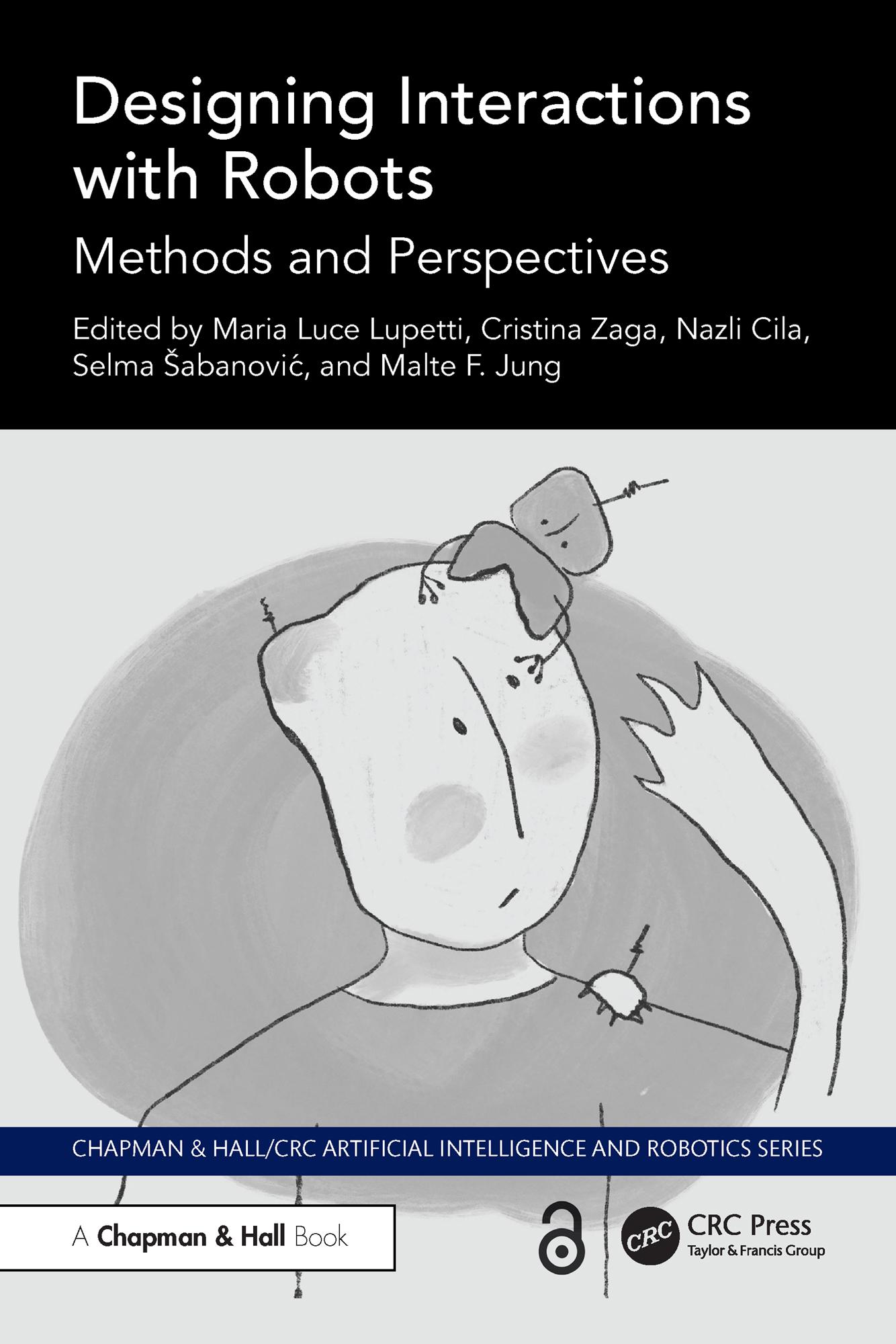
Developing robots to interact with humans is a complex interdisciplinary effort. While engineering and social science perspectives on designing human–robot interactions (HRI) are readily available, the body of knowledge and practices related to design, specifically interaction design, often remain tacit. Designing Interactions with Robots fills an important resource gap in the HRI community, and acts as a guide to navigating design-specific methods, tools, and techniques.
With contributions from the field's leading experts and rising pioneers, this collection presents state of the art knowledge and a range of design methods, tools, and techniques, which cover the various phases of an HRI project. This book is accessible to an interdisciplinary audience, and does not assume any design knowledge. It provides actionable resources whose efficacy have been tested and proven in existing research.
This manual is essential for HRI design students, researchers, and practitioners alike. It offers crucial guidance for the processes involved in robot and HRI design, marking a significant stride toward advancing the HRI landscape.
The Open Access version of this book, available at http://www.taylorfrancis.com, has been made available under a Creative Commons Attribution-Non Commercial-No Derivatives (CC-BY-NC-ND) 4.0 license.
Pay easily by card, Klarna, Apple Pay or Google Pay. Not happy? You always have a 14-day money-back guarantee. Read more in our terms. If you have any questions, email us at hello@memmo.org.
Memmo makes studying easier – wherever you are in the world. We bring your course books and smart study tools together in one place: summaries, quizzes, podcasts and flashcards. Plus Ted, your study buddy who answers anything you wonder. Over 50,000 students already study here – built to help you learn faster and stress less.