
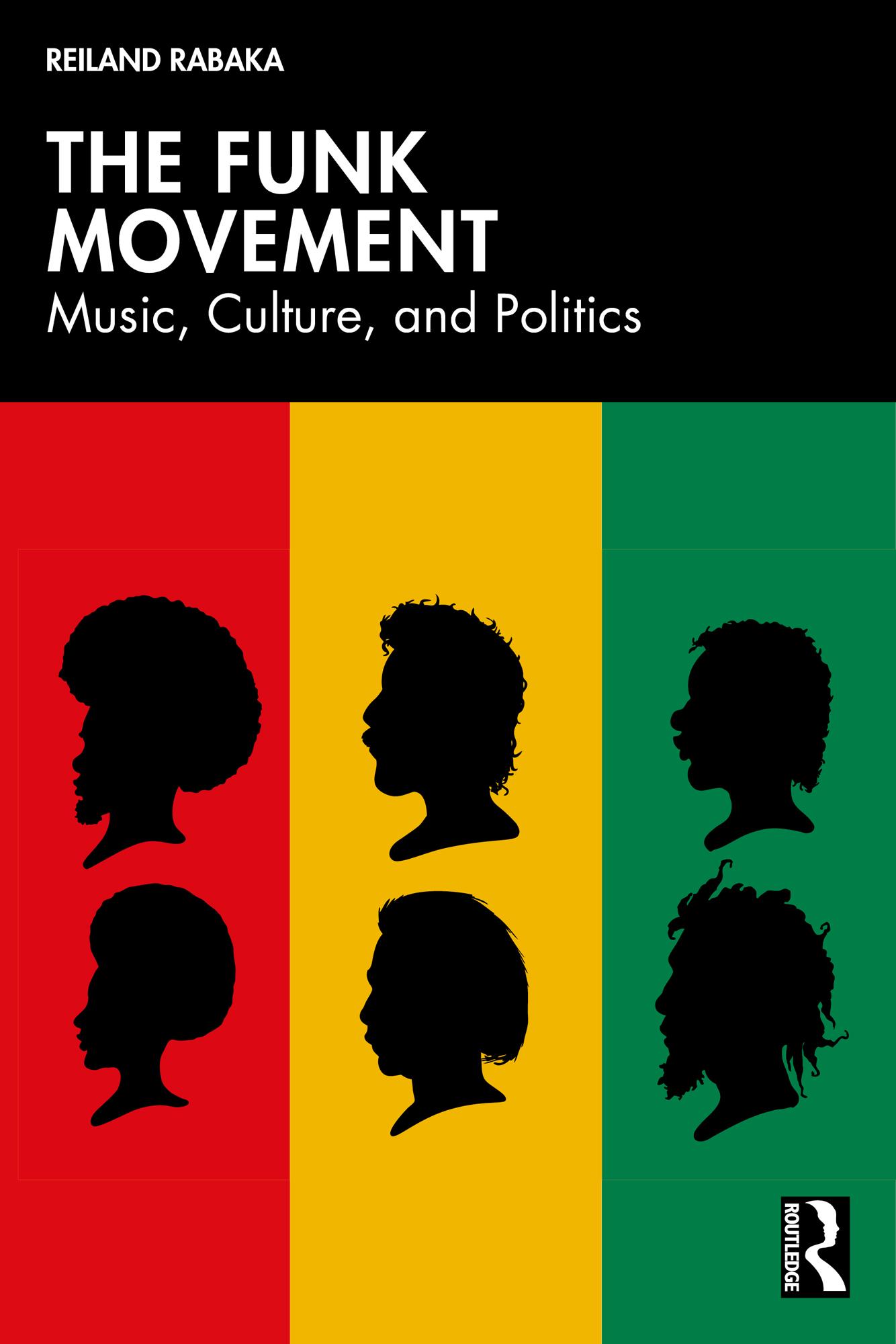
Rabaka explores funk as a distinct multiform of music, aesthetics, politics, social vision, and cultural rebellion that has been remixed and continues to influence contemporary Black popular music and Black popular culture, especially rap music and the Hip Hop Movement.
The Funk Movement was a sub-movement within the larger Black Power Movement and its artistic arm, the Black Arts Movement. Moreover, the Funk Movement was also a sub-movement within the Black Women’s Liberation Movement between the late 1960s and late 1970s, where women’s funk, especially Chaka Khan and Betty Davis’s funk, was understood to be a form of “Black musical feminism” that was as integral to the movement as the Black political feminism of Angela Davis or the Combahee River Collective and the Black literary feminism of Toni Morrison or Alice Walker. This book also demonstrates that more than any other post-war Black popular music genre, the funk music of the 1960s and 1970s laid the foundation for the mercurial rise of rap music and the Hip Hop Movement in the 1980s and 1990s.
This book is primarily aimed at scholars and students working in popular music studies, popular culture studies, American studies, African American studies, cultural studies, ethnic studies, critical race studies, women’s studies, gender studies, and sexuality studies.
Pay easily by card, Klarna, Apple Pay or Google Pay. Not happy? You always have a 14-day money-back guarantee. Read more in our terms. If you have any questions, email us at hello@memmo.org.
Memmo makes studying easier – wherever you are in the world. We bring your course books and smart study tools together in one place: summaries, quizzes, podcasts and flashcards. Plus Ted, your study buddy who answers anything you wonder. Over 50,000 students already study here – built to help you learn faster and stress less.