
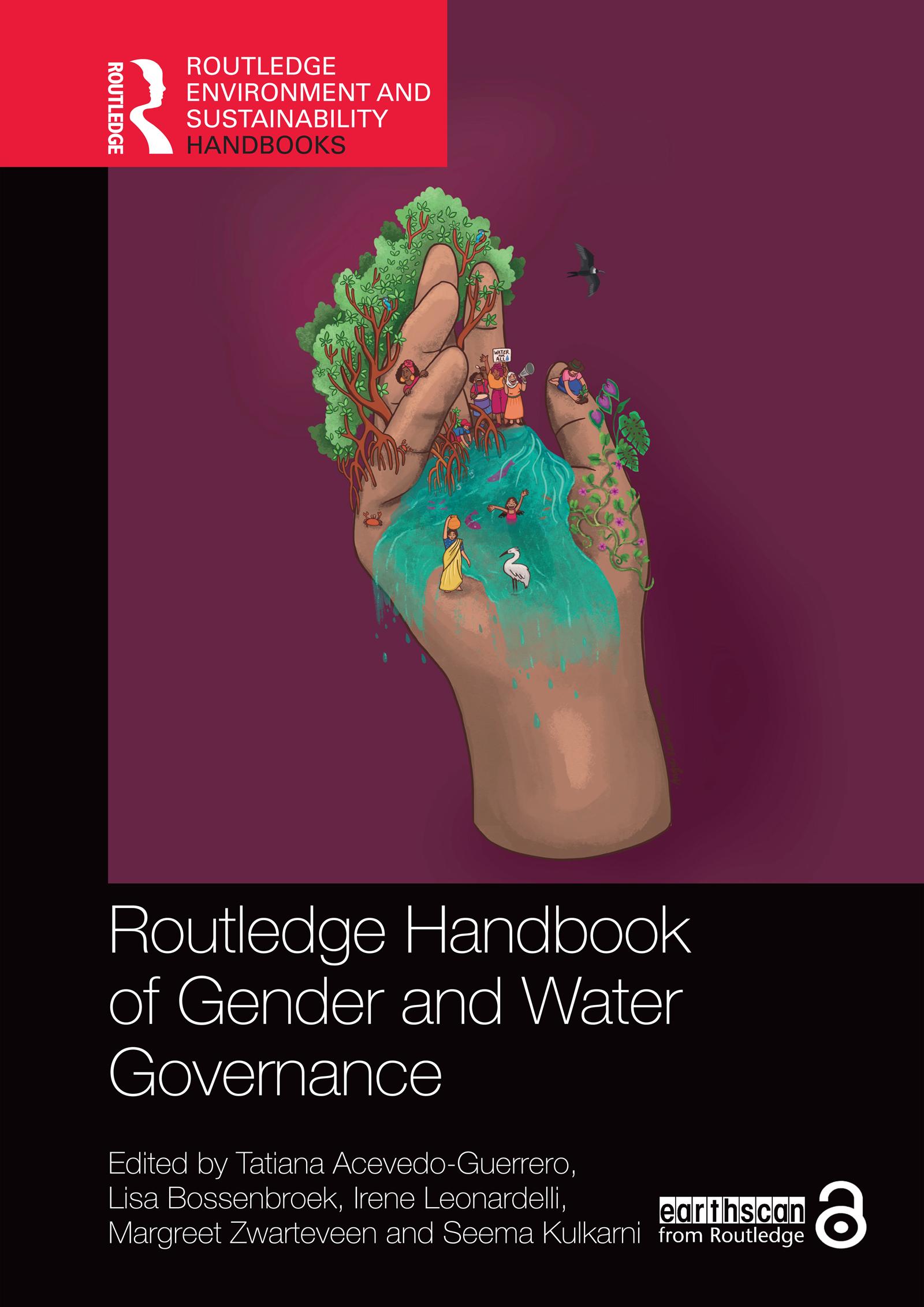
This handbook provides a comprehensive overview of the field of gender and water governance, exploring how the use, management and knowledge of water resources, services and the water environment are deeply gendered.
In water there is a recognized gender gap between water responsibilities and water rights and bridging this gap is likely to help achieve not just goals of equity but also those of sustainability. Building on a rich legacy of feminist water scholarship, the Routledge Handbook of Gender and Water Governance is a collection of reflections and studies that can be used as a prismatic lens into a thriving and ever proliferating array of feminist water studies. It provides a clear testimony of how hydrofeminism has evolved from rather instrumental gender and water studies to scholarship that uses feminist tools to pry open, critically reflect on and formulate alternatives to water development-as-usual. The book also shows how the community of feminists interested in studying water has diversified and expanded, from often white female scholars studying projects and gender relations in the so-called Global South, to a varied mix of scholars and activists theorizing from diverse geographical and political locations – prominently including the body. It is organized into five interconnected parts:
- Part I: Positionality and embodied waters
- Part II: Revisiting water debates: diplomacy, security, justice and heritage
- Part III: Sanitation stories
- Part IV: Precarious livelihoods
- Part V: New feminist futures
Each of these parts brings out the gendered nature of water, shedding light on the often neglected care and unpaid labour of women and its relationship with extractivism and socioeconomic inequalities. The overall aim of the handbook is to apply social science insights to water governance challenges, creating synergies and linkages between different disciplines and scientific domains.
The Routledge Handbook of Gender and Water Governance is essential reading for students, scholars and professionals interested in water governance, water security, health and sanitation, gender studies and sustainable development more broadly.
The Open Access version of this book, available at http://www.taylorfrancis.com, has been made available under a Creative Commons Attribution-Non Commercial-No Derivatives (CC-BY-NC-ND) 4.0 license.
Pay easily by card, Klarna, Apple Pay or Google Pay. Not happy? You always have a 14-day money-back guarantee. Read more in our terms. If you have any questions, email us at hello@memmo.org.
Memmo makes studying easier – wherever you are in the world. We bring your course books and smart study tools together in one place: summaries, quizzes, podcasts and flashcards. Plus Ted, your study buddy who answers anything you wonder. Over 50,000 students already study here – built to help you learn faster and stress less.