
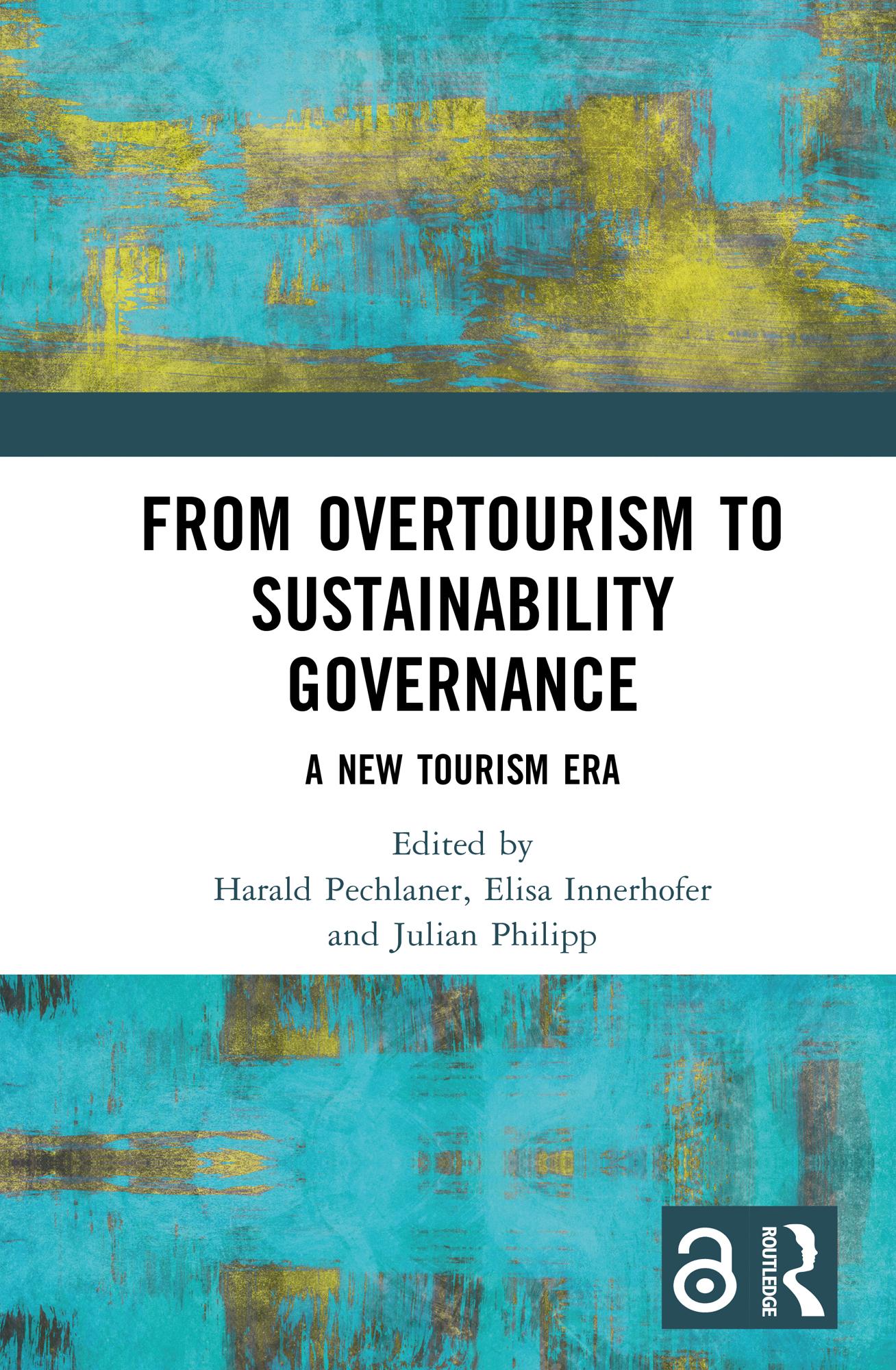
Insightful and international in scope, this significant volume explores the transition from overtourism to sustainability governance and elaborates perspectives for developing resilient destinations.
The book is split into three parts and comprises interdisciplinary contributions from renowned authors and scholars in the field, with each part including case studies to illustrate real-world applications of the topics and issues discussed. Part I provides an overview of current academic discussion on overtourism, presents theoretical concepts and illustrates the impact of the COVID-19 pandemic, as well as the development from overtourism to no-tourism. Part II discusses approaches towards a new sustainability through the lens of current research and future trends, including a possible new understanding of tourism in a post-pandemic world. Part III presents strategies to deal with overtourism, including management strategies and governance theories. Equipped with a wide range of examples and insights from across the globe, the book is intended to facilitate the ongoing journey towards a more sustainable tourism industry, that is increasingly resilient and less vulnerable to crises.
This will be of pivotal interest to academics, researchers and practitioners in the fields of tourism, over- and mass-tourism, as well as sustainability governance.
The Open Access version of this book, available at http://www.taylorfrancis.com, has been made available under a Creative Commons [Attribution-Non Commercial-No Derivatives (CC-BY-NC-ND)] 4.0 license.
Pay easily by card, Klarna, Apple Pay or Google Pay. Not happy? You always have a 14-day money-back guarantee. Read more in our terms. If you have any questions, email us at hello@memmo.org.
Memmo makes studying easier – wherever you are in the world. We bring your course books and smart study tools together in one place: summaries, quizzes, podcasts and flashcards. Plus Ted, your study buddy who answers anything you wonder. Over 75,000 students already study here – built to help you learn faster and stress less.