
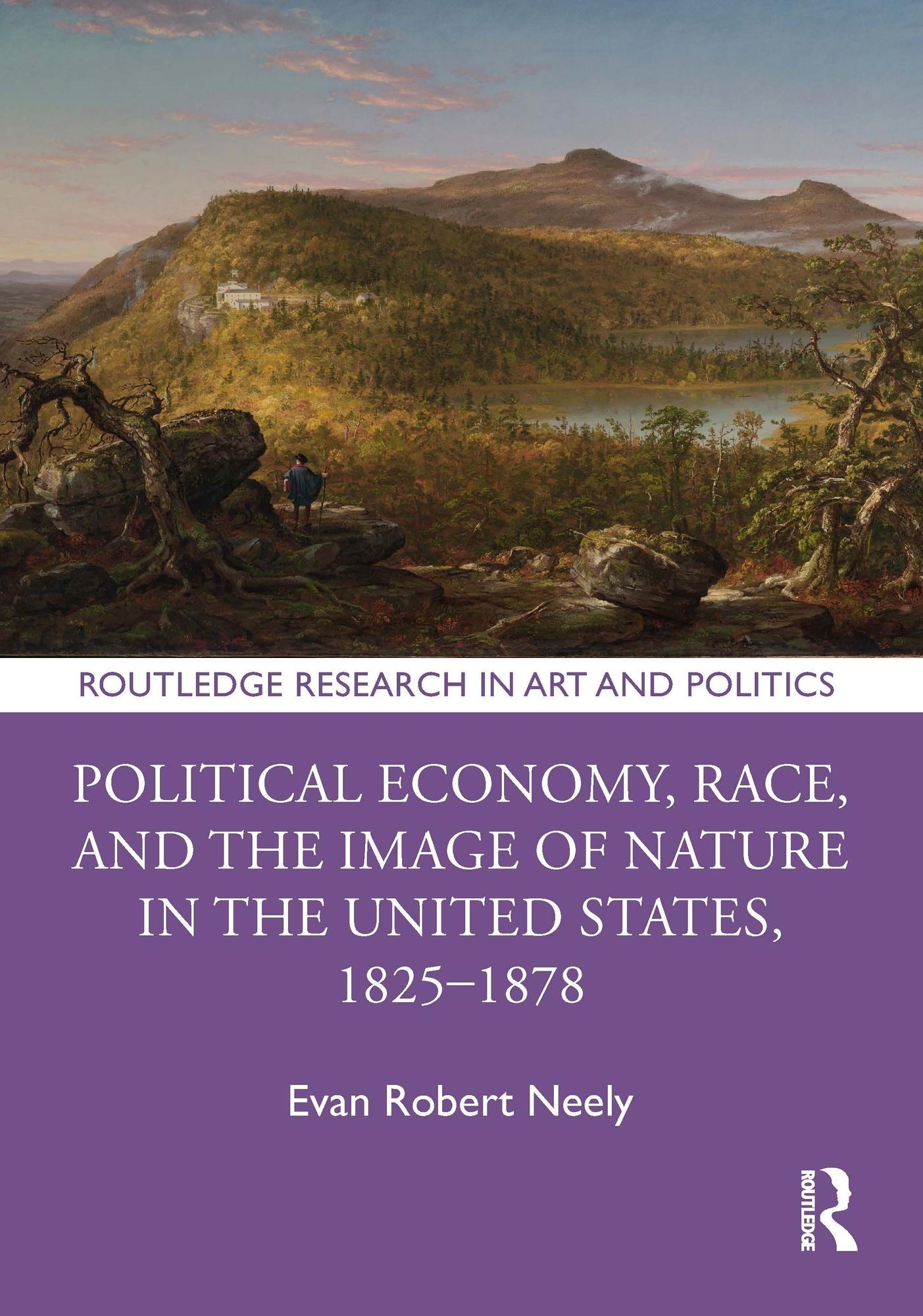
Political Economy, Race, and the Image of Nature in the United States, 1825–1878 is an interdisciplinary work analyzing the historical origins of a dominant concept of Nature in the culture of the United States during the period of its expansion across the continent.
Chapters analyze the ways in which “Nature” became a discursive site where theories of race and belonging, adaptation and environment, and the uses of literary and pictorial representation were being renegotiated, forming the basis for an ideal of the human and the nonhuman world that is still with us. Through an interdisciplinary approach involving the fields of visual culture, political economy, histories of racial identity, and ecocritical studies, the book examines the work of seminal figures in a variety of literary and artistic disciplines and puts the visual culture of the United States at the center of intellectual trends that have enormous implications for contemporary cultural practice.
The book will be of interest to scholars working in art history, visual culture, American studies, environmental studies/ecocriticism, critical race theory, and semiotics.
Pay easily by card, Klarna, Apple Pay or Google Pay. Not happy? You always have a 14-day money-back guarantee. Read more in our terms. If you have any questions, email us at hello@memmo.org.
Memmo makes studying easier – wherever you are in the world. We bring your course books and smart study tools together in one place: summaries, quizzes, podcasts and flashcards. Plus Ted, your study buddy who answers anything you wonder. Over 50,000 students already study here – built to help you learn faster and stress less.