
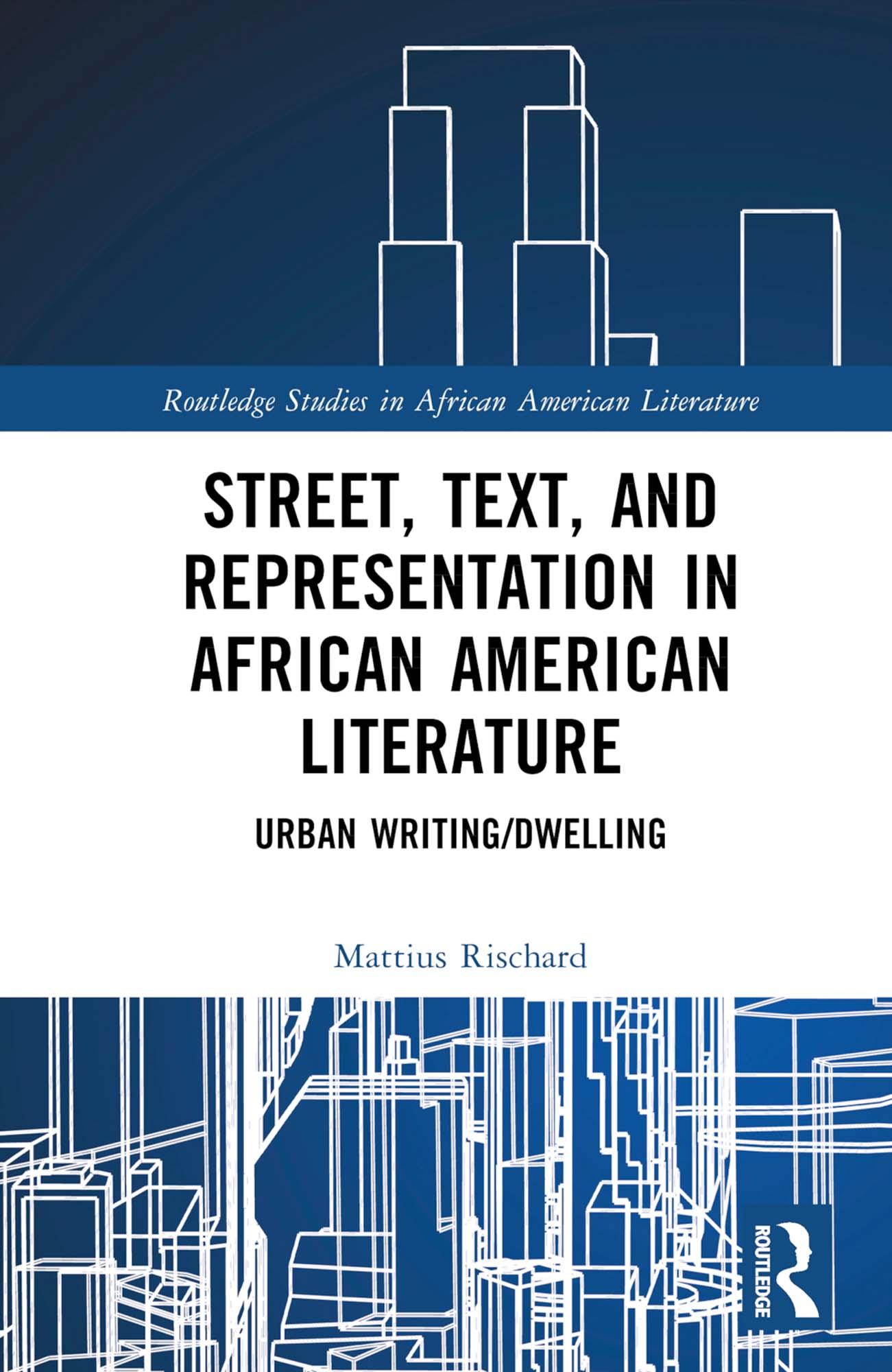
Comprehensive and comparative, this volume investigates African American street novelists since the Chicago Black Renaissance and the semiotic strategies they employ in publication, consumption, and depiction of street life. Divided into three chapters, this text analyzes the content, style, and ethics of “street” narrative through a discursive/rhetorical lens, exploring the development of street literature’s formal and contextual concerns to resolve the sociocultural and political questions surrounding cultural work. The book also gives emphasis to “text” or (post)structural literary analysis by answering questions about the genre’s aesthetic and linguistic techniques that respond to the injustices of urban planning. The last chapter, “Representation,” investigates the phenomenological hermeneutics of more recent street literature and its satire, highlighting the political stakes for authorship, credibility, and subjectivity. Through historical and contemporary studies of urban space, Blackness, and adaptations of street literature, this work attempts to network activists, artists, and scholars with the greater reading public by providing a functional ontology of reading the inner city.
Pay easily by card, Klarna, Apple Pay or Google Pay. Not happy? You always have a 14-day money-back guarantee. Read more in our terms. If you have any questions, email us at hello@memmo.org.
Memmo makes studying easier – wherever you are in the world. We bring your course books and smart study tools together in one place: summaries, quizzes, podcasts and flashcards. Plus Ted, your study buddy who answers anything you wonder. Over 50,000 students already study here – built to help you learn faster and stress less.