
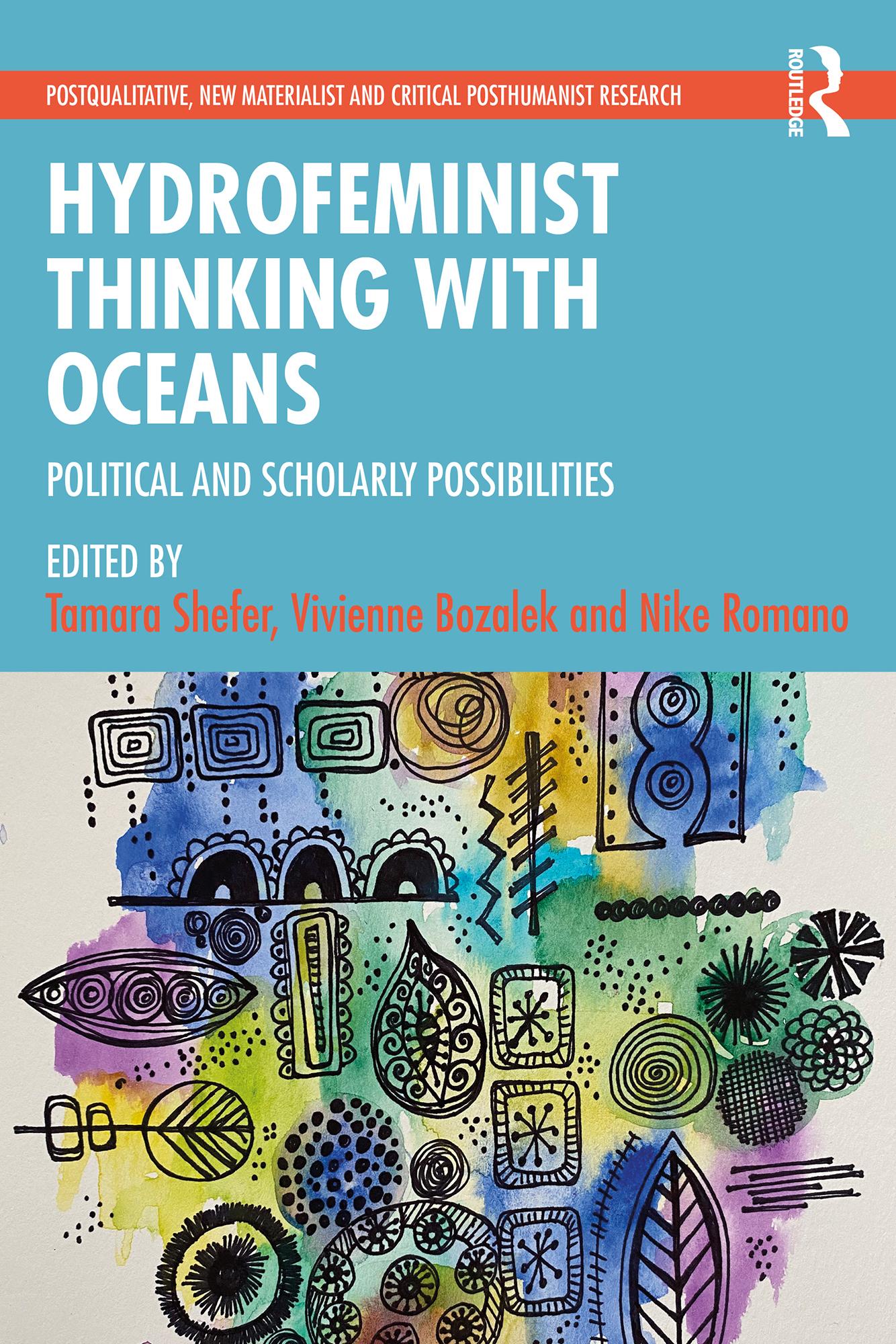
Hydrofeminist Thinking with Oceans brings together authors who are thinking in, with and through the spaces of ocean/s and beaches in South African contexts to make alternative knowledges towards a justice-to-come and flourishing at a planetary level. Primary scholarly locations for this work include feminist new materialist and post-humanist thinking, and specifically locates itself within hydrofeminist thinking.
Together with a foreword by Astrida Neimanis, the chapters in this book explore both land and water with oceans as powerfully political spaces, globally and locally entangled in the violences of settler colonialism, land dispossession, slavery, transnational labour exploitation, extractivism and omnicides. South Africa is a productive space to engage in such scholarship. While there is a growing body of literature that works within and across disciplines on the sea and bodies of water to think critically about the damages of centuries of colonisation and continued extractivist capitalism, there remains little work that explores this burgeoning thinking in global Southern, and more particularly South African contexts. South African histories of colonisation, slavery and more recently apartheid, which are saturated in the oceans, are only recently being explored through oceanic logics. This volume offers valuable Southern contributions and rich situated narratives to such hydrofeminist thinking. It also brings diverse and more marginal knowledges to bear on the project of generating imaginative alternatives to hegemonic colonial and patriarchal logics in the academy and elsewhere. While primarily located in a South African context, the volume speaks well to globalised concerns for justice and environmental challenges both in human societies and in relation to other species and planetary crises.
The chapters, which will be of interest to scholars, activists and other civil society stakeholders, share inspiring, rich examples of diverse scholarship, activism and art in these contexts, extending international scholarship that thinks in/on/with ocean/s, littoral zones and bodies of water. The book offers ethico-political perspectives on the role of research in ocean governance, policy development and collective decision-making for ecological justice. This book is suitable for students and scholars of post-qualitative, feminist, new materialist, embodied, arts-based and hydrofeminist methods in education, environmental humanities and the social sciences.
Pay easily by card, Klarna, Apple Pay or Google Pay. Not happy? You always have a 14-day money-back guarantee. Read more in our terms. If you have any questions, email us at hello@memmo.org.
Memmo makes studying easier – wherever you are in the world. We bring your course books and smart study tools together in one place: summaries, quizzes, podcasts and flashcards. Plus Ted, your study buddy who answers anything you wonder. Over 50,000 students already study here – built to help you learn faster and stress less.