
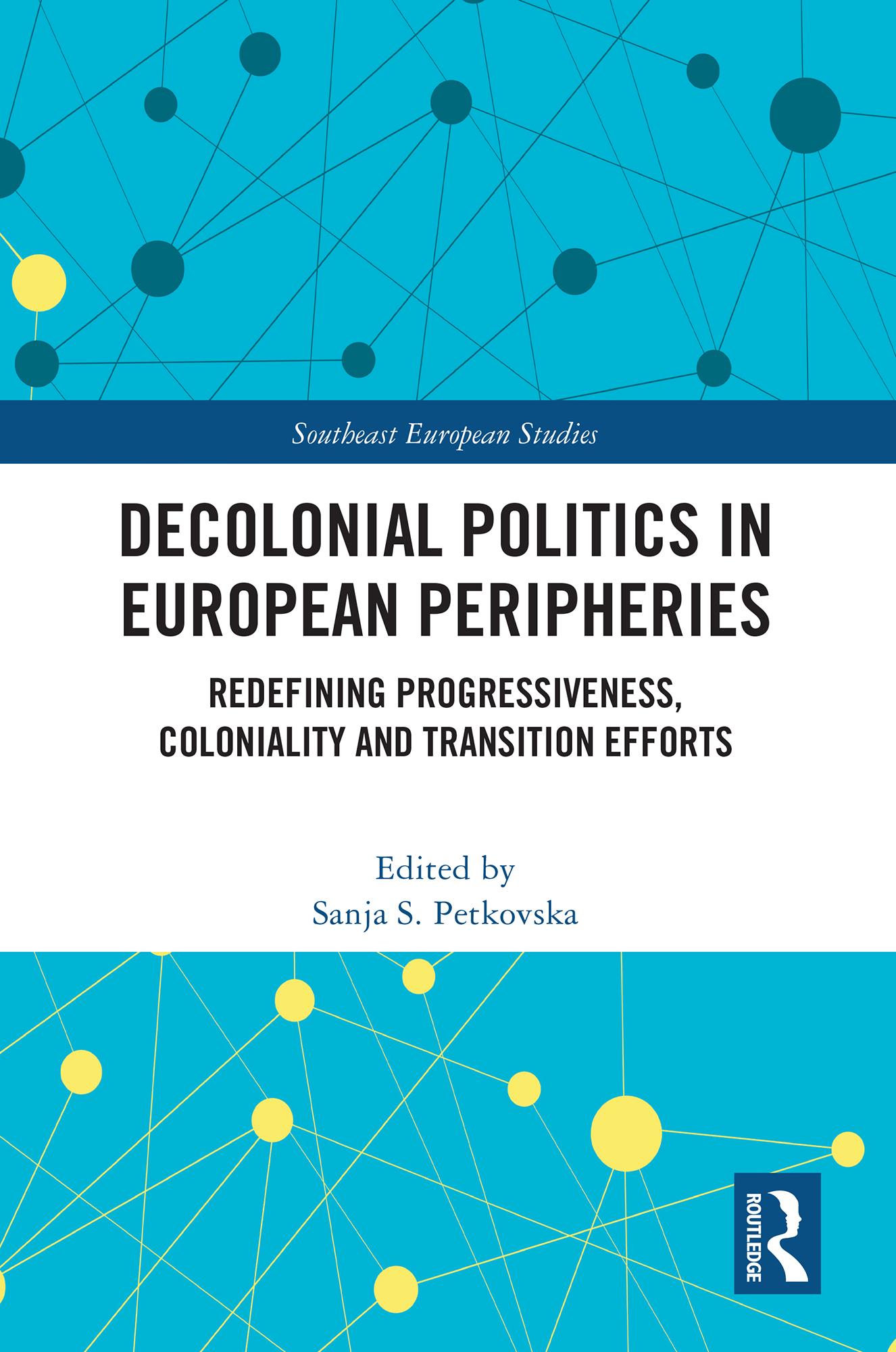
Decolonial Politics in European Peripheries: Redefining Progressiveness, Coloniality and Transition Efforts is a timely contribution to the project of theorizing “Europe” through decolonial perspectives on the Left, as the European and global crisis has prompted new reflections on what it means to sit still at the European “peripheries”.
The book explores how the joint scholarship efforts of postcolonial and postsocialist scholars might come up with better-grounded and more detailed theoretical and methodological insights into the process of globalization, and subsequent peripheralization, if framed under a progressive and leftist perspective. The authors, many from the South-East Europe region, use a variety of analytical lenses to demonstrate how the nexus of postcolonial, postsocialist area studies and progressive developmental political thought could inspire changes in the future which are in dissonance with neoliberal and neoconservative capitalism. As the side effects of global capitalism continue to accelerate, scholars and activists in the postsocialist periphery are increasingly turning to the concept of decoloniality in the hope that it might offer more options on how to begin to build up their framework. This book offers numerous examples of how decolonial theory can be applied to activist work in the fight against austerity and neoliberalization, as well as examples of how decolonial critique can be mobilized to contest processes of Europeanization and Euro-Atlantic integration.
This book will intrigue students and scholars of critical social scholarship in general as well as postsocialism and postcolonialism, critiques of right populism and the rise of white nationalism in Europe, and those studying the regions of South-Eastern Europe and Eurasia more generally. It will also interest activists, organizers, decision-makers, policy analysts, and leftists, both in the region and internationally.
Pay easily by card, Klarna, Apple Pay or Google Pay. Not happy? You always have a 14-day money-back guarantee. Read more in our terms. If you have any questions, email us at hello@memmo.org.
Memmo makes studying easier – wherever you are in the world. We bring your course books and smart study tools together in one place: summaries, quizzes, podcasts and flashcards. Plus Ted, your study buddy who answers anything you wonder. Over 50,000 students already study here – built to help you learn faster and stress less.