
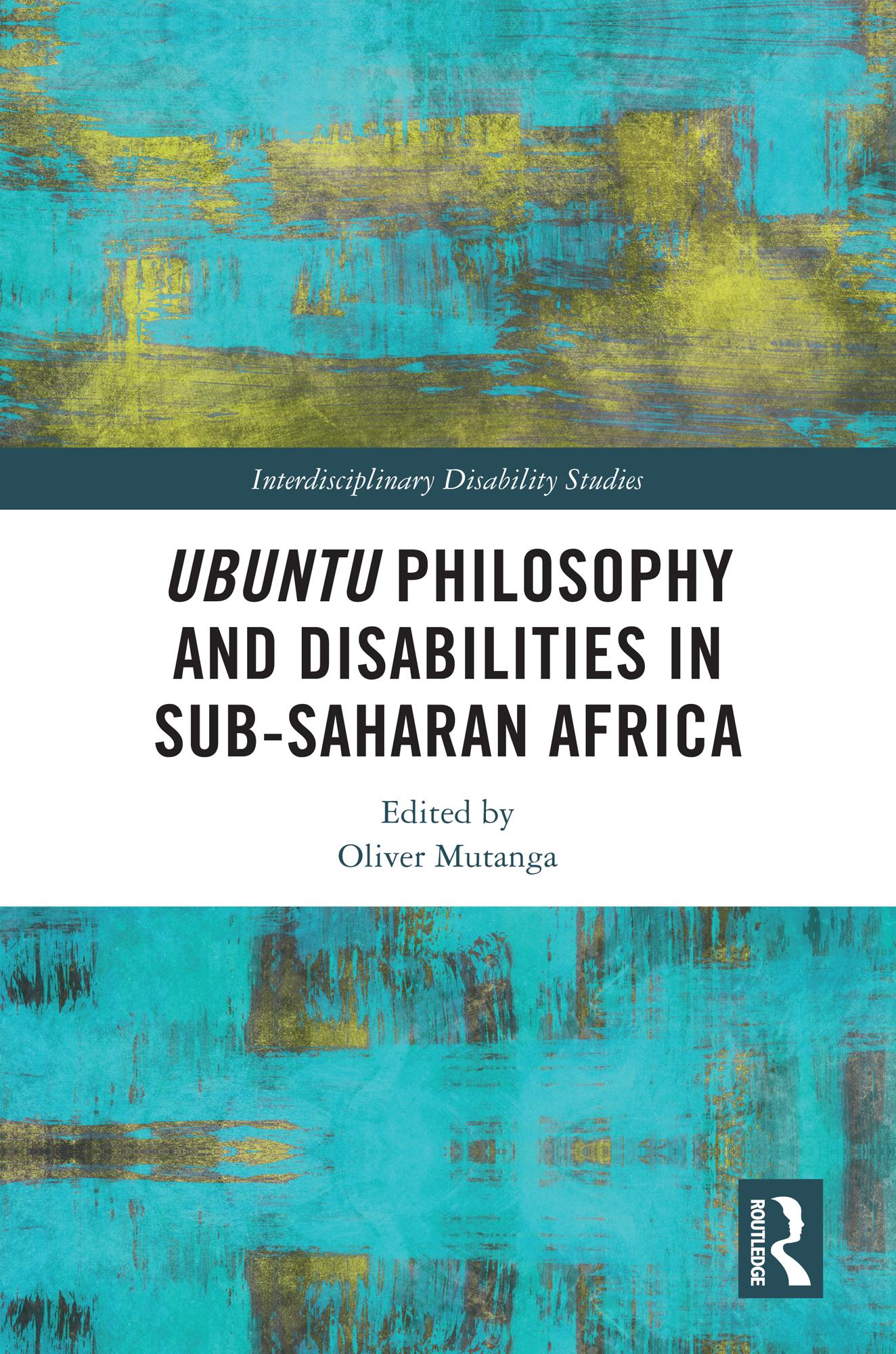
This book uses Ubuntu philosophy to illuminate the voices of people with disabilities from Sub-Saharan Africa. Disability literature is largely dominated by scholars and studies from the Global North, and these studies are largely informed by Global North theories and concepts. Although disability literature in the Global South is now fast growing, most studies continue to utilise conceptual, theoretical, and philosophical frameworks that are framed within Global North contexts. This presents two major challenges: Firstly, the voices of people with disabilities in the Global South remain on the fringes of disability discourses. Secondly, when their voices are heard, their realities are distorted.
This edited book, consisting of 11 chapters, provides case studies from Botswana, Ghana, Lesotho, Uganda, and South Africa, explores disability in various fields: Inclusive education, higher education, environment, Open Distance Learning, and Technical and Vocational Education and Technical Colleges.
The book contributes to the ways in which disability is understood and experienced in the Global South thereby challenging the Western hegemonic discourses on disability. This collection of contributions will be of interest to all scholars and students of disability studies, development studies, medical sociology, and African studies.
Pay easily by card, Klarna, Apple Pay or Google Pay. Not happy? You always have a 14-day money-back guarantee. Read more in our terms. If you have any questions, email us at hello@memmo.org.
Memmo makes studying easier – wherever you are in the world. We bring your course books and smart study tools together in one place: summaries, quizzes, podcasts and flashcards. Plus Ted, your study buddy who answers anything you wonder. Over 50,000 students already study here – built to help you learn faster and stress less.