
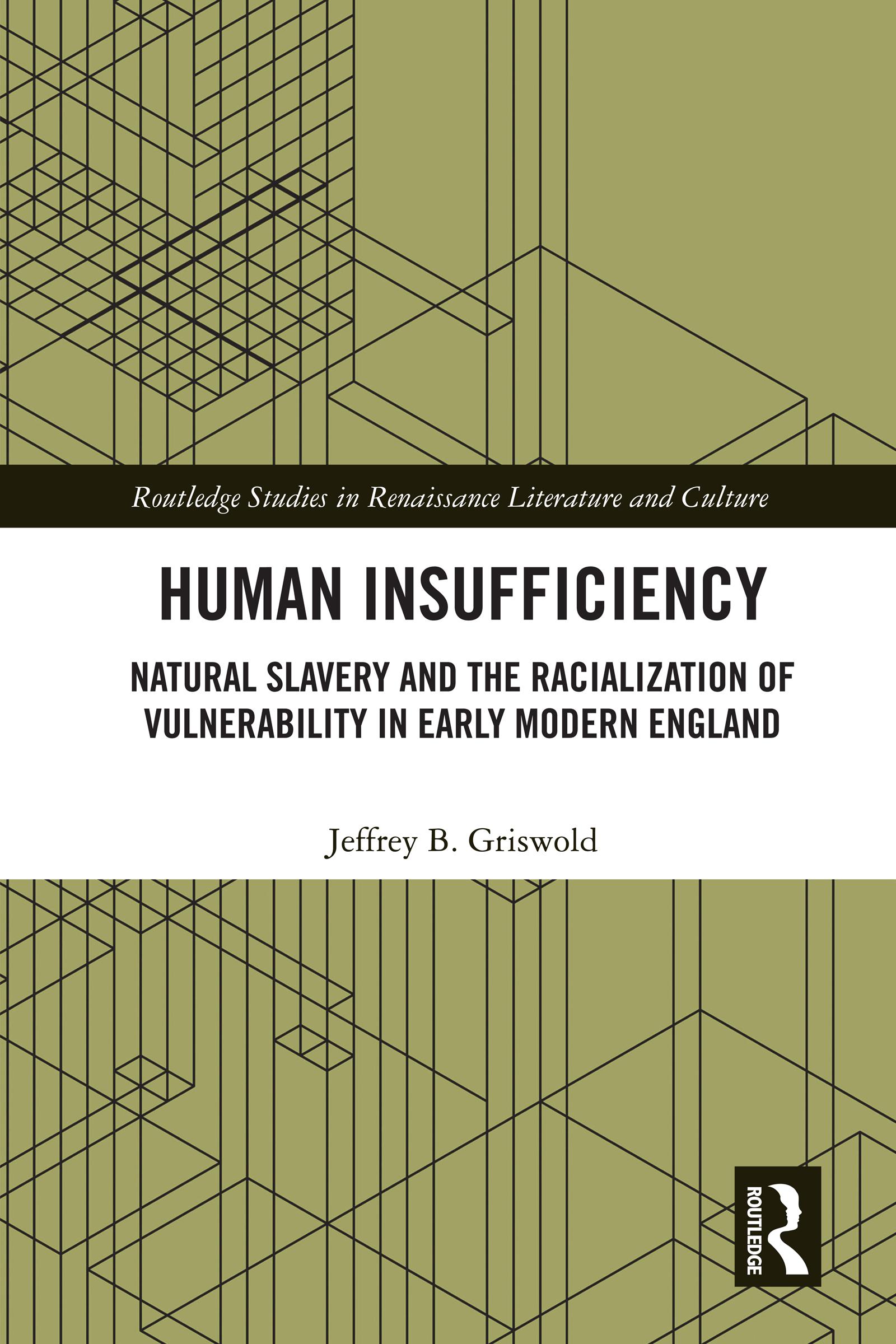
Human Insufficiency argues that early modern writers depict the human political subject as physically vulnerable in order to naturalize slavery. Representations of Man as a weak creature—“poor” and “bare” in King Lear’s words—strategically portrayed English bodies as needing care from people who were imagined to be less fragile. Drawing on Aristotle’s depictions of the natural master and the natural slave in the Politics, English writers distinguished the fully human political subject from the sub-human Slave who would care for his feeble body. This justification of a nascent slaving economy reinvents the violence of enslaving Afro-diasporic peoples as a natural system of care. Human Insufficiency’s most important contribution to early modern critical race studies is expanding the scope of the human as a racialized category by demonstrating how depictions of Man as a vulnerable species were part of a discourse racializing slavery.
Pay easily by card, Klarna, Apple Pay or Google Pay. Not happy? You always have a 14-day money-back guarantee. Read more in our terms. If you have any questions, email us at hello@memmo.org.
Memmo makes studying easier – wherever you are in the world. We bring your course books and smart study tools together in one place: summaries, quizzes, podcasts and flashcards. Plus Ted, your study buddy who answers anything you wonder. Over 50,000 students already study here – built to help you learn faster and stress less.