
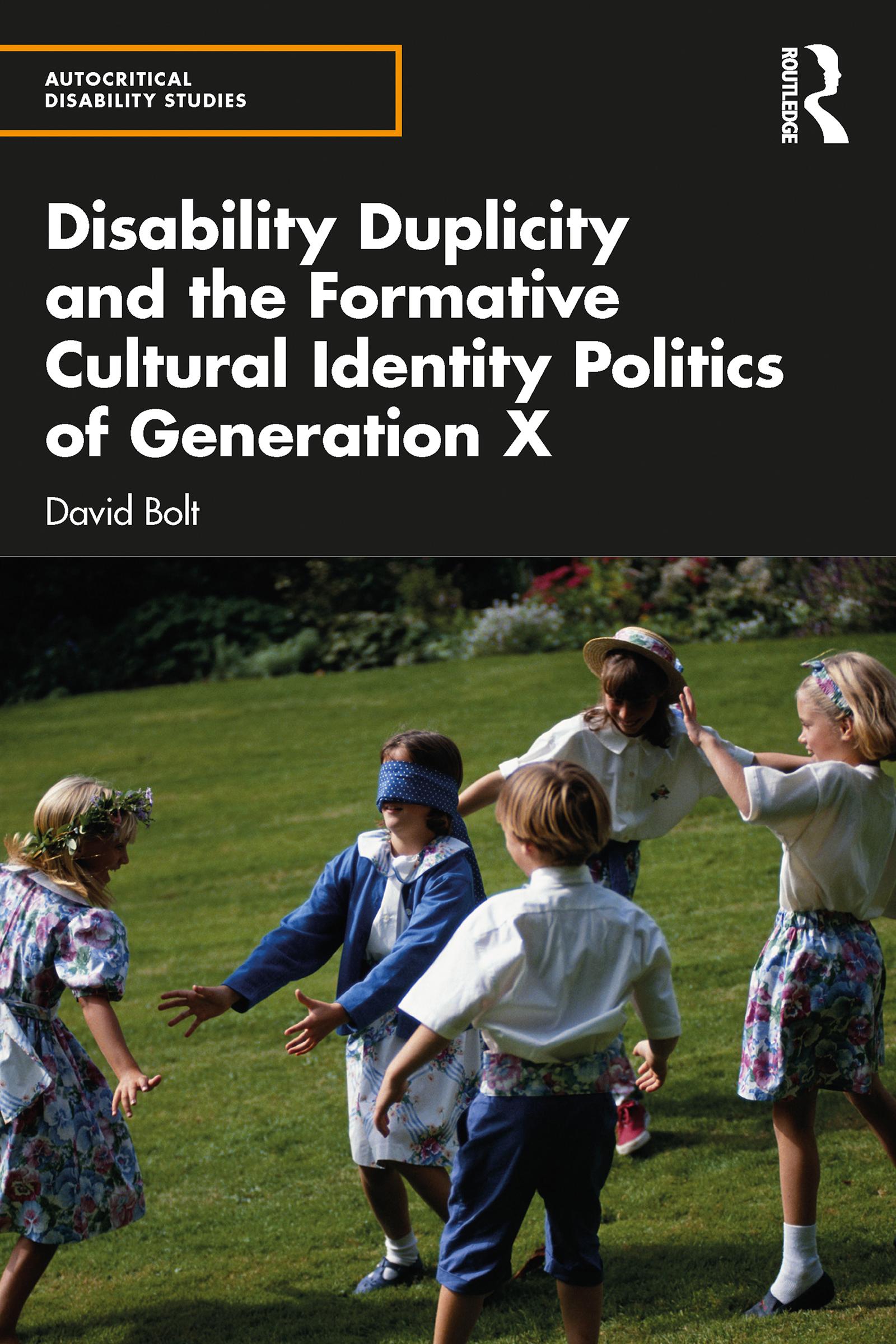
Disability is history and futurity, culture and society, practice and theory, work and play, an immense desire for life by which body and mind are dragged kicking and screaming into each and every new day.
Using autocritical discourse analysis, a new hybrid research method that combines aspects of the established methods of critical discourse analysis (CDA) and autoethnography, this book explores the formative cultural identity politics of disability via cultural stations of UK popular culture. These cultural stations include action figures, children’s books, television miniseries, comics, comedy films, teenage drama and sitcoms, the punk rock movement, and alternative comedy. Although the cultural stations range from toys and comics to aggressive music and chaotic sitcoms, all are considered with a focus on the language and tropes of disability. Indeed, most of the works are not remembered as portrayals of disability but the book’s analysis reveals flash if not fleeting representations that, when centralised, clarify patterns of duplicity. Via the language of power, and the power of language, all these texts are found to have contributed to the formative cultural identity politics of disability.
It will be of interest to all scholars and students of disability studies, sociology, toy studies, comic studies, humour studies, television studies, popular music studies, gender studies, literary studies, and cultural studies.
Pay easily by card, Klarna, Apple Pay or Google Pay. Not happy? You always have a 14-day money-back guarantee. Read more in our terms. If you have any questions, email us at hello@memmo.org.
Memmo makes studying easier – wherever you are in the world. We bring your course books and smart study tools together in one place: summaries, quizzes, podcasts and flashcards. Plus Ted, your study buddy who answers anything you wonder. Over 50,000 students already study here – built to help you learn faster and stress less.