
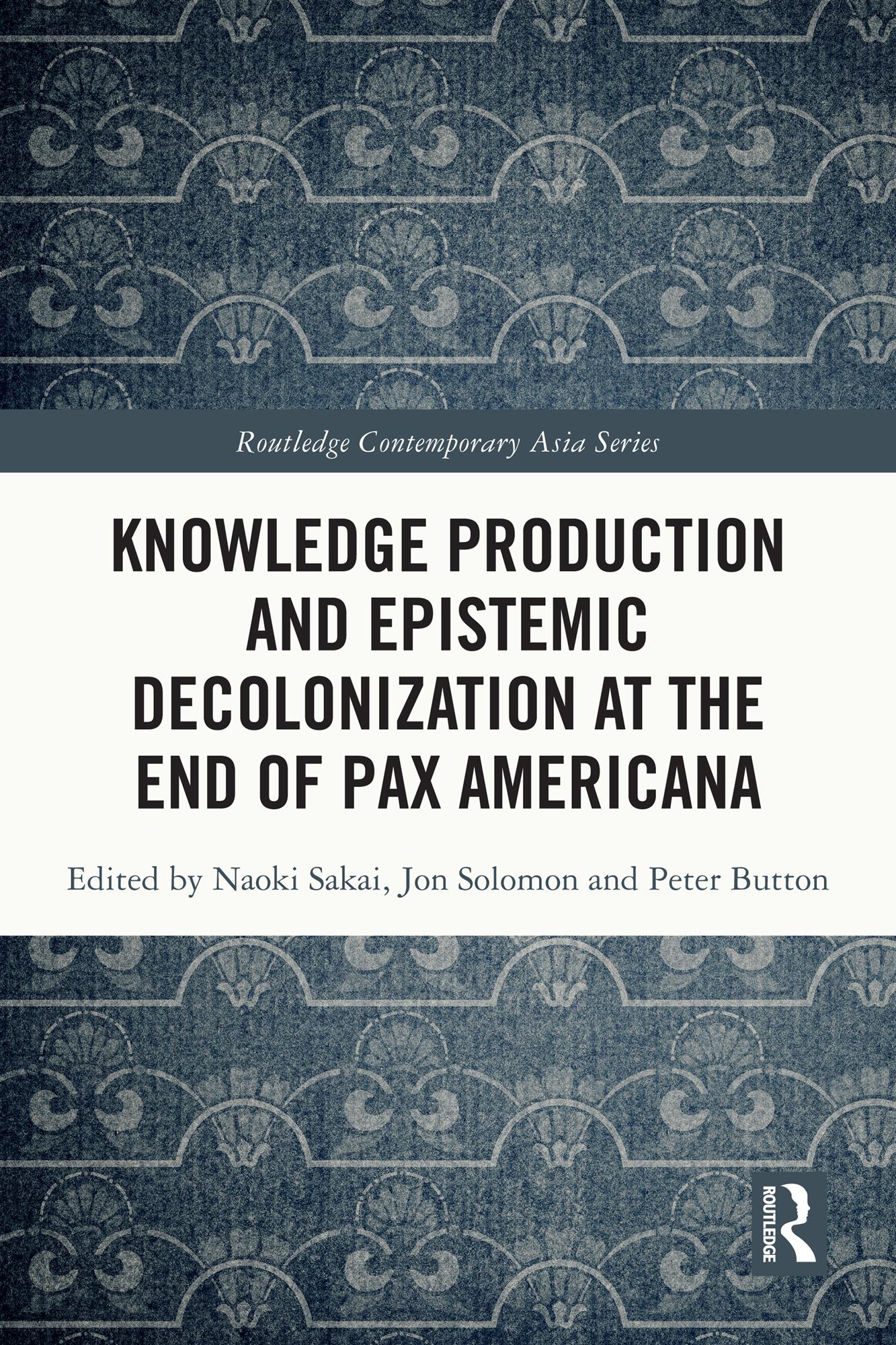
This book critically analyzes the global hegemony of the United States – a hegemony whose innovative aspect consists in articulating postcoloniality to imperial control – in relation to knowledge and knowledge production.
Through targeted case studies on the historical relationship between regional areas and the United States, the authors explore possibilities and obstacles to epistemic decolonization. By highlighting the connection between the control of work and the control of communication that has been at the core of the colonial regimes of accumulation (‘classic colonialism’), they present an entirely new form of disciplinary practice, not based on the equation of evolution and knowledge. An extensive introduction outlines the historical genealogy of Pax Americana epistemic hegemony, while individual chapters examine the implications for different regions of the world and different domains of activity, including visual culture, economy, migration, the arts, and translation.
This interdisciplinary collection will appeal to students and scholars in many fields, including Asian studies, American studies, postcolonialism, and political theory.
Pay easily by card, Klarna, Apple Pay or Google Pay. Not happy? You always have a 14-day money-back guarantee. Read more in our terms. If you have any questions, email us at hello@memmo.org.
Memmo makes studying easier – wherever you are in the world. We bring your course books and smart study tools together in one place: summaries, quizzes, podcasts and flashcards. Plus Ted, your study buddy who answers anything you wonder. Over 50,000 students already study here – built to help you learn faster and stress less.