
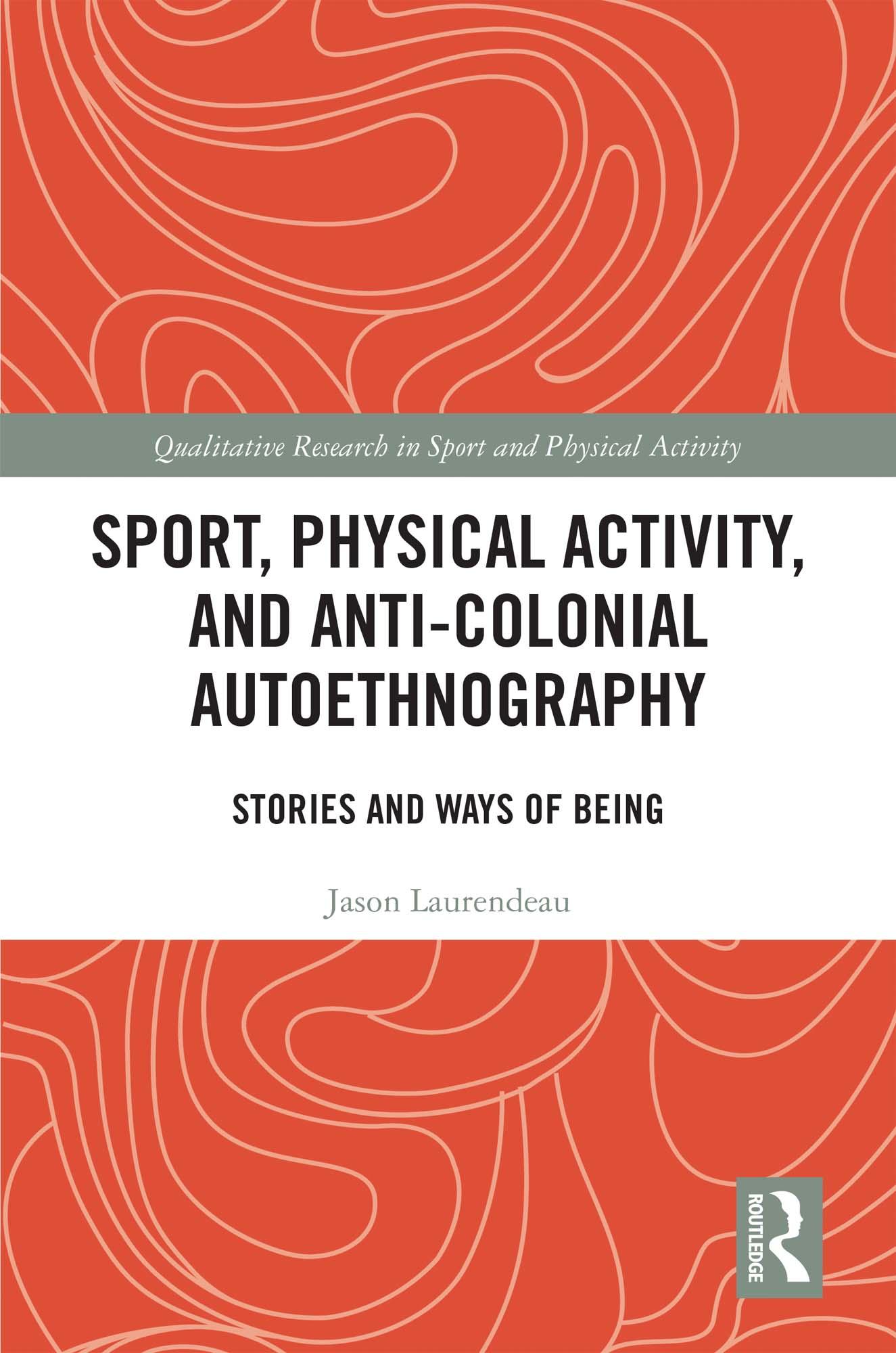
This book offers a brief history of how autoethnography has been employed in studies of sport and physical (in)activity to date and makes an explicit call for anti-colonial approaches – challenging scholars of physical culture to interrogate and write against the colonial assumptions at work in so many physical cultural and academic spaces.
It presents examples of autoethnographic work that interrogate physical cultural practices as both produced by, and generative of, settler-colonial logics and structures, including research into outdoor recreation, youth sport experiences, and sport spectatorship. It situates this work in the context of key paradigmatic issues in social scientific research, including ontology, epistemology, axiology, ethics, and praxis, and looks ahead at the shape that social relations might take beyond settler colonialism.
Drawing on cutting-edge research and presenting innovative theoretical perspectives, this book is fascinating reading for anybody with an interest in physical cultural studies, sport studies, outdoor studies, sociology, cultural studies, or qualitative research methods in the social sciences.
Pay easily by card, Klarna, Apple Pay or Google Pay. Not happy? You always have a 14-day money-back guarantee. Read more in our terms. If you have any questions, email us at hello@memmo.org.
Memmo makes studying easier – wherever you are in the world. We bring your course books and smart study tools together in one place: summaries, quizzes, podcasts and flashcards. Plus Ted, your study buddy who answers anything you wonder. Over 50,000 students already study here – built to help you learn faster and stress less.