
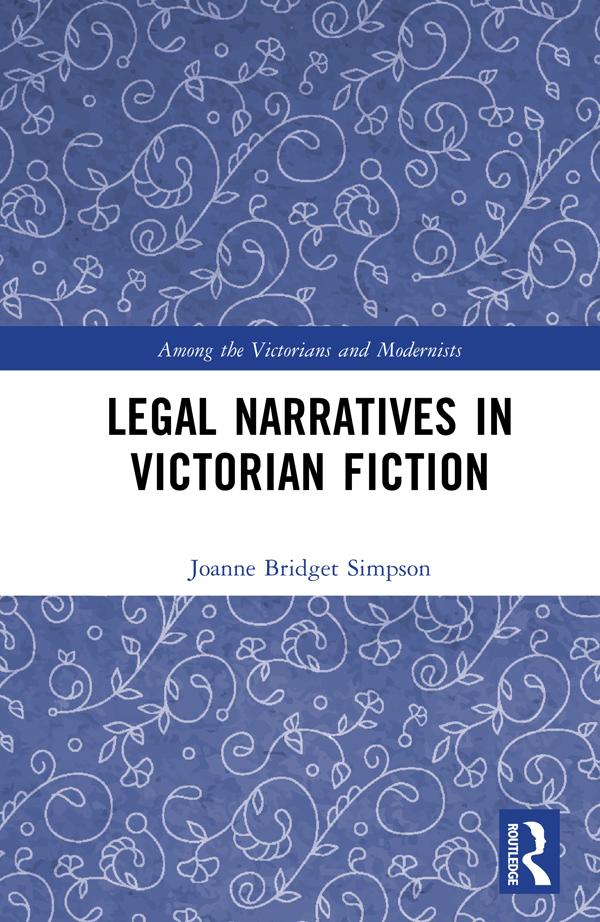
The law holds up a mirror to society and reflects that society and its ongoing preoccupations. This book establishes legal interpretation as a mode of literary interpretation, contextualising the opinions and sociological background of literature within the context of the law of its period and examines the inherent role of the law in the construction of the narrative in the literature of the nineteenth century. From the approach to the operation of jurisprudence and legal application, to the prosecution of the poor, the criminological approach to moral panics and the use of the affirmative defence to mitigate women within society, this book explores the ways in which the authors of the period used the novel form as a way of challenging and critiquing the legal operating model of the world in which their characters found themselves; examining the way in which the authors of the period used the novel as a means of critiquing the nature of the role of the law within society, its impact upon the general public, and the reciprocity which exists between legal ideals and the society which manifests those ideals through thought and action. This is a useful text for students of nineteenth-century literature or the law.
Pay easily by card, Klarna, Apple Pay or Google Pay. Not happy? You always have a 14-day money-back guarantee. Read more in our terms. If you have any questions, email us at hello@memmo.org.
Memmo makes studying easier – wherever you are in the world. We bring your course books and smart study tools together in one place: summaries, quizzes, podcasts and flashcards. Plus Ted, your study buddy who answers anything you wonder. Over 50,000 students already study here – built to help you learn faster and stress less.