
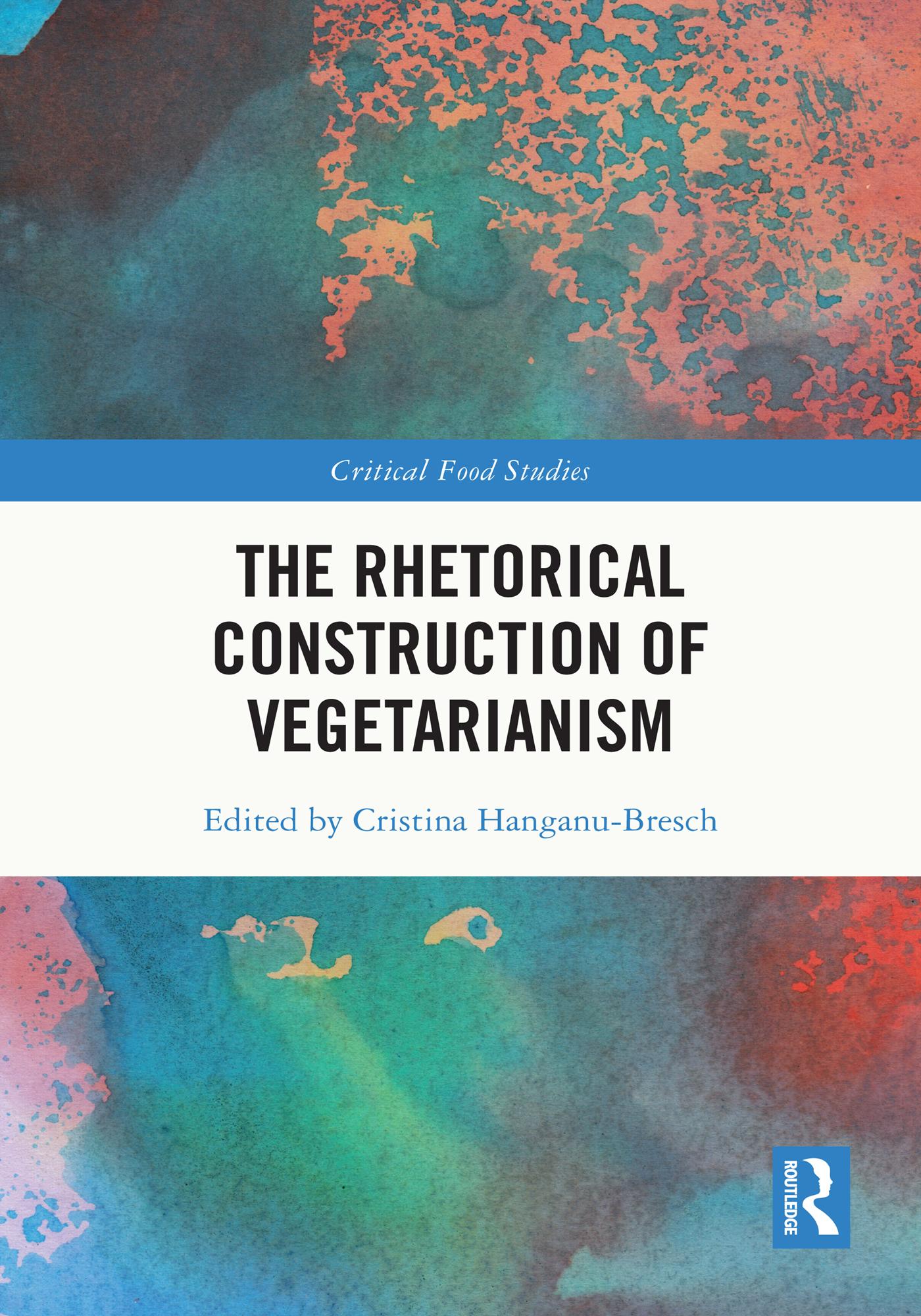
This book explores themes in the rhetoric of vegetarian discourse. A vegan practice may help mitigate crises such as climate change, global health challenges, and sharpening socioeconomic disparities, by ensuring both fairness in the treatment of animals and food justice for marginalized populations. How the message is spread is crucial for these aims.
Vegan practices thus uncover tensions between individual dietary choices and social justice activism, between ego and eco, between human and animal, between capitalism and environmentalism, and within the larger universe of theoretical and practical ethics. The chapters apply rhetorical methodologies to understand vegan/vegetarian discourse, emphasizing, for example, vegan/vegetarian rhetoric through the lens of polyphony, the role of intersectional rhetoric in becoming vegan, as well as ecofeminist, semiotic, and discourse theory approaches to veganism. The book aims to show that a rhetorical understanding of vegetarian and vegan discourse is crucial for the goals of movements promoting veganism.
The book is intended for a wide interdisciplinary audience of scholars, researchers, and individuals interested in veganism, food and media studies, rhetorical studies, human-animal studies, cultural studies and related disciplines. It urges readers to examine vegan discourses seriously, not just as a matter of personal choice or taste but as one vital for intersectional justice and our planetary survival.
Pay easily by card, Klarna, Apple Pay or Google Pay. Not happy? You always have a 14-day money-back guarantee. Read more in our terms. If you have any questions, email us at hello@memmo.org.
Memmo makes studying easier – wherever you are in the world. We bring your course books and smart study tools together in one place: summaries, quizzes, podcasts and flashcards. Plus Ted, your study buddy who answers anything you wonder. Over 50,000 students already study here – built to help you learn faster and stress less.