
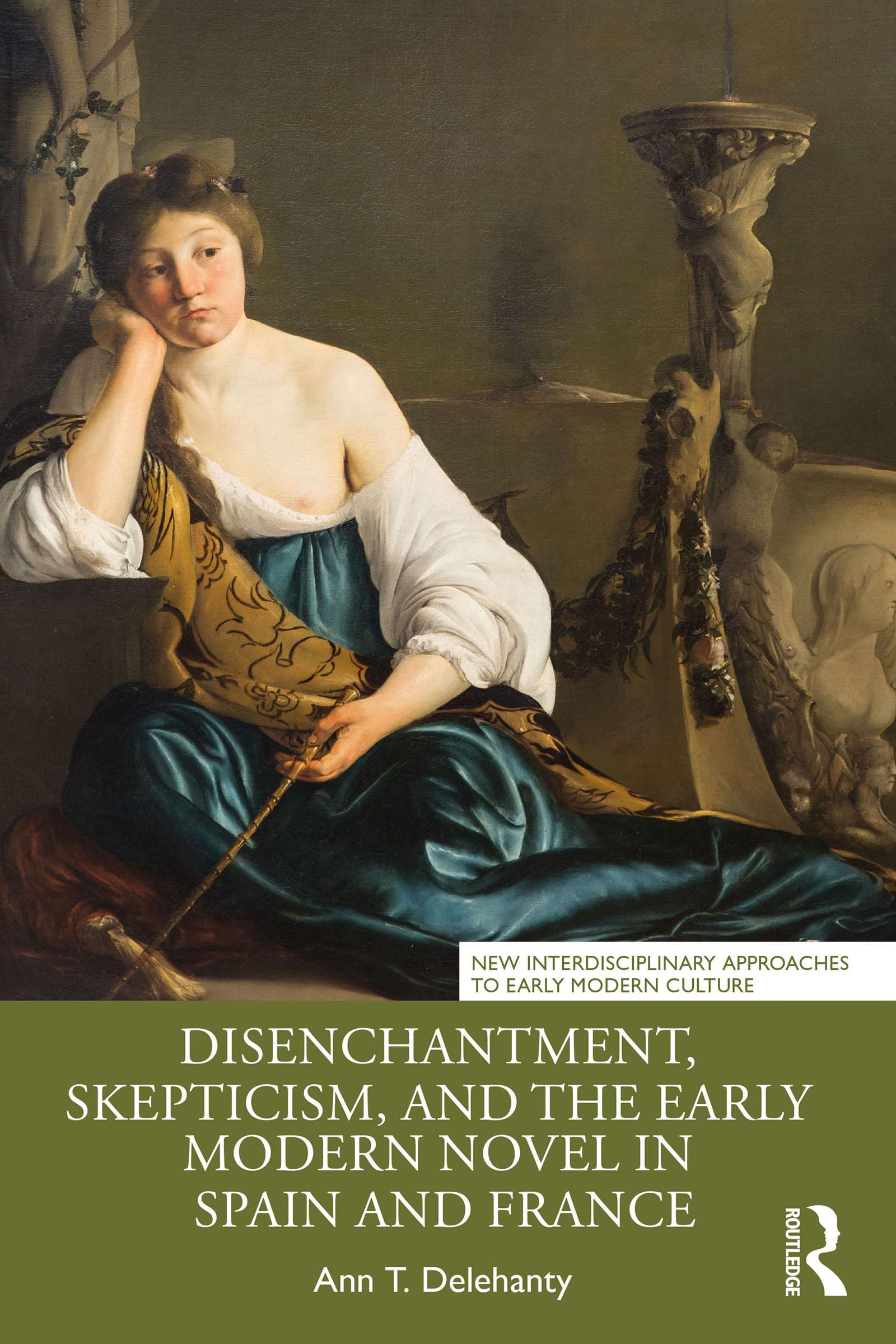
This volume examines five early modern novels from the seventeenth century in Spain and France as examples of literature as a form of skeptical inquiry: Cervantes’s Don Quijote, Zayas’s Desengaños amorosos, Scarron’s Roman comique, Cyrano de Bergerac’s L’Autre Monde, and Mme. de Lafayette’s Zayde.
These early modern novels encourage readers to take a critical stance toward accepted beliefs, through content that stages multiple encounters with the shockingly unfamiliar as well as through experiments in literary form, especially the interpolated story. At its broadest reach, this study asserts the fundamental value of literature as a means of encouraging discernment, recognizing the illusory, and honing critical acuity. In terms of the particularity of the historical moment, the volume also identifies the early modern novel as uniquely able to represent the conflicting value spheres of early modernity because of its ability to present multiple voices and its fascination with conflicting vantage points.
Due to its interdisciplinary nature, Disenchantment, Skepticism, and the Early Modern Novel in Spain and France appeals to literary scholars and intellectual historians of the early modern period in Europe, as well as to advanced undergraduates and postgraduates studying the early novel, intellectual history, and philosophy of literature.
Pay easily by card, Klarna, Apple Pay or Google Pay. Not happy? You always have a 14-day money-back guarantee. Read more in our terms. If you have any questions, email us at hello@memmo.org.
Memmo makes studying easier – wherever you are in the world. We bring your course books and smart study tools together in one place: summaries, quizzes, podcasts and flashcards. Plus Ted, your study buddy who answers anything you wonder. Over 50,000 students already study here – built to help you learn faster and stress less.