
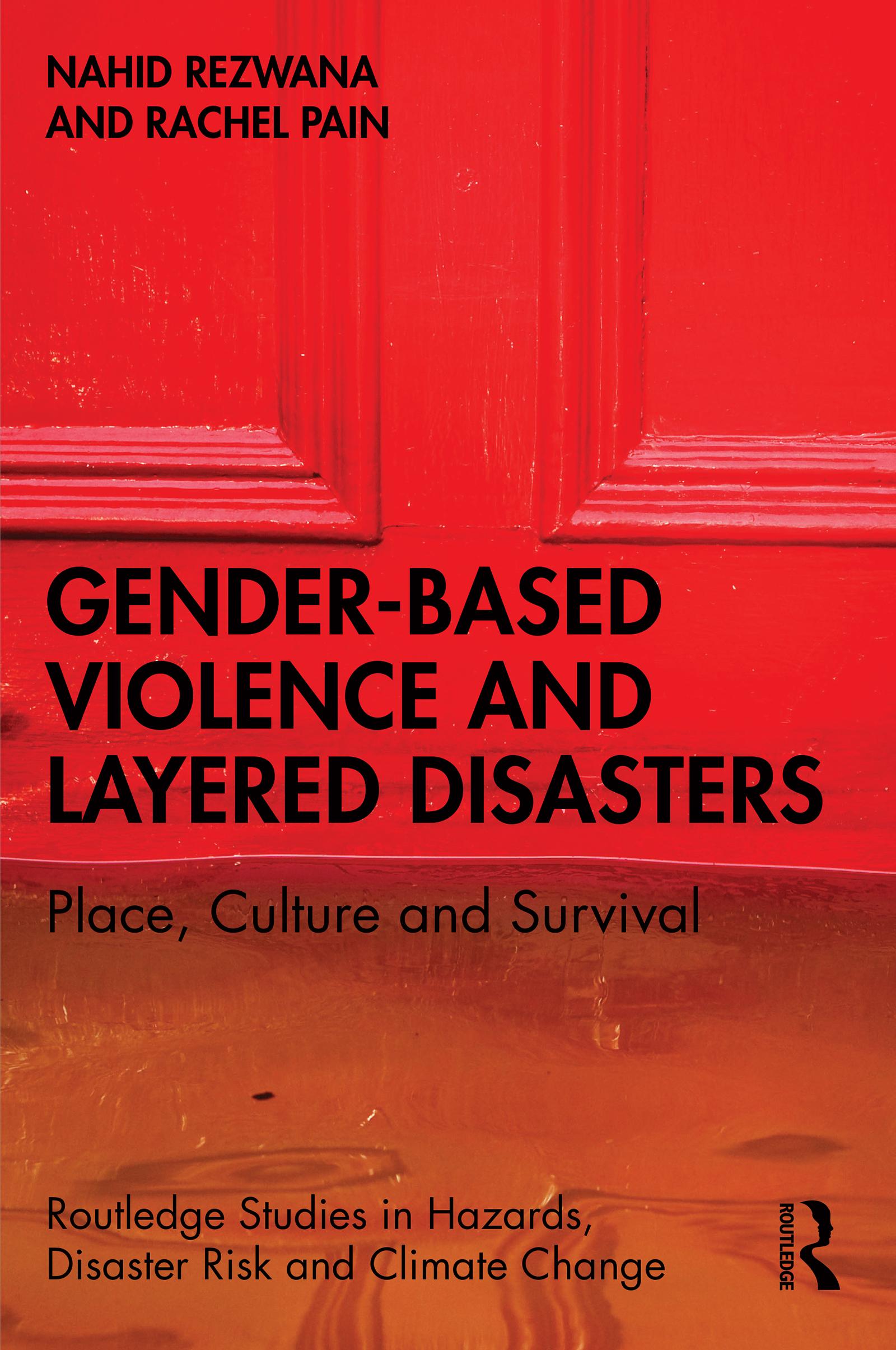
This book investigates the widespread and persistent relationship between disasters and gender-based violence, drawing on new research with victim-survivors to show how the two forms of harm constitute ‘layered disasters’ in particular places, intensifying and reproducing one another.
The evidence is now overwhelming that disasters and gender-based violence are closely connected, not just in moments of crisis but in the years that follow as the social, economic and environmental impacts of disasters play out. This book addresses two key gaps in research. First, it examines what causes the relationship between disasters and gender-based violence to be so widespread and so enduring. Second, it highlights victim-survivors’ own accounts of gender-based violence and disasters. It does so by presenting findings from original research on cyclones and flooding in Bangladesh and the UK and a review of global evidence on the Covid-19 pandemic. Drawing on feminist theories, it conceptualises the coincidence of gender-based violence, disasters and other aggravating factors in particular places as ‘layered disasters.’ Taking an intersectional approach that emphasises the connections between culture, place, patriarchy, racism, poverty, settler-colonialism, environmental degradation and climate change, the authors show the significance of gender-based violence in creating vulnerability to future disasters. Forefronting victim-survivors’ experiences and understandings, the book explores the important role of trauma, and how those affected go about the process of survival and recovery. Understanding disasters as layered casts light on why tackling gender-based violence must be a key priority in disaster planning, management and recovery. The book concludes by exploring critiques of existing formal responses, which often ignore or underplay gender-based violence.
The book will be of interest to all those interested in understanding the causes and impacts of disasters, as well as scholars and researchers of gender and gender-based violence.
Pay easily by card, Klarna, Apple Pay or Google Pay. Not happy? You always have a 14-day money-back guarantee. Read more in our terms. If you have any questions, email us at hello@memmo.org.
Memmo makes studying easier – wherever you are in the world. We bring your course books and smart study tools together in one place: summaries, quizzes, podcasts and flashcards. Plus Ted, your study buddy who answers anything you wonder. Over 50,000 students already study here – built to help you learn faster and stress less.