
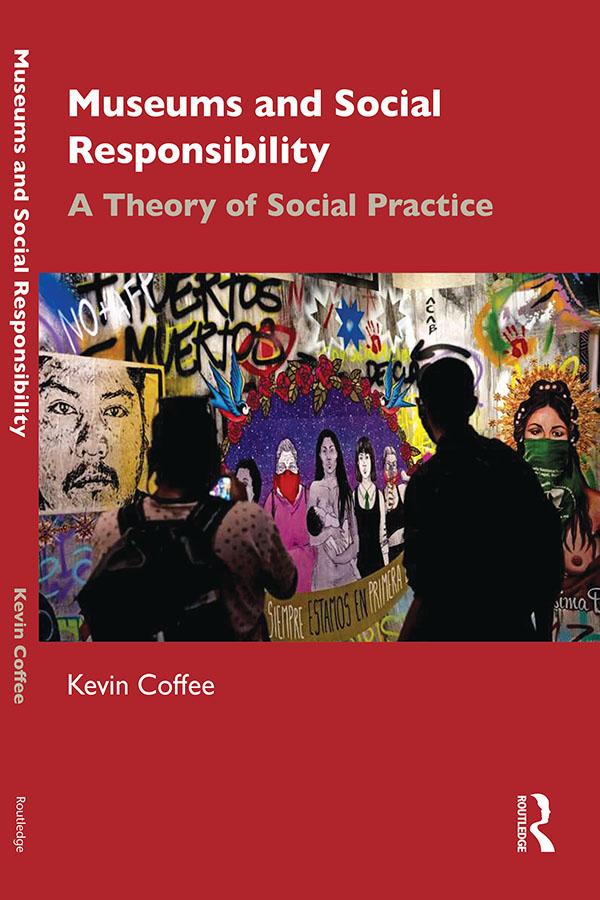
Museums and Social Responsibility examines inherent contradictions within and effecting museum practice in order to outline a museological theory of how museums are important cultural practices in themselves and how museums shape the socio-cultural dynamics of modern societies, especially our attitudes and understandings of about human agency and creative potential.
Museums are libraries of objects, presenting thematic justification that dominate concepts of normativity and speciality, as well as attitudes of cultural deprecation. By sorting culture into hierarchies of symbolic value, museums cloak themselves in supposed objectivity, delivered with the passion of connoisseurship and the surety of scholarly research. Ulterior motives pertaining to socio-economic class, racial and ethnic othering, and sexual subjugation, are shrouded by that false appearance of objectivity. This book highlights how the socially responsive practitioner can challenge and subvert taken-for-granted motivations by undertaking liberatory museum work that engages subaltern narratives, engages historically disadvantaged populations, and co-creates with them dialogical practices of collecting, preserving, exhibiting and interpreting. It points to examples in Africa, Asia, Europe, and the Americas, not as self-contained entities but as practices within a global web of relationships, and as microcosms that define normality and abnormality, that engage users in critical dialogue, and that influence, are conditioned by, and disrupt taken-for-granted understandings and practices of class, ethnicity, sex, gender, thinking and being.
Suitable for students, researchers, and museum professionals, Museums and Social Responsibility presents a comprehensive argument and proposes critical, reflective processes to the practitioner, so that their museum work may more effectively engage with and change their societies and the world.
Pay easily by card, Klarna, Apple Pay or Google Pay. Not happy? You always have a 14-day money-back guarantee. Read more in our terms. If you have any questions, email us at hello@memmo.org.
Memmo makes studying easier – wherever you are in the world. We bring your course books and smart study tools together in one place: summaries, quizzes, podcasts and flashcards. Plus Ted, your study buddy who answers anything you wonder. Over 50,000 students already study here – built to help you learn faster and stress less.