
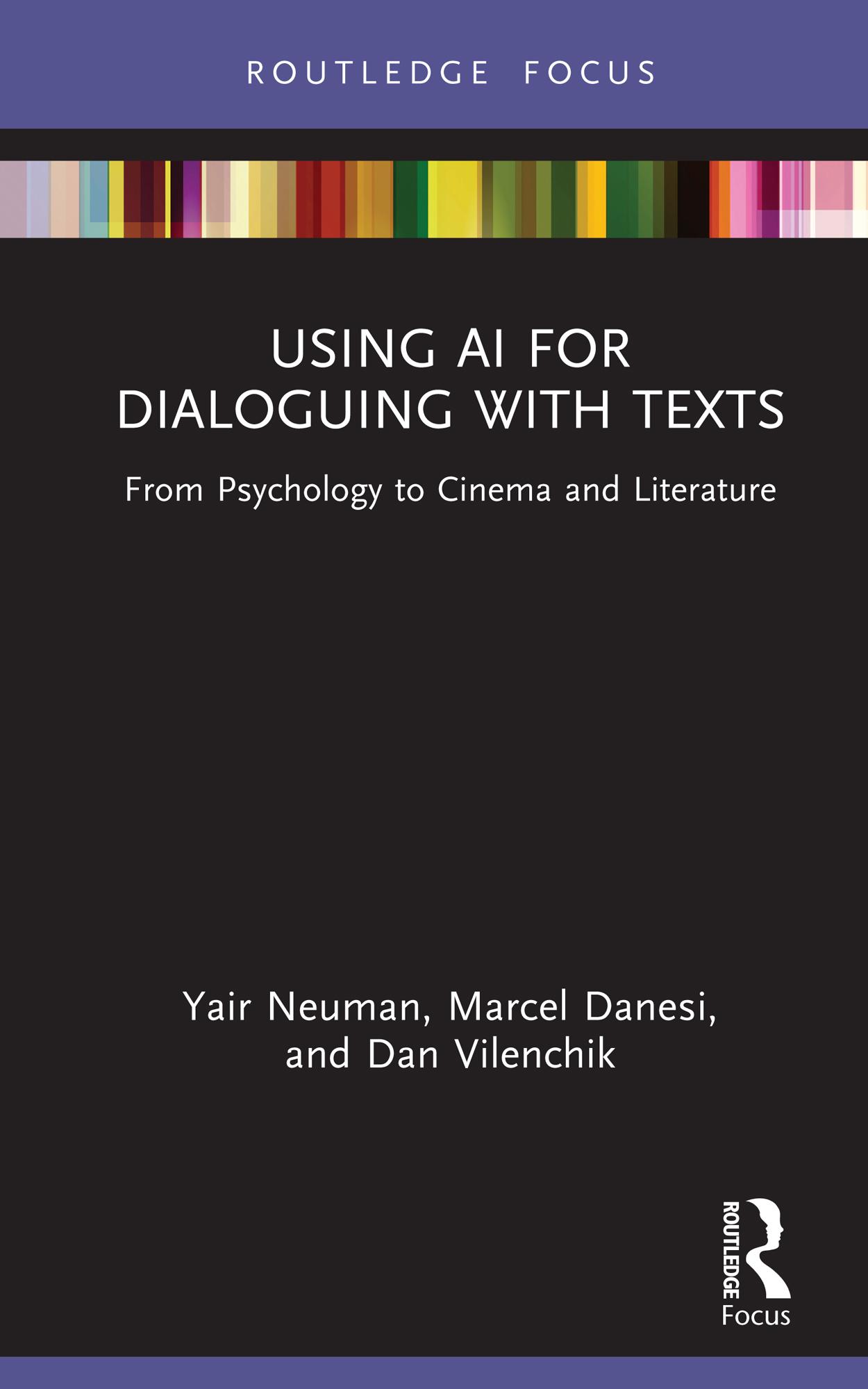
This concise volume offers an accessible introduction to state-of-the-art artificial intelligence (AI) language models, providing a platform for their use in textual interpretation across the humanities and social sciences.
The book outlines the affordances of new technologies for textual analysis, which has historically employed established approaches within the humanities. Neuman, Danesi, and Vilenchik argue that these different forms of analysis are indeed complementary, demonstrating the ways in which AI-based perspectives echo similar theoretical and methodological currents in traditional approaches while also offering new directions for research. The volume showcases examples from a wide range of texts, including novels, television shows, and films to illustrate the ways in which the latest AI technologies can be used for "dialoguing" with textual characters and examining textual meaning coherence.
Illuminating the potential of AI language models to both enhance and extend research on the interpretation of texts, this book will appeal to scholars interested in cognitive approaches to the humanities in such fields as literary studies, discourse analysis, media studies, film studies, psychology, and artificial intelligence.
Pay easily by card, Klarna, Apple Pay or Google Pay. Not happy? You always have a 14-day money-back guarantee. Read more in our terms. If you have any questions, email us at hello@memmo.org.
Memmo makes studying easier – wherever you are in the world. We bring your course books and smart study tools together in one place: summaries, quizzes, podcasts and flashcards. Plus Ted, your study buddy who answers anything you wonder. Over 50,000 students already study here – built to help you learn faster and stress less.