
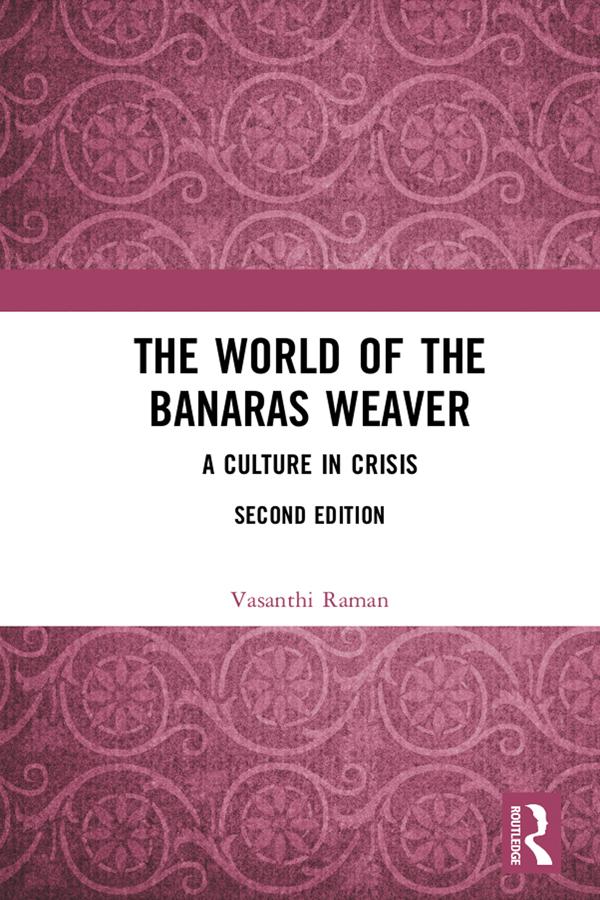
This book is a fascinating investigation into how communalism plays out in everyday India. Using the metaphor of tana-bana – the warp and the weft of the Banarasi sari – the author reproduces the interwoven life of Hindu-Muslim relations in the Banarasi sari industry.
As the city of Banaras in Uttar Pradesh takes the centre stage as the site of this ethnographic study, the author documents the dissonance in representations of Banaras as a sacred Hindu city and its essential plural character. The volume
• examines in-depth the lives of Banaras Muslims in the social and economic matrix of the sari industry;
• highlights how women negotiate between home, family and their place in the artisanal industry; and
• sheds light on their fast-changing world of the Banaras weavers and their responses to it.
With a new introduction and fresh data, the second edition looks at the subsequent developments in the weaving industry over the last decade. This volume will be of immense interest to scholars and researchers of social anthropology, gender studies, development studies, sociology and South Asian studies.
Pay easily by card, Klarna, Apple Pay or Google Pay. Not happy? You always have a 14-day money-back guarantee. Read more in our terms. If you have any questions, email us at hello@memmo.org.
Memmo makes studying easier – wherever you are in the world. We bring your course books and smart study tools together in one place: summaries, quizzes, podcasts and flashcards. Plus Ted, your study buddy who answers anything you wonder. Over 50,000 students already study here – built to help you learn faster and stress less.