
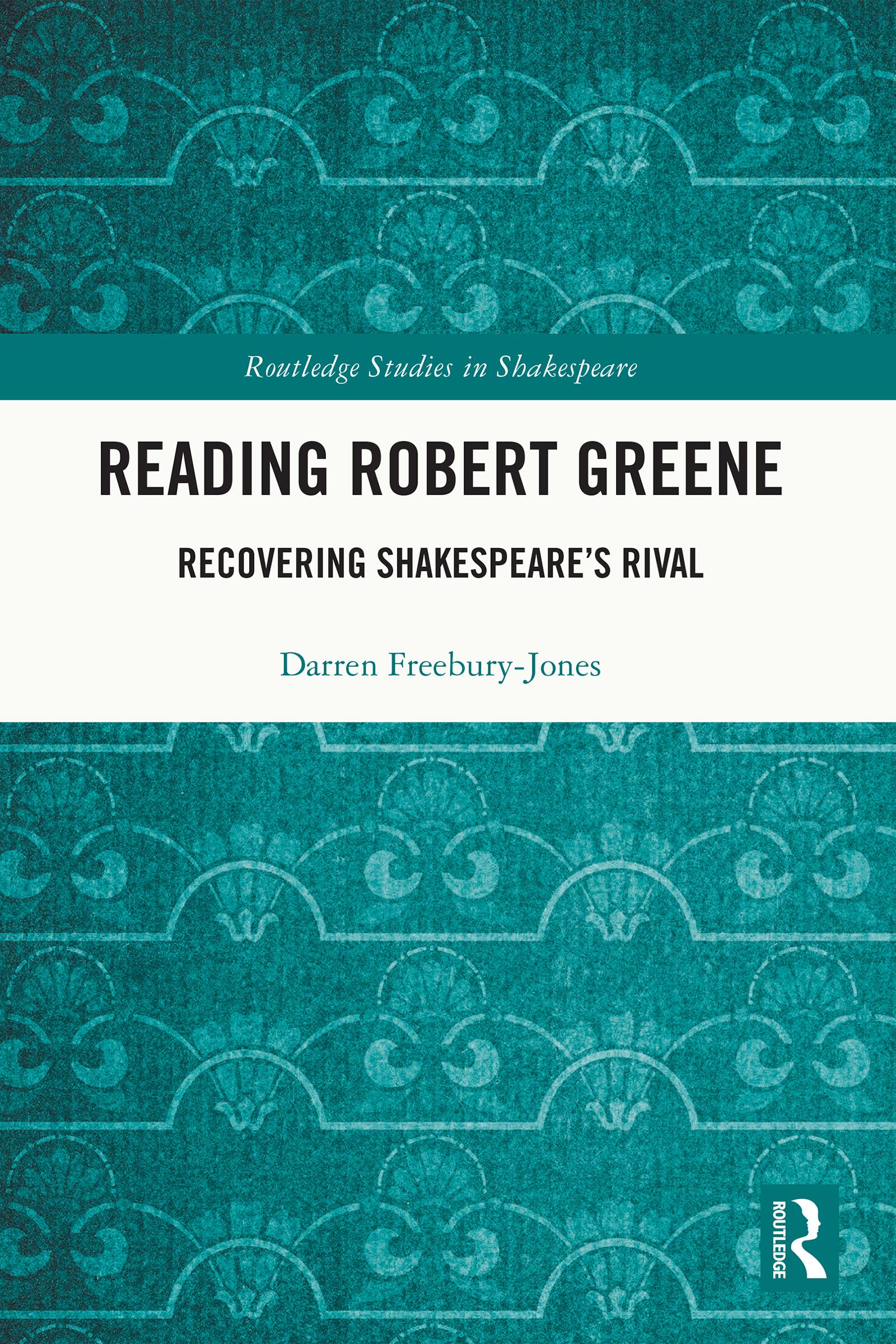
Robert Greene holds a significant place in our understanding of Elizabethan literature. This book offers the most rigorous attempt yet undertaken to determine the scope of the playwright’s canon through analyses of Greene’s verse style, vocabulary, rhyming habits, and the dramatist’s phraseology in his attested plays and in comparison to four plays that have long been on the margins of Greene’s corpus: Locrine, Selimus, George a Greene, and A Knack to Know a Knave. The book defines the ranges for Greene’s stylistic habits for the very first time and proceeds to identify parallels of thought, language, and overall dramaturgy that reveal a single author’s creative consciousness. This volume also casts light on Greene as a more collaborative dramatist than has hitherto been acknowledged. Through emphasizing the immediate surroundings in which Greene was writing – the flourishing of popular theatres in two compact areas of London, in which each theatre company and their dra-matists kept a close eye on what their competitors were producing – Greene emerges as an influential playwright, whose restored oeuvre enables us to establish new ways in which his dramatic methods impacted other writers of the period, including Shakespeare.
Pay easily by card, Klarna, Apple Pay or Google Pay. Not happy? You always have a 14-day money-back guarantee. Read more in our terms. If you have any questions, email us at hello@memmo.org.
Memmo makes studying easier – wherever you are in the world. We bring your course books and smart study tools together in one place: summaries, quizzes, podcasts and flashcards. Plus Ted, your study buddy who answers anything you wonder. Over 50,000 students already study here – built to help you learn faster and stress less.