
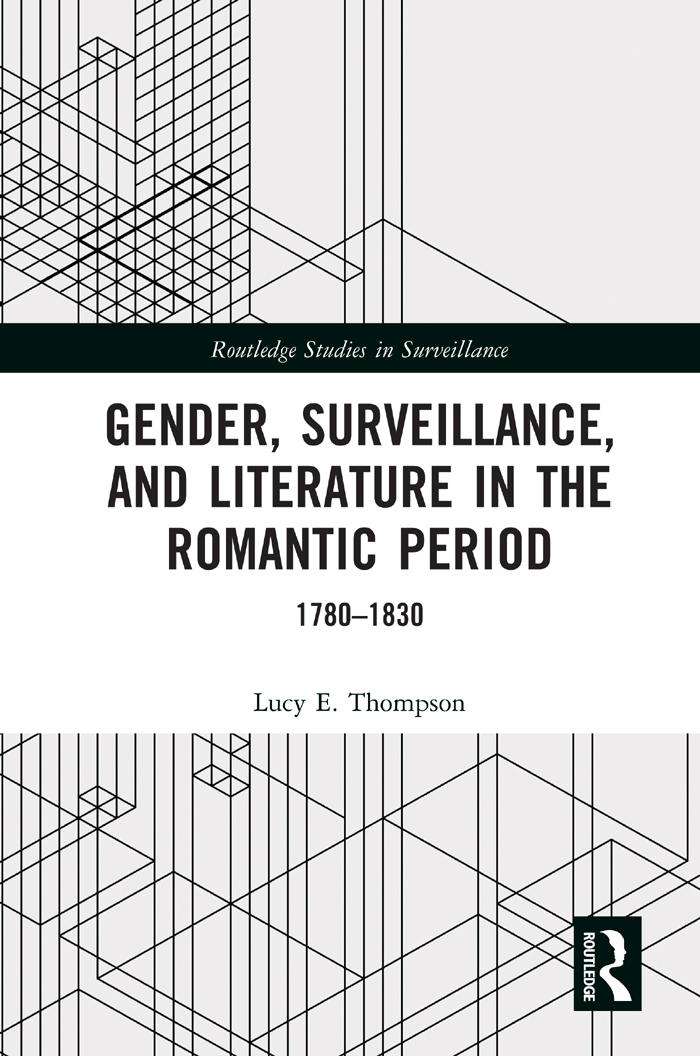
Romantic-era literature offers a key message: surveillance, in all its forms, was experienced distinctly and differently by women than men. Gender, Surveillance, and Literature in the Romantic Period examines how familiar and neglected texts internalise and interrogate the ways in which targeted, asymmetric, and often isolating surveillance made women increasingly and uncomfortably visible in a way that still resonates today.
The book combines the insights of modern surveillance studies with Romantic scholarship. It provides readers with a new context in which to understand Romantic-period texts and looks critically at emerging paradigms of surveillance directed at marginal groups, as well as resistance to such monitoring. Works by writers such as Jane Austen, Charlotte Smith, and Joanna Baillie, as well as Lord Byron and Thomas De Quincey, give a new perspective on the age that produced the Panopticon.
This book is designed to appeal to a wide readership, and is aimed at students and scholars of surveillance, literature, Romanticism, and gender politics, as well as those interested in important strands of women’s experience not only for the additional layers they reveal about the Romantic era but also for their relevance to current debates around asymmetries of power within gendered surveillance.
Pay easily by card, Klarna, Apple Pay or Google Pay. Not happy? You always have a 14-day money-back guarantee. Read more in our terms. If you have any questions, email us at hello@memmo.org.
Memmo makes studying easier – wherever you are in the world. We bring your course books and smart study tools together in one place: summaries, quizzes, podcasts and flashcards. Plus Ted, your study buddy who answers anything you wonder. Over 50,000 students already study here – built to help you learn faster and stress less.